

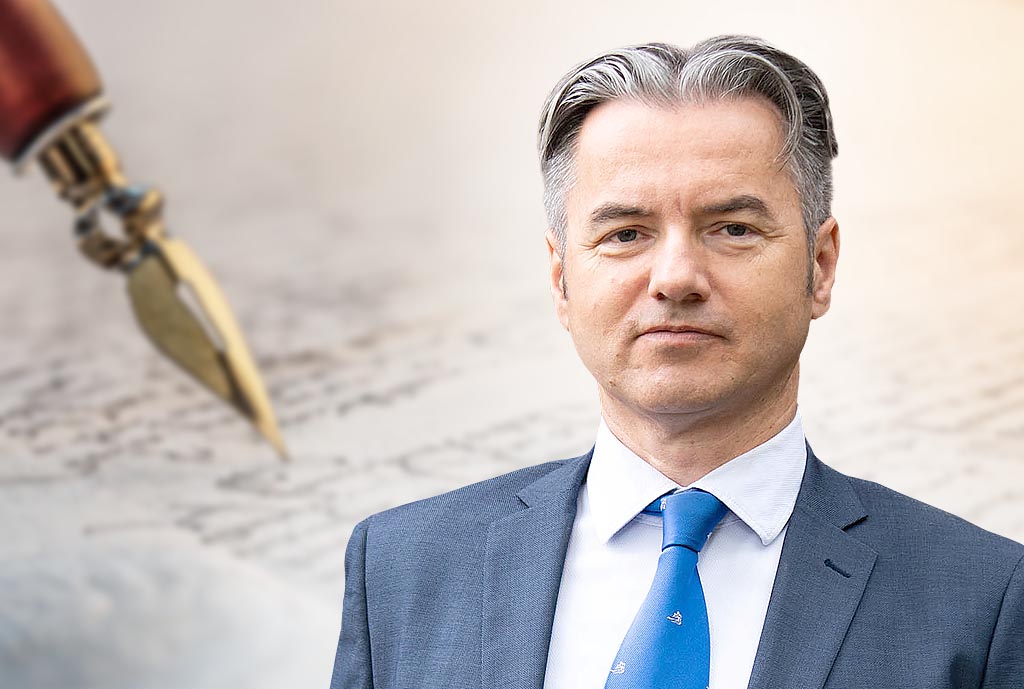
By: dr. Metod Berlec
Slovenia’s political landscape, thirty‑five years after independence, remains marked by a pronounced post‑communist continuity that reaches back to the communist revolution during the Second World War and the years that followed.
In May 1945, Slovenia emerged from one totalitarianism (Nazism) only to fall under another (Communism). It became part of socialist Yugoslavia, where the key levers of power were controlled by the leaders of the Communist Party, headed by Josip Broz Tito and his subordinate Slovenian party officials, from Boris Kidrič and Edvard Kardelj to, later, Milan Kučan. During this period, there was no political pluralism, no free elections, and no independent institutions. This shaped a social and economic structure that, to a large extent, survived the transition to democracy.
The first democratic elections in 1990 marked a turning point, but the political transition did not fully take place, as the last head of the Party, Milan Kučan, became the first President of the Republic of Slovenia. In nearly 35 years of independence, centre‑right governments have led Slovenia for only ten years, while the remaining time power has stayed in the hands of political forces rooted in the continuity of the previous system. This imbalance is reflected across many segments of society: from the media landscape and cultural institutions to the economy, judiciary, and civil society. The result of such a structure is weaker oversight of those in power, as key subsystems remain ideologically close to one political bloc, the transitional left. This reduces accountability, limits critical debate, and creates conditions in which corruption flourishes. The pre‑election wiretaps revealing a “criminal organisation” in power are just one symptom of a broader problem: the lack of an effective balance between the two political poles. In recent years, it has become clear that an unbalanced political space also affects economic and social stability. Warnings about high tax burdens, low competitiveness, declining exports, and the insufficient efficiency of public systems – from the judiciary to healthcare – point to the need for change. But such change is possible only if there is enough political will, professional autonomy, and institutional independence.
Slovenia today faces a challenge that goes beyond day‑to‑day politics. The question is whether we can establish a more balanced, plural, and democratically mature system in which power is subject to effective oversight and institutions operate in the interest of citizens, not criminal networks. This is crucial for the country’s future development – for its economic vitality, social cohesion, and international credibility. This is why the formation of a centre‑right government, the ideological rebalancing of society, the establishment of a genuine system of checks and balances, and the real separation of powers into the executive, legislative, and judicial branches are essential steps that would have a systemic and developmental impact on the future of the Republic of Slovenia. The coming days and weeks will therefore be of great importance …