

By: Nova24tv.si
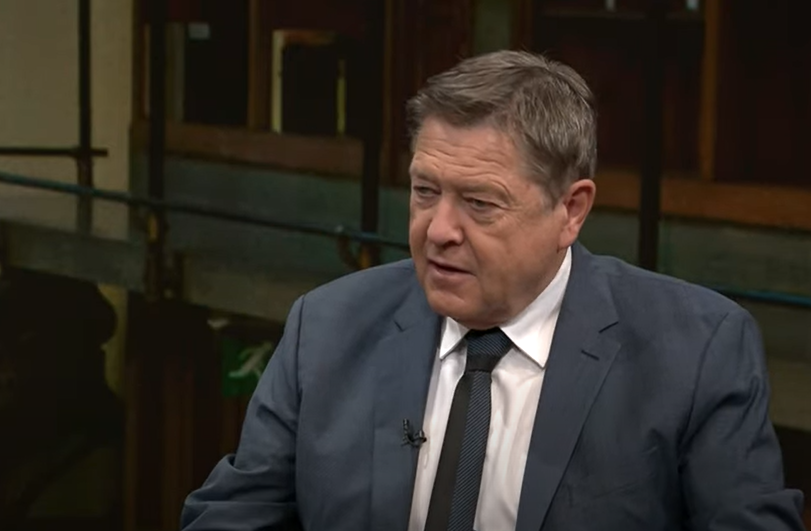
The draft law on the burial and remembrance of the victims of concealed mass graves, submitted to parliamentary procedure by the SDS, NSi, SLS, FOKUS and Democrats parliamentary groups, would finally allow a dignified burial for all victims at the Žale cemetery in Ljubljana. We asked historian Dr Mitja Ferenc to comment on the significance of the law.
Ferenc points out that the law would address two extremely important issues: a collective burial of the victims and the reinstatement of the national Day of Remembrance for the Victims of Communist Violence on 17 May, which was abolished by the Golob government.
Victims would finally receive a burial place
“These are two matters already recognised by the European Union, the right to a dignified burial and the remembrance of the victims of totalitarian regimes,” Ferenc emphasises. “The first important element regulated by the law is that the victims would finally receive a burial place. This concerns, above all, the approximately 43 Roma killed by the Partisans in Iška, the remains of around 3,500 victims from Macesnova Gorica, as well as the victims whose bones fill the ossuary at the Dobrava cemetery near Maribor.” The latter refers to remains found in Tezno, while the bones of the victims from Macesnova Gorica are mostly kept in Škofja Loka.
Will Slovenia finally be able to condemn all totalitarianisms?
“The second important element is the reinstatement of the remembrance day for these victims. Last June, the European Parliament adopted a resolution on preserving the memory of the victims of the post‑war communist period in Slovenia, so the law merely regulates matters already endorsed by the European Union,” Ferenc explains. He himself contributed to the adoption of this resolution in 2025, which calls for further investigation of concealed mass graves, the opening of Yugoslav secret‑service archives, and the proclamation of a national remembrance day for the victims of totalitarian regimes, including communism.
“The proposed law would regulate this appropriately, without ideology or ideological disputes. It is primarily about ensuring that the victims finally receive a dignified burial and a common resting place in Ljubljana, and that we remember them properly and address this historical issue,” Ferenc concludes.
The key provisions of the law stipulate that the victims’ remains be permanently buried at the Žale cemetery in Ljubljana, with this section of the cemetery receiving the status of a cultural monument, that 17 May be reinstated as the national day of remembrance for the victims of communist violence, and that DNA analysis and identification procedures for the victims be formally established.
NSi, whose MP Janez Cigler Kralj is the first signatory of the proposal, emphasised that this is “a step that recognises the basic dignity of every human being”, adding that the time has come for “the entire Slovenian political sphere to show respect to all victims of the wars and, unburdened by the past, build the future.” Janez Janša accompanied the proposal with the statement that the “Day of Remembrance for the Victims of Communist Terror” is returning, adding that the dead will finally be buried with dignity, thereby settling a civilisational debt and fulfilling the “civilisational norm that demands a dignified burial and the right to remembrance.”
Regarding the Roma killed in Iška in 1942, who would also finally receive a dignified burial, we have requested a comment from the Council of the Roma Community of Slovenia, and will publish their response once received.