

By: C. R.
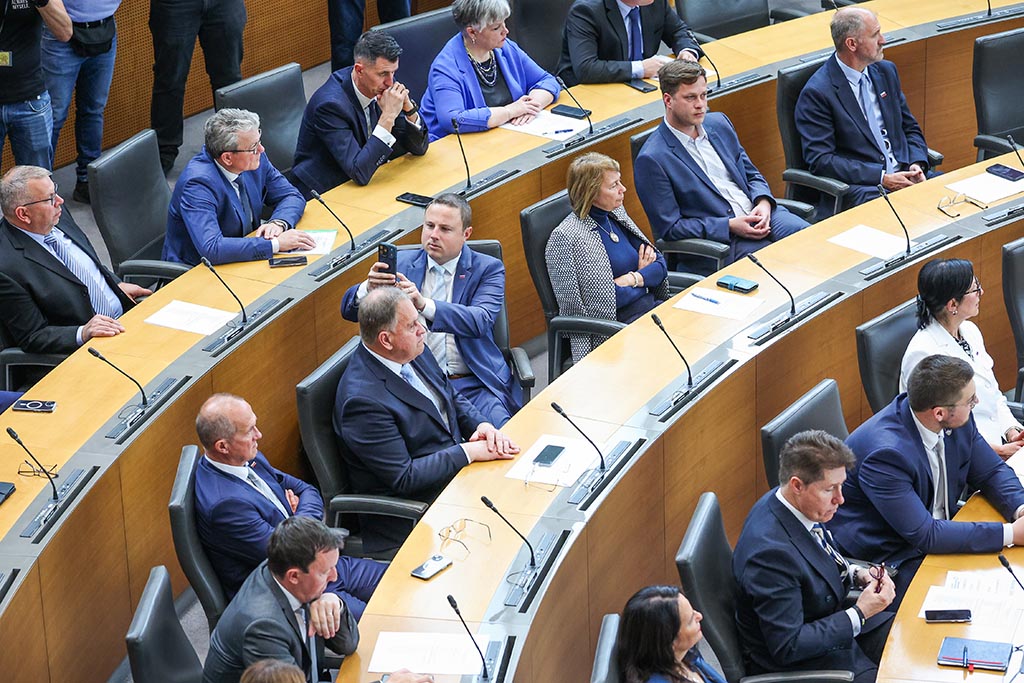
Slovenian National Assembly approved the intervention law for Slovenia’s development with 47 votes in favour and 35 against. The proposed amendments of the outgoing coalition were rejected in the vote, while the proponents of the law withdrew their own amendments. Svoboda, SD and Levica Vesna have announced a legislative referendum.
The proponents of the law – MPs from NSi, SLS and Fokus, as well as the Democrats and Resnica – included several measures aimed at the looming energy crisis, among them a lower value‑added tax on basic foodstuffs and part of energy products.
The law also contains systemic solutions in the areas of more favourable treatment of small businesses and so‑called flat‑rate taxpayers, taxes and social contributions, as well as healthcare and pensions. The so‑called omnibus bill amends ten different laws.
The National Assembly adopted a harmonising amendment which, according to Janez Cigler Kralj of NSi, resolves inconsistencies regarding the start of application of the amended provisions. “Pensioners, part‑time sole proprietors and other taxpayers will stop paying the long‑term care contribution on the first day of the month following the entry into force of the law,” he explained.
These systemic interventions, labelled as “intervention measures”, have angered the outgoing coalition parties, parts of the expert community and parts of civil society, led by trade unions. MPs from these parties again warned in today’s debate that the law is tailored primarily to the wealthy. At the same time, they cautioned that without specifying compensatory measures, it would create at least a one‑billion‑euro hole in public finances and destabilise key social systems such as pensions and healthcare.
“If you drain the public purse by roughly one billion euros, you must of course say how you will make up for the shortfall – whether through higher taxes or lower spending, otherwise the numbers simply do not add up. People should unfortunately prepare for this,” said Svoboda MP Alenka Bratušek.
Some of the measures they consider most harmful were targeted for removal through proposed amendments, but these attempts were unsuccessful.
The proponents, meanwhile, supported mainly by the business sector and several other stakeholders, have from the beginning stressed that the law represents relief for people and companies after four years of increasing burdens and declining competitiveness under the centre‑left coalition, and that it lays the foundations for faster future development. In their view, the measures will trigger numerous positive effects.
As NSi MP Aleksander Reberšek stated, accusations that the measures benefit only the wealthy are very painful given the effort put into drafting the law. “We are working for everyone; we are relieving all our citizens. This is the kind of responsible policy that empowers people,” he emphasised.
MPs did not vote on the proponents’ amendments because the proponents withdrew them. This too drew criticism, with opponents claiming the withdrawal was done solely to ensure the law would be passed today. The outgoing coalition is preparing a legislative referendum on the law. The Levica party initially spoke of a consultative referendum, but it now appears the outgoing coalition is considering a legislative one – even though such a referendum is not permitted on fiscal matters.


