By Andrej Sekulović
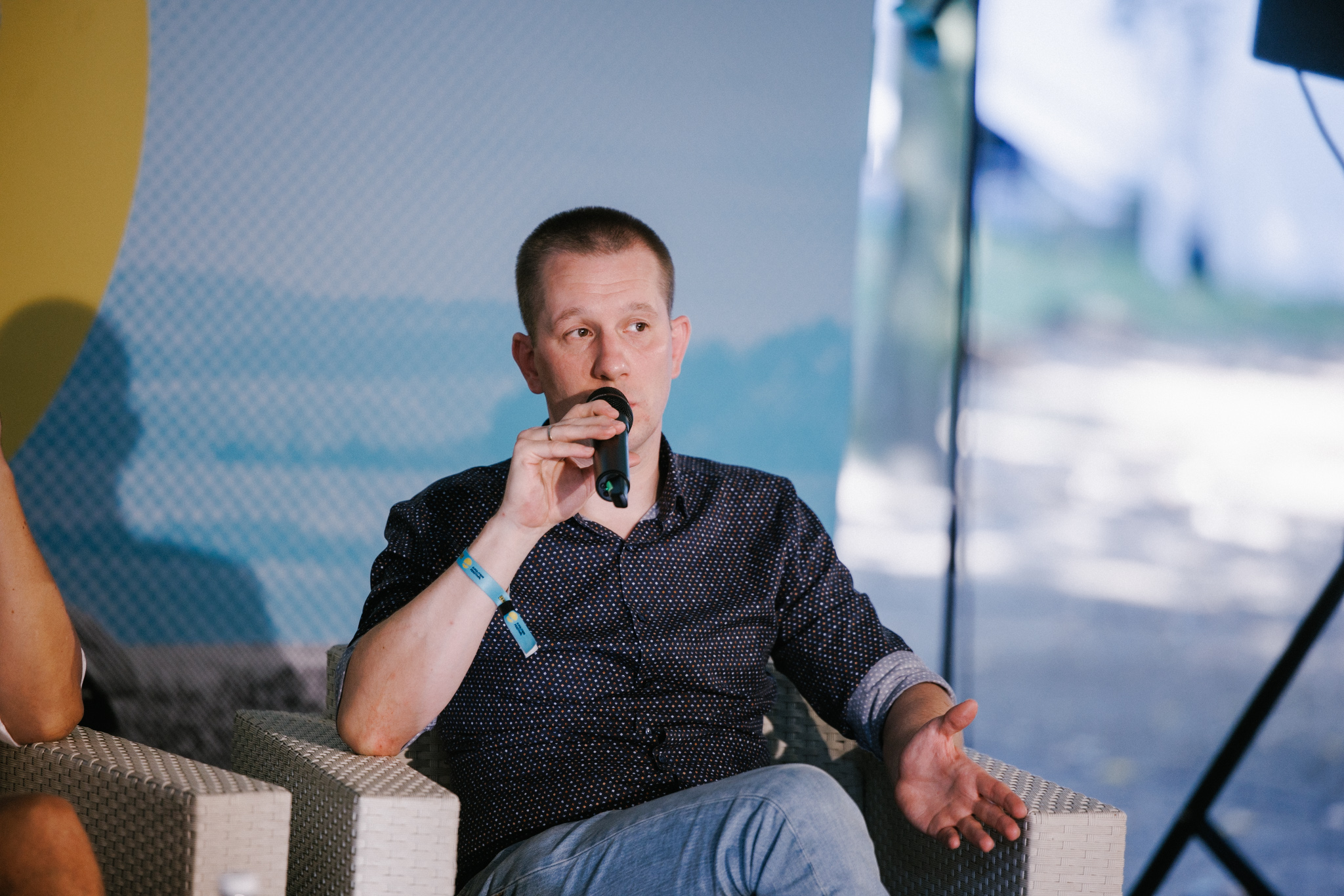
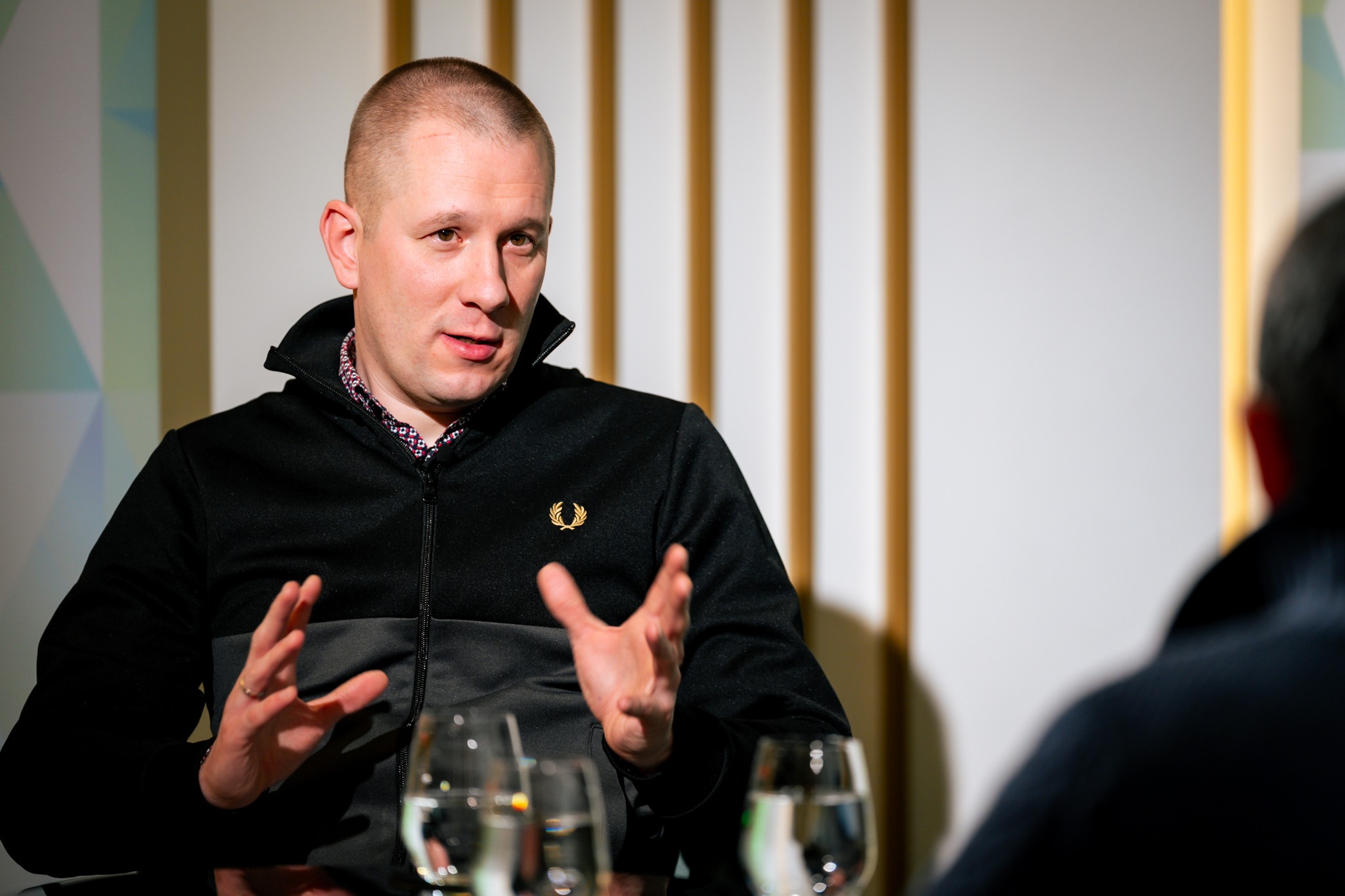
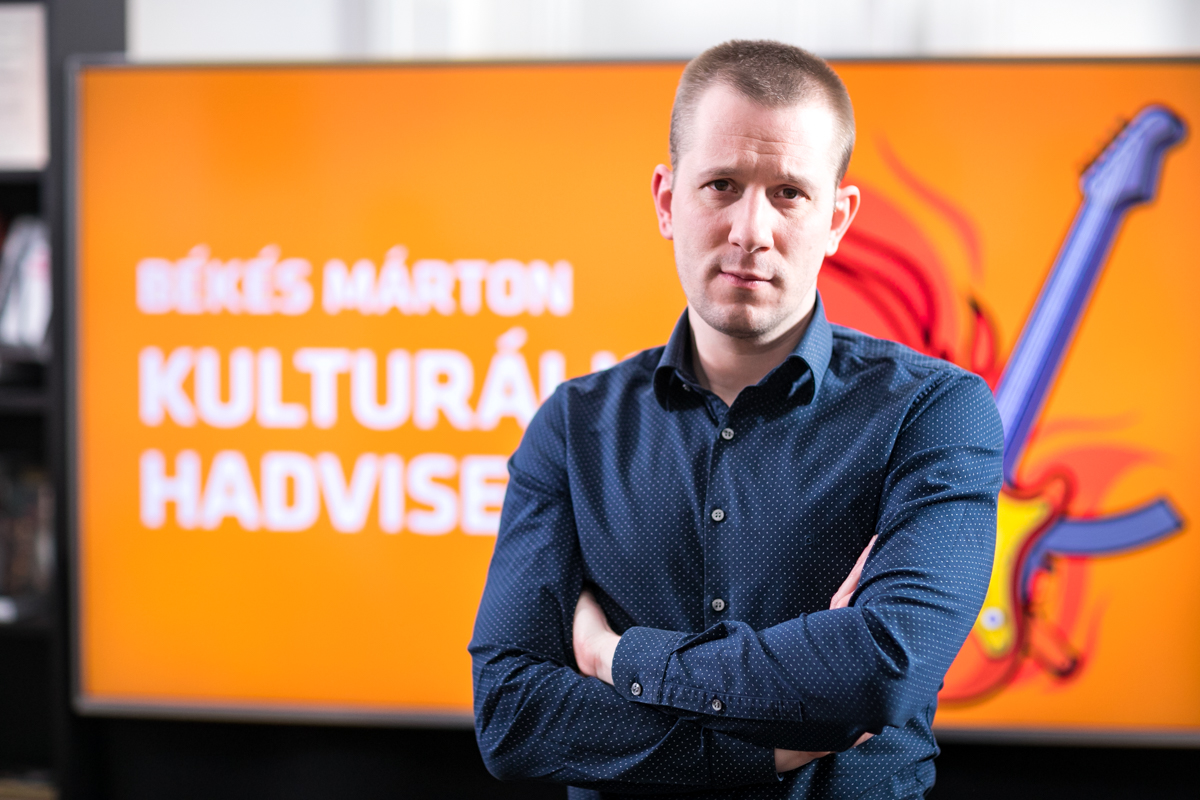
Dr Márton Békés is a Hungarian author, columnist, editor and think-tank director. His work focuses on analysing the cultural struggle and the phenomenon of the Orbán government, as well as broader socio-political issues. We spoke to him about cultural hegemony, the role of Central Europe in today’s political landscape and other interesting topics.
Dr. Bekes, you are the director of the 21 Century Institute, as well as the editor-in-chief of the national-conservative quarterly Kommentár. Can you please briefly introduce both the think tank and the quarterly?
The Institute is under the command of Professor of history Mária Schmidt, who is also the director general of the highly known Museum of the House of Terror in Budapest. In the moderate-conservative, centre-right Institute, we are analysing the contemporary Hungarian politics, the European processes and the state of the international relations of our times. Besides, since 2018, I have been the editor-in-chief of the national-conservative quarterly Kommentár, which is sometimes at the table of Viktor Orbán. The journal’s mission is to give interesting theory and useful praxis for a national future. Around the magazine, a complete eco-system of community (movement, summer festival, broadcast program, book series) exists under the umbrella of the Tranzit-project.
You have also authored, co-authored and edited quite a few books. Has any of your works been translated into other languages, and what are the main topics of your books?
One of my last books is about metapolitics, written in 2020, this has a shortened, remastered and English-speaking 57-page long e-book version, the title is: Cultural Warfare – The Theory and Practice of Cultural Power. In 2022, I wrote a pocket book about the so-called ‘national block’, that is to say, the political and social system existing in Hungary right now, which was also published in Germany by Jungeuropa the next year. In 2023 appeared also my brief volume about the theory and praxis of Conservative Revolution. At the end of March this year, my new volume was published about the ’national maximum’, which is about the present Hungarian regime with a historical, political, social and cultural context.
One of your books is about Cultural Warfare. It seems this is a very important topic, because, as Andrew Breitbart said, politics is downstream from culture, and in most of the Western world today, the general culture is heavily influenced by the liberal left. How can we reclaim contemporary culture from the left? Should we build an alternative culture, and what are the main weapons in the cultural warfare?
I totally agree with this remark, because politics is just a derivative of culture. For that very reason those who could gain the majority in the field of culture could later have the majority of votes at the ballot boxes. The Old Right failed because they didn’t care about culture, in contrast with the New Left, which made its own `long march through the institutions’ of culture (broadcast, communication, entertainment, marketing, media, movie). So we, the New Right, must have our own ‘long march’. That’s why my slogan is ‘back to the culture’.
So, staying on the topic of cultural warfare and hegemony, what is the current situation in Hungary concerning this? Was Orbán´s national conservative government able to achieve such right-wing hegemony, and how strong is the Left in the cultural life of Hungary?
The current existing Orban system is the most important phenomenon after the regime change of 1989/90. This system is right now a very political regime, with specific characteristics (national-democratic constitution, majority rule, economics based on work, families in the center of the state, sovereignty, child protection), but we need to take the next step, which is to be a new era, a great historical epoch. To build it, the most important tool is the Culture, i.e. to reach the cultural hegemony. So, I am a right-wing Gramscian, an identitarian-culturalist, who thinks that ‘politics + culture = history’.
In the Western societies, where the above mentioned hegemony is still quite firmly in the hands of the liberals, the right wing Identitarian strategy is metapolitics, or in other words influencing general social norms and culture outside of the realm of parliaments and party politics, to create conditions in which the national conservative political forces can gain power. But in Hungary, you already have a conservative government. Are metapolitics thus still relevant in Hungary, or are there any other issues and strategies that are currently more important, such as influencing governmental decisions and upholding conservative values?
The Left-liberal side better understands the significance of culture for two reasons. On the one hand, because of the communist past, namely, there was a political-economic regime change, but not at all a cultural regime change. On the other hand, because of the disinterest of the Right in the cultural field. In today’s Hungary, there are finally two changes: first, since 2010 the institutional structure has been changing, so the state could prioritise the constitutional-national values in culture; secondly, there is a broad right-wing (conservative, nationalist, populist, sovereignist) metapolitical ground. So now we have the state apparatuses and civic metapolitical initiatives, but in Hungary, we have to fight for our national culture as well, because the foreign-backed Left-liberals fight a Kulturkampf against it.
Because of promoting family values, patriotism and strong border security, Hungary is at odds with the European Union. The latter constantly demonises Hungary as being some sort of right-wing dictatorship, while in reality, Hungary is one of the few EU countries that lets its citizens decide about important questions, such as migration or LGBT propaganda in schools, by having referendums. How do you view these animosities between Brussels and Budapest, and what is truly behind them? Is it a struggle between fundamentally different worldviews?
In Hungary, we have a majoritarian-democratic political system. This regime is based on popular vote and national opinion. Since 2010, the Fidesz led by Orbán won one after the other four times the two-thirds of the seats of the Hungarian parliament (in 2010, 2014, 2018 and 2022). We have ‘national consultations’, referendums, and since 2012 a popular movement named Békemenet (March of Peace) supporting the decisions of the goverment, that mobilizes hundreds of thousands of citizens on the streets. The Brusselite fight against Budapest is the European part of the main clash of the 21st century between globalists and localists, or internationalists and nationalists, by another name neoliberals and populists.
While the conservative groups in the EU parliament, including Orban´s Patriots for Europe, are gaining support, the leadership of the EU, in the hands of EPP, mostly ignores it and would rather work with the liberals and the leftists. What is your opinion on the so-called conservative EPP, and do you believe the EU as an institution could be rehabilitated, or are you more of the opinion that we would need new alliances or confederations that would be truly European in the future?
EPP is always on the same way as the German Christian Democrats, today both are just in the name Conservative and Christian, they are in reality mainstream progressive factions following the command of the Atlantist-Globalist elite. They are the centre-right mouthpiece of the EU-federalism in aliance with the Left, Liberal and Green factions of the same federal lobby. The great problem of the EU-federalists of all kinds is that a fundamental change is in progress on the other side of the Atlantic because of Trump II and the MAGA-storm. The winds are changing rapidly in Washington, but in Brussels everything remains. But the European Union alone does not have enough power and financial resources to be a strong bastion of the unipolar-globalist world order. The Patriots around Orbán have the opportunity to change the game in Brussels within a few years. I think that Europe, maybe the European Union, has a future, but this oncoming perspective will come from our region, namely Central Europe.
The victory of President Trump and his policies has shaken up world affairs. It seems that Orbán is a close European ally of Trump. What are the current relations between the two leaders, and do you think in the long term, Trump´s victory will be good or bad for Europe?
The victory of Trump was a riposte of the American people against the globalist era of the last 30-35 years, in it the bipartisan warmongering-globalist administrations of Clinton, Bush, Obama and Biden. The MAGA movement is a classic American populist revolt against the coastal elite, while the administration of Trump II will be a 19th-century-like Jacksonian-nationalist regime at home, and a quasi-isolationalist-protectionist foreign course, similar to the doctrine of Monroe. The ‘Trump-tornado’ has an effect on the weather in Europe as well, especially since it could make the European patriots stronger. But we are Europeans, not the 51st state of the US, so we need a new perspective of our own based on native etnopluralism, European historical heritage and continental cooperation.
Hungarians have a rich and diverse history, from battles against the Ottomans to resistance against communism. How have such historical experiences affected the Hungarian mindset?
Our historical lesson learned made us stronger, because from 1526 to 1989 there were a lot of occupations from the South, the West and the East as well (Ottomans, Habsburgs, German Nazis and Soviet Communists). We learned that we have only one hope: our own Nation. There is an enigmatic phrase of the Hopi Tribe belongs to the Navajo Nation living in Arizona, that says ‘we are the ones we have been waiting for’ – this suits my people too. I think that the common historical experience from the early Middle Ages to the miserable decades of communism forged our Nations into brothers. We have more in common than what separates us. My favourite Hungarian thinker of the 20th century, László Németh, said that the Nations of Central Europe became ‘milk brothers’ because despite of different origins (Baltic, German, Hungarian, Romanian, Slavic) the common experiences knitted us together. We are the natives of this land, sharing common values and common interests. Why don’t we cooperate as we have for a thousand years?
For the end, maybe you could tell us with which other nations Hungarians have the best relations and bonds currently, and how important you believe European cooperation is in the `global´ struggle against liberalism and the forces that are destroying Europe?
I think all the regional Nations are potential allies of Hungary and each other as well. We have a historically good relationship with the countries of the Visegrad Four, but during the war and the negative consequence of the regime change in Warsaw and Prague, unfortunately, the Polish and Czech connection weakened, but we have excellent friendship with Slovakia and also with Serbia. As a Central-European-fanatic, I think that from the Adriatic coast to the Black sea as from the Baltic to the Balkan, we must have a closer relationship, because of the common value system, shared cultural heritage and similar historical observations, and joint political interest as well. Unfortunately, most of Western Europe is in decline, but our region is full of life, will of power and joy of activism. Emil Cioran, the great Romanian writer born in Transylvania, once upon a time wrote that ’the future belongs to the periphery of the Earth’. Modelled after this I think that the future of Europe belongs to our region. Living in Central Europe, we were long-time on the periphery of Europe, but in the future we will be at the centre of Europe.
Biography
Dr. Márton Békés was born in 1983 in Szombathely, Hungary, and studied political science and history, where he obtained his PhD. He was the editor of the broadcast programme from 2009-2014 and edited the Young Conservatives website from 2010-2014. Since 2019, he has been the director of the think tank 21st Century Institute and since 2018 the editor-in-chief of the quarterly Kommentár. He has published ten books in the last ten years, most recently Nemzeti blokk (2022, National Block), Konzervatív forradalom (2023, Conservative Revolution) and Nemzeti maximum (2025, National Maximum). In addition, he has contributed as co-author to three books and as editor to 15 books.