

By Andrej Sekulović
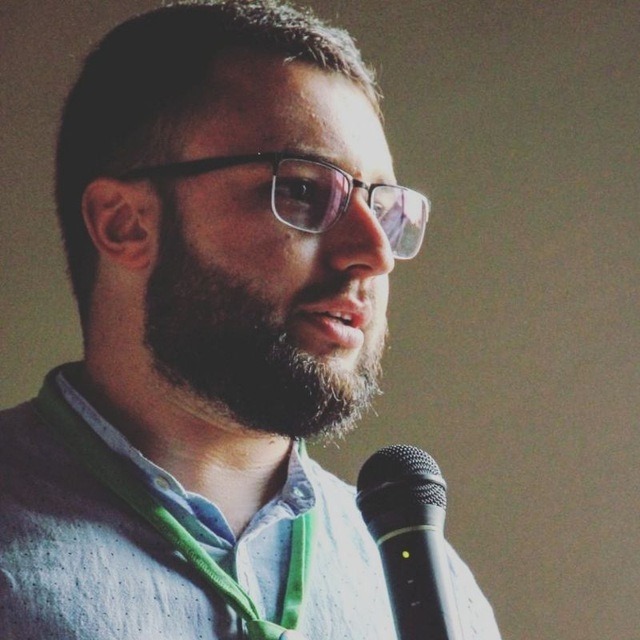
We spoke with Davide Quadri, political advisor to Patriots for Europe and International Secretary of the youth wing of the Italian party Lega, about implementing remigration, demographic challenges, and the situation in Italy.
Mr Quadri, you are active within the youth wing of the Italian conservative party Lega. Can you please tell us a bit more about your role within the Salvini´s party and how the party is doing these days?
I serve as the International Secretary for Lega Giovani. My main responsibility is to build and strengthen a network with like-minded patriots and youth movements across Europe. The Lega itself is strongly rooted in the local territories, where it represents the concerns of ordinary citizens and provides concrete answers on the ground. At the national level, Lega plays a central role in government, bringing its values and priorities into policymaking and defending the interests of Italians and the local community.
You are also active within the Patriots for Europe, the national-conservative group in the EU parliament. Why did Lega decide to join this group, and what is your role within this group?
Within the Patriots group, Lega chose to join this group because of the strong alignment of values and objectives it shares with the other parties involved. This is a coalition marked by coherence, consistency, and loyalty to its principles—something that distinguishes it from other political groups in the European Parliament. It is no surprise that the Patriots group is becoming increasingly attractive to representatives from other, more “identity-oriented” groups, who see in it a credible and solid platform for cooperation.
The leader of Lega, Matteo Salvini, was smeared and attacked by the media and even dragged into courts by the Italian »justice« system, because of his staunch opposition to mass migration and actions with which he wanted to curb the migrational wave. What is the current situation regarding this? Was he cleared in the courts?
We cannot forget the excellent work done by Matteo Salvini when he served as Minister of the Interior, especially on issues of border control and national security, for which he was attacked by a left-wing judge. Today, Minister Piantedosi is carrying forward important policies with professionalism and determination, yet it is clear that on migration, more still needs to be done, but we are in a better direction than in the past.
How do you view Meloni´s government policies on mass migration, and what is the government currently doing to stop the illegal migrations in Italy?
The current government is working seriously on the migration front, with agreements with third countries and other policies, but the results are still not sufficient. The problem lies in the many structures and organisations that profit from migration and see Italy as a safe harbour for landings. This perception is unfortunately reinforced by the complacency of a certain politicised section of the judiciary, which often obstructs government action. This is not just an opinion, unfortunately—it has been documented by investigative reports published in major Italian newspapers.
In May, you attended the big Remigration Summit in Milan, which various leftist groups wanted to prevent. What were your impressions, and do you believe remigration might become a policy in Italy in the future?
Italy must show greater courage by opening a frank and serious debate on remigration. The government should not be afraid to propose legislation inspired at least by the Danish model—an approach adopted, notably, by a left-wing government. The right should not shy away from drafting a clear legal framework that allows for the return of migrants who have no right to remain in Italy, particularly those who entered irregularly, those whose asylum applications have been rejected, or those who pose a threat to public safety. This is not about ideology, but about common sense and responsibility towards our citizens. This are measure that places order, legality, and social cohesion at the centre. Remigration also means protecting Italy’s welfare system, which is often under pressure because of uncontrolled flows. It allows resources to be directed towards those who genuinely need them, and towards Italian families struggling with low birth rates and economic challenges. Ultimately, it is about ensuring that immigration is sustainable, regulated, and in line with Italy’s national interest.
Tell us a bit about the current demographic situation in Italy.
Italy’s demographic situation is alarming. The answer to the declining birth rate cannot be mass immigration. What is needed is a comprehensive set of social and family policies that allow couples to have children without being forced to choose between family and career. Too often today, having children in Italy is seen not as a blessing but as an economic burden. Italy should take inspiration from Hungary’s pro-family policies, which have successfully encouraged higher birth rates by supporting young families.
What is the current situation with »woke« ideology, LGBT+ groups and NGOs? Does the current government curb their agenda?
In Italy, the so-called woke ideology is far less pervasive than in other countries. Italians are pragmatic: they care about real issues such as jobs, security, and economic stability. This is why attempts to impose a woke or ideological agenda consistently fail at the ballot box. Certain media outlets, often echoing the U.S. liberal press, still try to push these narratives, but they are increasingly out of touch with public opinion. Italians are, in fact, much more tolerant and reasonable than the progressive establishment portrays abroad.
Thank you for the interview. Would you like to add anything for the end?
I want to thank you for your attention and raise awareness among the Slovenian public about the challenges we face, which concern us all at the European level, in order to defend the Europe we know and deeply love.
Biography
Davide Quadri is the International Secretary of Lega Giovani, the youth wing of the Italian party Lega led by Matteo Salvini. He is also a political advisor to the Patriots for Europe group in the European Parliament and a co-founder of the international patriotic network, Patriots Network. Between 2011 and 2014, he studied economics at the University of Insubria (Università degli Studi dell’Insubria), and between 2022 and 2025 at Pegaso Telematic University (Università Telematica Pegaso).