By:C. R.
Representatives of the Srebrna nit Association will file a constitutional appeal following the Supreme Court’s decision to reject their lawsuit regarding the referendum on assistance in voluntary ending of life. They believe the court changed its case law without providing an explanation, which amounts to a violation of the principle of equal protection of rights, said Bogdan Biščak.
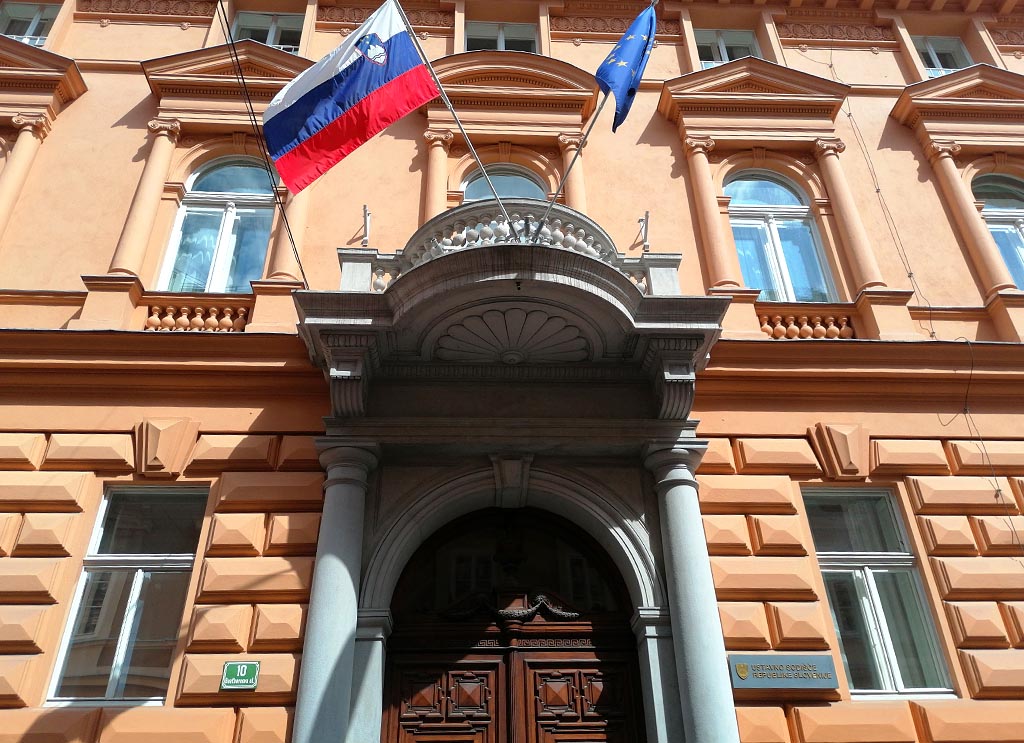
Despite certain unlawful actions, the Supreme Court has rejected the lawsuit in which the petitioners Bogdan Biščak, Andrej Pleterski, Dušan Keber, Igor Pribac, and Brigita Skela Savič challenged the validity of the referendum on the law on assistance in voluntary ending of life. The court ruled that they had not proven that the established violations during the campaign influenced the will of the voters or that the outcome would have been different without these irregularities.
In a statement to the media today, Biščak said that they would file an appeal within the prescribed deadline, which is no later than 60 days. “We expect the Constitutional Court to uphold our appeal, annul the Supreme Court’s ruling, and likely instruct it to reconsider the matter,” he said.
He added that they had hoped for a different decision, as they believe that, as plaintiffs, they were not required to prove that the irregularities in the referendum campaign did influence the result, but only that they could have. Biščak reiterated that this is the criterion introduced by the Constitutional Court in its ruling on the referendum on the second railway track, when it annulled that referendum.
“In its ruling, the Supreme Court did not explain why it applied two different criteria, nor why it changed its own established case law. From this perspective, the ruling is extremely lacking and unconvincing,” Biščak said.
He stressed that the lawsuit was not filed solely to annul this referendum and repeat it, but “perhaps even more because we care about the direction our democracy will take in the future”. He believes that if the situation remains as it is, democracy may be at risk.
“We may ask ourselves whether anyone who wishes will be able to enter a campaign as an unregistered organiser without any of the legal obligations that apply to registered organisers. Whether people who can afford it will be able to finance campaigns run by unregistered organisers who are not required to report their funding. Whether lies will be permitted,” he listed. Biščak believes the Supreme Court missed an opportunity to rule that such practices should not be allowed in the future.
The proponents of the law agree with the part of the Supreme Court’s ruling that recognised that doctors and the Catholic Church violated the law, but they disagree with the court’s conclusion that the established violations are insufficient to annul the referendum result, Pribac said on behalf of the proponents.
“We believe that not only the parliamentary election campaign was dirty, but also the referendum campaign, perhaps even more so. Opponents of the right to assistance in voluntary ending of life regularly smeared us as deceitful murderers, poisoners. This false accusation disqualified us in advance as legitimate participants in public debate and placed us in an unequal position,” they argue. Pribac announced that they will continue the legal battle to define the limits of what is permissible in such campaigns. They will also continue efforts to establish the right to assistance in ending one’s life.
Pleterski added that the Supreme Court identified concrete irregularities in the campaign, which are now confirmed in case law as practices that must not be repeated. “In this sense, we can say that our appeal has also produced a positive result for the rule of law,” he said.
Keber emphasised that, in their view, the Supreme Court erred when it claimed that supporters of the law had the opportunity to respond to the opponents’ claims with counterarguments. “In reality, the opponents’ claims were not opinions that could be debated, they were lies that could be verified. They involved comparisons with Nazi legislation, descriptions of how these procedures supposedly work abroad, references to murders, and so on, all of which are false,” he said.
According to him, the Supreme Court effectively held that lies may be repeated. “We know from past experience that repeated lies certainly influence the perception of people who hear them,” Keber stressed.”