

By: C. R.
The transitional left has broken its teeth over opposing the intervention law and has lost the first battle. This happened in the National Council, which was expected to vote for a veto on the law but did not.
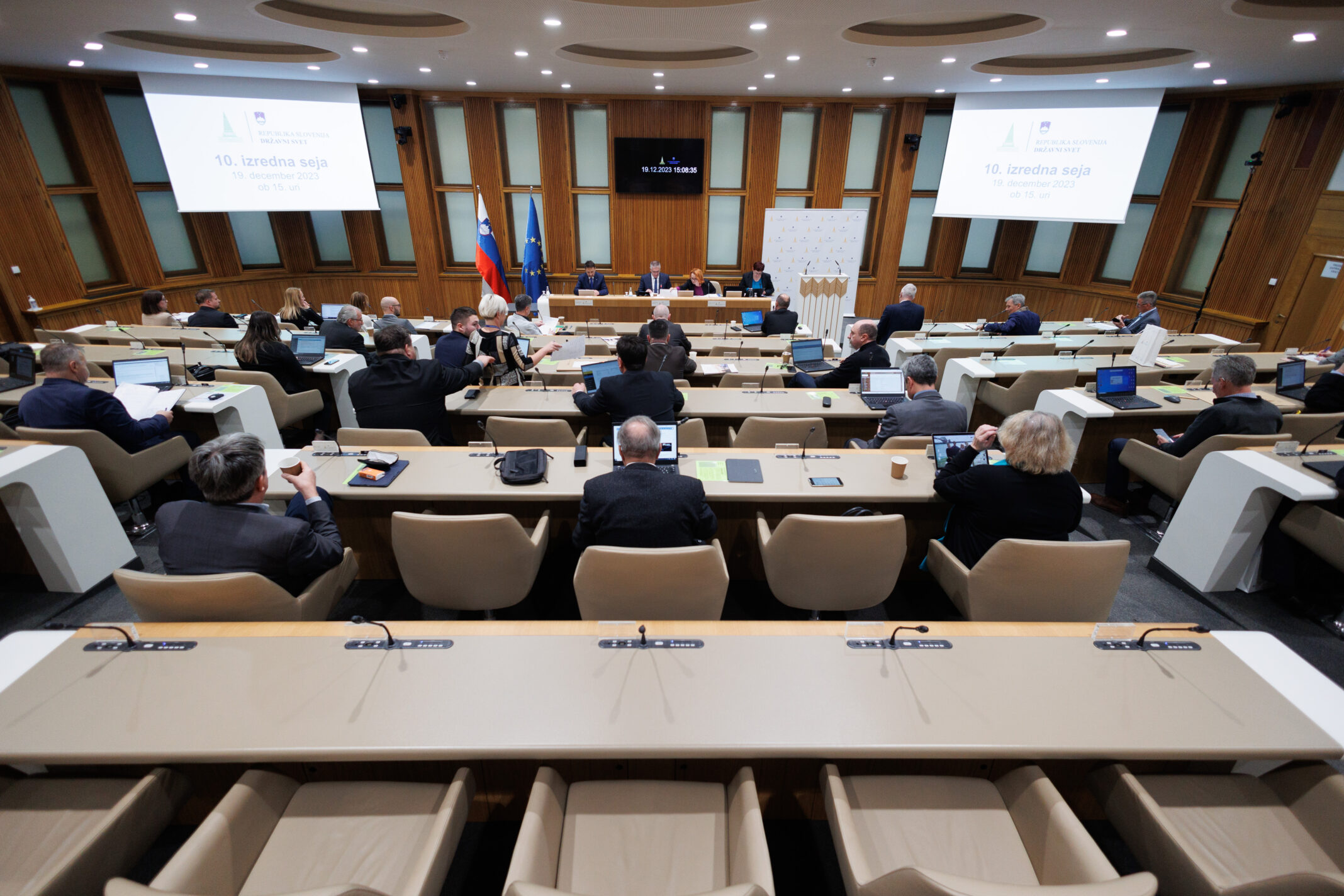
The National Council of the Republic of Slovenia, acting on the initiative of the Interest Group of Employees, discussed the proposal for a suspensive veto on the Act on Intervention Measures for Slovenia’s Development (ZIURS), which had been adopted by the National Assembly at its 6th extraordinary session on 11 May 2026. Prior to the session of the National Council, an extraordinary meeting of the competent Committee for the Economy, Crafts, Tourism and Finance was held, which did not support the veto proposal.
The proposer of the suspensive veto stressed that ZIURS is not, in substance, an intervention law, but a far‑reaching intervention into the fundamental systems of the welfare state, prepared and adopted without proper social dialogue and without the involvement of the broader expert and interested public. In her view, the law introduces solutions that are not developmental in nature but primarily benefit a narrow circle of interests.
The explanation of the veto proposal highlighted the rapid and, according to the proposer, unreasonable legislative procedure. Although the law was submitted under the regular procedure, its consideration, due to two requests for extraordinary sessions, proceeded in practice at the pace of an urgent procedure. As a result, according to employee representatives, the expert and broader public were almost entirely excluded.
The proposer emphasised that the interested public had initially not been invited to the joint committee session of the National Assembly, forcing trade unions to request participation afterwards, and even then, they were given only limited time to present their views. She also noted that, due to the timing and unexpectedly rapid convening of the competent committee, neither the National Council nor its committees were able to form their opinions in time. This, she argued, prevented the National Council from exercising one of its key constitutional powers.
The explanation also criticised the use of the so‑called omnibus legislative technique, as the law combines numerous substantively unrelated amendments in the fields of tax policy, social security, healthcare, the labour market, and hospitality. According to the proposer, this approach was also used to limit the possibility of a legislative referendum, since the law contains provisions on taxes and other compulsory levies, which are generally exempt from referendum.
The proposer further warned of potential constitutional issues in several provisions, including the automatic termination of employment contracts upon meeting retirement conditions, the regulation of recourse claims, and the temporary suspension of the entire new Hospitality Act.
According to the proposer, the law poses numerous risks to the stability of key social subsystems and may have serious consequences for public finances, potentially requiring interventions in rights financed from public funds and affecting the scope and/or quality of public services.
In the veto proposal, the Interest Group of Employees additionally stressed that the National Council, as guardian of the constitutional order, must warn against the unacceptable exclusion of social partners and the National Council itself from the legislative process, as well as the danger of adopting systemic changes without adequate societal consensus.
After the debate, National Councillors did not adopt the request for the National Assembly to reconsider the Act on Intervention Measures for Slovenia’s Development (ZIURS), as the required majority was not reached (14 votes FOR, 21 AGAINST).
The next option available to opponents is a referendum. They have reportedly collected 47,000 signatures; 2,500 are required to initiate the procedure. If the National Assembly rejects the referendum initiative on constitutional grounds, the proposers may still turn to the Constitutional Court.