

By: I. K.
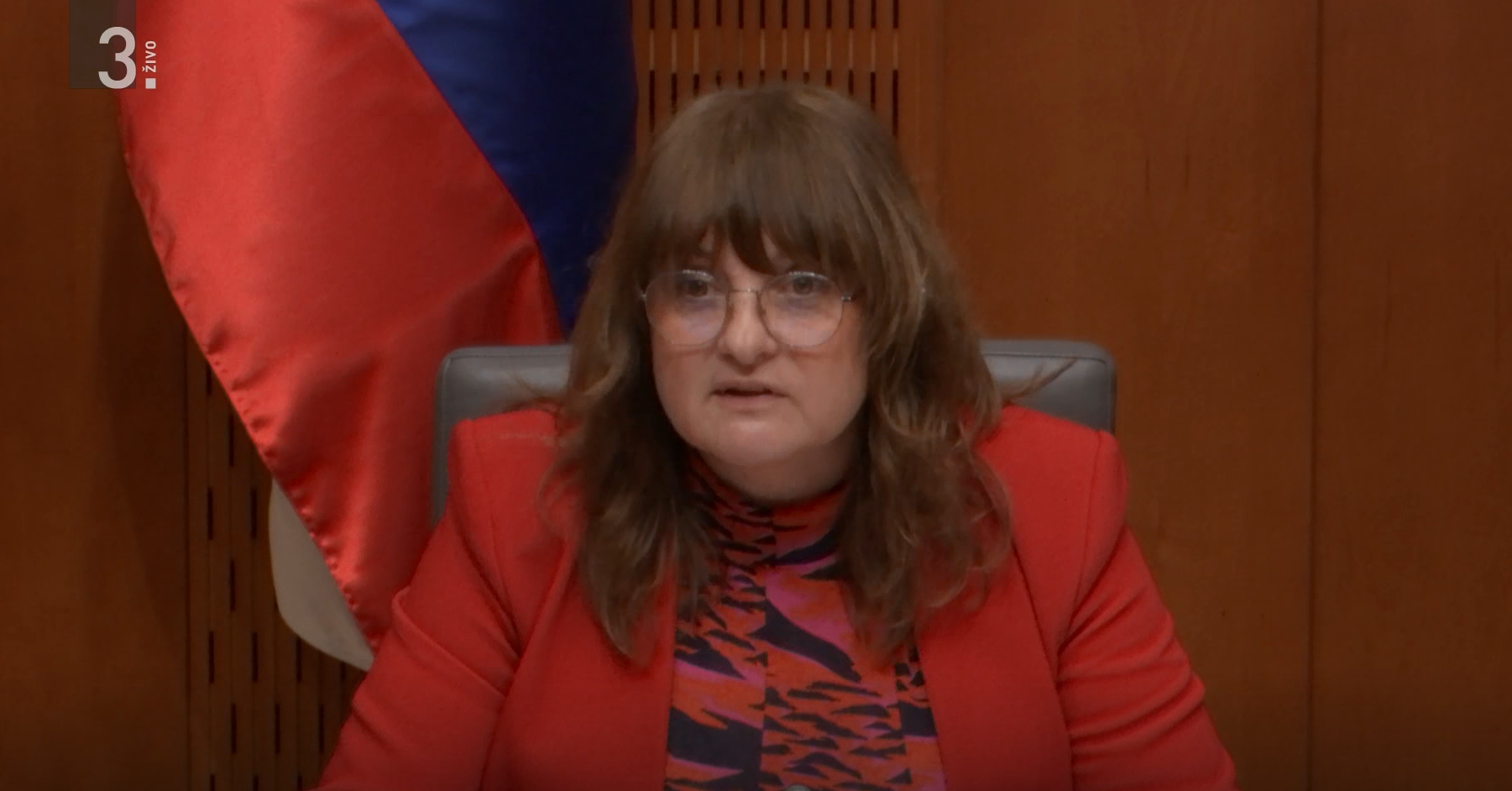
Only in Slovenia can it happen that a politician prosecutes a private company through political levers of power while simultaneously suing it in a private civil lawsuit. The company Nova obzorja d.o.o. has informed the National Assembly of the Republic of Slovenia, the heads of parliamentary groups, and the Commission for the Prevention of Corruption about such a case. There is a well-founded reason for the disqualification of the chair of the parliamentary inquiry commission, MP Tamara Vonta, who is investigating the independent media outlet Nova obzorja, which also includes our publication, while at the same time suing the company as a private individual.
In a letter addressed to the President of the National Assembly and the heads of parliamentary groups, the company Nova obzorja emphasises that Tamara Vonta is simultaneously the chair of the investigative commission examining alleged illegal financing of political parties and media propaganda, and a plaintiff in a civil lawsuit against the same company that is the subject of the investigation.
On April 7, 2025, MP Vonta, National Assembly President Urška Klakočar Zupančič, and MP Lena Grgurevič jointly filed a lawsuit against Nova obzorja d.o.o. The District Court in Ljubljana later partially dismissed the case due to lack of jurisdiction and transferred part of it to the Local Court in Ljubljana. Later, on September 10, 2025, Tamara Vonta filed an independent lawsuit against the same company (case no. III P 767/2025), thereby – as Nova obzorja stresses – becoming a direct party in legal proceedings against the entity she is investigating as chair of the parliamentary commission.
A textbook case of conflict of interest
Nova obzorja warns that this dual relationship between the MP and the investigated company creates a direct link between judicial and parliamentary proceedings, constituting a statutory disqualification under Article 3 of the Parliamentary Inquiry Act (ZPPre). This is, therefore, a textbook example of a conflict of interest.
If the MP continues to serve as chair of the investigative commission, she would be violating the Constitution of the Republic of Slovenia – particularly the principles of the rule of law, separation of powers, and the right to impartial adjudication – as well as the Integrity and Prevention of Corruption Act (ZIntPK), which stipulates that official conduct must be free of conflicts of interest and the appearance of bias.
It is not only a matter of whether the MP is personally impartial – the mere appearance of bias is sufficient. Case law from the European Court of Human Rights (especially in Piersack v. Belgium, De Cubber v. Belgium, and Hauschildt v. Denmark) emphasises that objective impartiality must always be ensured.
Disqualification should have occurred ex officio
In its legal explanation, Nova obzorja states that the disqualification arose automatically (ex lege) on the day the lawsuit was filed. In their view, the MP should have ceased her work on the commission at that point and formally notified the President of the National Assembly. Until the Assembly decides on the matter, she should be temporarily denied access to commission materials and information, which is a legal obligation under ZPPre, not a discretionary option.
For this reason, Nova obzorja proposes that the commission: acknowledge the existence of a disqualification reason for MP Tamara Vonta; temporarily deny her access to commission materials and participation in its work; notify the President of the National Assembly of the disqualification; propose her removal from the position of commission chair.
Until the Assembly reaches a decision, the commission should be led by the vice-chair or the oldest present member to ensure the legality and impartiality of the proceedings.
Why did not she recuse herself upon filing the lawsuit?
Company director Boris Tomašič emphasises that the purpose of the disqualification request is to “ensure constitutional legality, impartiality, integrity, and credibility of the parliamentary investigative commission’s work, and to protect the reputation of the National Assembly of the Republic of Slovenia.”
The question that arises is why MP Vonta has not recused herself, given the clearly demonstrated conflict of interest. If she lacks basic legal understanding and political culture, then National Assembly President Urška Klakočar Zupančič should have done so, she is, after all, a lawyer herself and also participated in the lawsuit against the same media outlet. The behavioural patterns of the Freedom Movement clearly show a desire to act like their political predecessors, who simultaneously held executive, legislative, and judicial power. In totalitarian systems, the concept of conflict of interest simply does not exist. There, power is always wielded against the people. Tamara Vonta evidently aspires to be that kind of authority figure.


