

By: Nova24tv.si
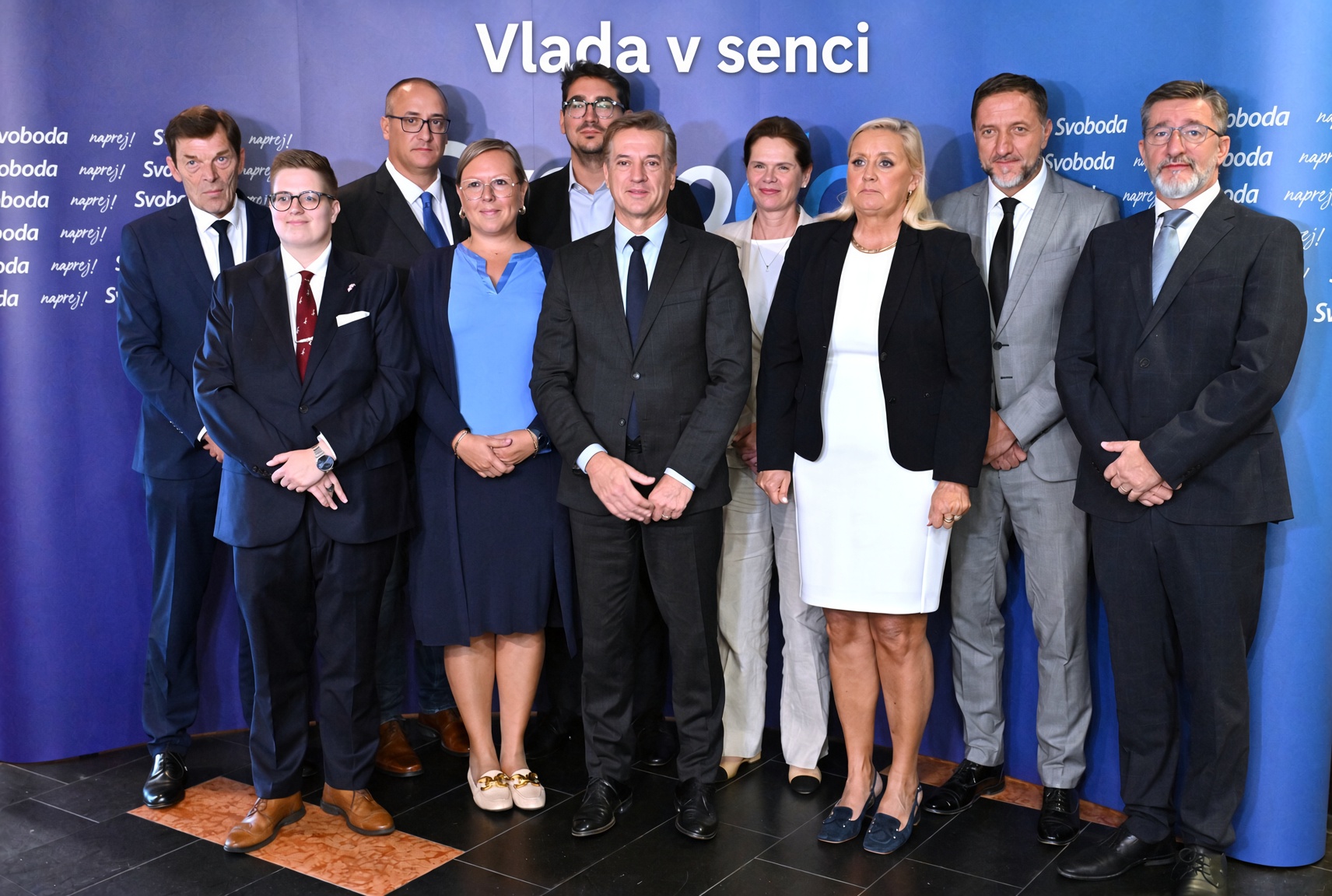
On the 100th day of Janša’s government, the shadow government began operating. Coordination and leadership of the team were taken over by former prime minister Robert Golob. Although he hoped that partners from the former coalition would join the project, Freedom, after the rejections that began arriving soon after the idea was presented, will be forced to run the shadow government alone. As it begins operating, the question arises of how much media space mainstream outlets, traditionally sympathetic to the left‑leaning political bloc, will devote to them, and how much to the actual measures of the current government.
When the leader of the former ruling party, the Freedom Movement, announced the establishment of a shadow government, with which, according to him, they want to fulfil the trust voters twice expressed in elections, the announcement received considerable attention. So did the rejections from related parties. According to STA, the SD party stated that “they do not need frameworks in which one political party sets the rules.” They are convinced that the Freedom Movement is not the only political force capable of leading Slovenia. In Vladimir Prebilič’s Prerod party, they pointed out that they were not part of the previous government and therefore do not see themselves as part of a shadow government under Svoboda’s leadership. In their view, the task of the opposition is to prepare better, professionally grounded solutions, not merely to criticise the authorities, for which a shadow government is not necessary, but “knowledge, political will, and readiness to work are.”
Even before the first regular session of Golob’s shadow government, held on Sunday, Delo published an extensive interview in which a Svoboda MP insisted, in a populist tone, that “unfortunately, they have done nothing for the people so far.” Other media also reported that the shadow government would begin operating on Sunday, linking it to the 100 days of Janša’s fourth government. Among other things, Svoboda’s statement could be read that the shadow government would represent “a political and professional alternative to the current government.”
It is difficult to speculate how much space mainstream media will devote to the criticisms of Golob’s shadow government, but given their political preferences, it can be expected that they will not be pushed to the margins, after all, they can thank these media for securing their first mandate. And, of course, NGOs such as those led by Jaša Jenull and Nika Kovač.
Golob revealed even before the shadow government began operating that he would take over the health portfolio himself. SDS parliamentary group leader Jelka Godec responded to this announcement on the social network X, reminding the public of his actual record during the previous government. “The minister of health in the shadow government will be opposition MP Golob. Once he was the prime minister who carried out the wildest privatisation of healthcare in the history of Slovenia. And as we say here, in healthcare he ‘messed up everything that could possibly be messed up.’ Today, under the Palestinian flag, he shouts that he is fighting for the well‑being of Slovenian patients,” she wrote. Since Golob did not reveal the other members of the shadow government, social networks began circulating ideas about who might cover each portfolio. “A lot can already be said about the shadow government simply by the fact that they could not find anyone to lead the health sector. Golob will lead it himself. And the others? Ribič could take finance, Tina Gaber agriculture, Marcel culture,” SDS MP Jana Gržinič noted. Another idea appeared on X: “Shadow government and new ministries: – for looting: Alenka B., for feeding slackers: Mesec, for Gaza and backwaters: Vasev, for order and peace: Jenull, abortion and euthanasia: Nika, for tourism: Dubai Tina.”
Suddenly, they are supposedly full of ideas
On Sunday it became clear that Golob’s shadow government intends to organise its work in the areas of cost‑of‑living pressures, economy, competitiveness and public finances, seniors and social security, youth, future and knowledge, healthcare and long‑term care, energy security and infrastructure, and order, safety and peace. Alenka Bratušek, Klemen Boštjančič, Matej Grah, Vinko Logaj and Jure Leben are the names that joined Golob in criticising the current government. Bratušek will take over seniors and social security, Logaj youth and knowledge, Boštjančič economy and public finances, Leben energy and infrastructure, and Grah order, safety and peace. “Shadow government?! A tragicomic session during Sunday lunch with a few leftovers from Golob’s former cabinet. When you see Mojca Seliškar Toš or Jure Leben, you know that Golob, whose head Tina Gaber keeps filling with ‘Robi, you are still the prime minister’, practically has no one left. But it is also a reality check for ‘big’ Klemen Boštjančič, who – clearly – also has nowhere else to go. And Miran Videtič is right: this is no longer politics, it is a diagnosis,” long‑time journalist Bojan Požar commented.
Golob insists that the goal of their work will not be merely criticism of the current government, but especially the preparation of measures for the widest possible circle of people. He says they want to show that things can be done differently, that measures can be prepared in a “dignified manner.” He also claims they are assembling a team “ready to take responsibility for leading the country immediately.” “It will continue the work begun in the previous term, respond to new challenges, and offer its own solutions,” they maintain. All of this naturally raises eyebrows, after all, these are people who had four years to turn ideas into legislative solutions for the benefit of citizens. Many at the time felt that the party formed just before the previous elections was essentially implementing the Left’s programme, and it is no small detail that during the last coalition negotiations Svoboda reportedly struggled to produce a convincing draft coalition agreement. Now the public is suddenly expected to believe they are full of ideas and ready to roll up their sleeves to fix much of what they themselves caused (for example in long‑term care).
If there were genuine desire to work for the benefit of citizens, Svoboda could have accepted the offered hand of cooperation, something the left bloc is never capable of offering, even though it claims to be inclusive, tolerant, respectful, etc. Instead, they preferred to reject the offer, because power is what truly motivates them, and they hope to regain it through constant criticism of the government and desperate PR manoeuvres, such as filing a proposal for the impeachment of the prime minister, even though it is crystal clear in advance that it will fail given the balance of power in parliament. Apparently, it is indeed difficult for some to accept that in a democracy, it is normal for governments to change.