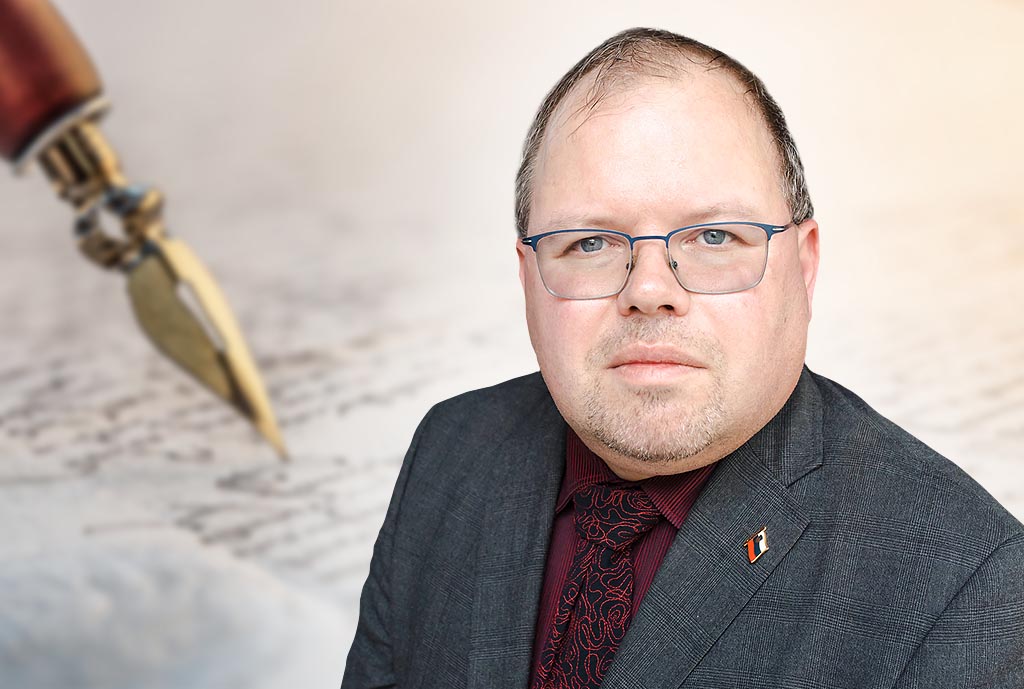
By: Gašper Blažič
So much has already been written about the controversial law to be decided this Sunday that I will not delve into all the details listed by numerous representatives of the professional public, doctors, lawyers, and indeed many ordinary people as well. Instead, I will write a few words about the reactions of the law’s advocates. For their communication is truly unusual.
Why unusual? Above all because, if opinion polls show the government set to win this referendum overwhelmingly, with the controversial law supposedly enjoying two‑thirds support, its advocates ought to be perfectly calm. Yet clearly, they are not. I must add first that many who fanatically defend the euthanasia law are in fact indifferent to it. They defend it mainly out of a sense of supposed moral, intellectual, and social superiority over those of us who oppose it, whom they brand as backward, fanatics, and sadists. One could say it continues the old avant‑garde hatred born at the start of the communist revolution. For them, hatred is life’s nourishment; they cannot live without it. Dr Stane Granda was right when he wrote in Družina that this is a kind of “popular counting” by the chief of Slovenian paganism, meaning Milan Kučan, who recently revealed himself as a master of demagogy by invoking the word “monopoly.”
Here lie other snags in their argumentation. Just today on X I saw a leftist fanatic respond: “You will not decide about MY life.” Wait a moment, what are you talking about? So far, according to this logic, others have decided about one’s life (and Kučan hinted at exactly this in his video). Now, if the law passes, each person will decide when they want to die. But here is the catch: many fanatics who boast of thinking with their own heads can be programmed in seconds to parrot the arguments of the last party boss, only slightly rearranged. So, according to this or that troll, I supposedly have a say in when they die? Truly unbelievable – while they loudly proclaim their wet dreams of having to finish off today’s “White Guardists,” that is, all Janšists, right‑wingers, and “Catholibans,” by throwing them into Huda Jama and completing the job the revolutionaries of 1945 supposedly did too poorly.
Truly a culture of death. So much for their “monopoly” on killing.
Given all this, slogans like “my body, my choice” collapse like a house of cards under the most basic scientific premises. Why, for example, do these comrades who so fanatically defend Golob’s modern “Mengelism” not ask why someone like Dušan Keber was not born as a black man in Burkina Faso in the 15th century? I did not choose my birthday, year of birth, birthplace, nationality, race, mother tongue, or even height – these were given. I may change my name or residence, but some things are fixed. Similarly with unborn children: as Nika Kovač loudly proclaims, the slogan “my body, my choice” ignores the fact that from conception a child has its own DNA, which immediately refutes the claim that it is merely part of the woman’s body, like a temporary organ.
We must pay attention to something else: how the advocates of these woke, leftist, pseudo‑progressive ideas conceive of ethics. For them it is only a social contract, valid until society decides otherwise. If society decides marriage between a human and a dog is possible, then it is legalised. There are no objective moral norms to prevent it. This reveals that modern progressives dismiss natural law entirely. Complete ethical scepticism and relativism: no highest good, no objective norm. The consequence: law based on human instinct; Peter Singer would applaud.
And believe me, in a society without objective moral norms, life is dangerous. Someone may kill you and not be punished, because they had a “justifiable” reason and did not consider it wrong. Listen to the statements of mass criminals: they all acted with “good intentions,” which often pave the road to hell. At worst they claim they acted according to laws, though sometimes not even the laws they themselves passed. In such cases we speak of bandits.
That is why I have a strong argument to cast my vote AGAINST in the referendum. Because I do not want social ethics to be the arbitrary agreement of a handful of mandarins whose only measure of morality is their own interest and whim, their passing impulse.