

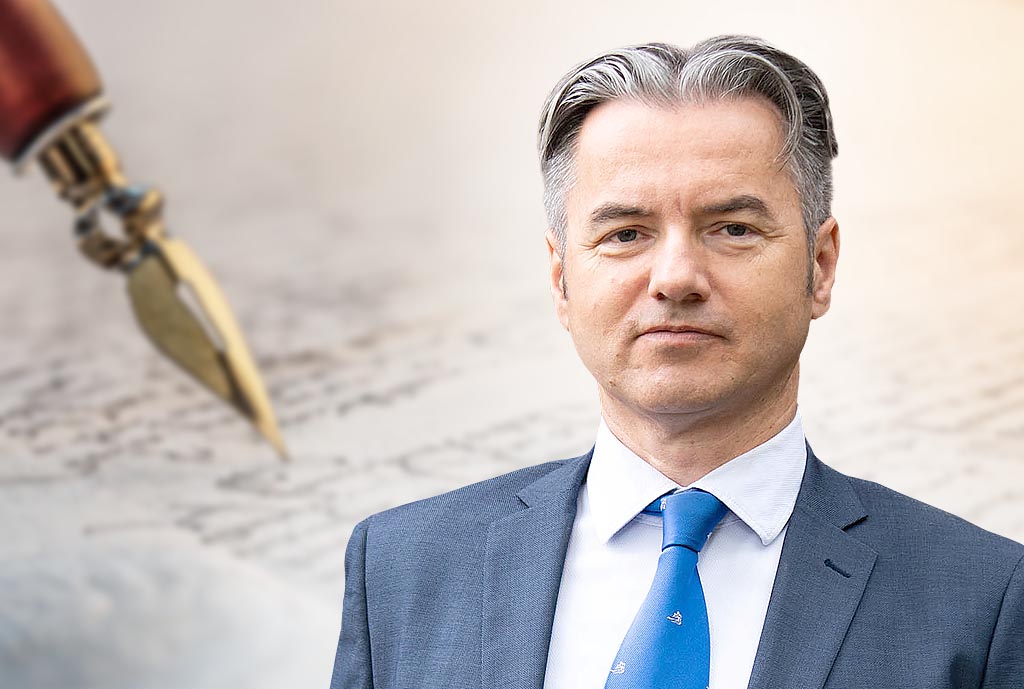
By: Dr Metod Berlec
Parliamentary elections in Hungary have brought a major change, the kind this country has not seen in more than a decade. The Tisza party, led by Péter Magyar, won convincingly and thus opened a new political chapter. Yet despite this, neighbouring Hungary will continue to have a centre‑right government. Hungarian voters expressed a desire for a change in the way the country is governed, not for a pronounced ideological shift to the left, as Magyar is a centre‑right politician, and his party Tisza is a member of the European People’s Party (EPP).
Slovenia experienced a political shift in the recent elections, though in a somewhat different direction. The results show that the political landscape has moved to the right, but not enough to form a stable centre‑right government without difficulties. This means that, in Slovenia, more post‑election political wisdom, pragmatism and willingness to negotiate will be needed if we want a government capable of reversing the direction in which the previous left‑wing administration has taken the country. We write about this in detail in the magazine. Friday’s election of Resni.ca party president Zoran Stevanović as Speaker of the National Assembly – with the support of SDS, NSi, SLS, Fokus, the Democrats and Resni.ca – is the first serious signal that such an option is realistic. Although there is still a long way to go, this vote can be understood as a test of whether a programme‑based coalition can emerge, one that would not continue the previous policies but instead return Slovenia to a path of predictable, programme‑driven and responsible governance.
The reactions of pro‑government media and commentators have been intense. Part of the public, accustomed to the political dominance of the left bloc, is expressing discomfort at the possibility of a change in power. The attacks on Stevanović and the so‑called centrist trio show that the pressure is high – mainly because they are making decisions based on programme content rather than empty political slogans. If they were to support a new left‑wing Golob government, they would receive praise from pro‑government commentators but would simultaneously commit political suicide. Supporting a centre‑right option opens the possibility of a serious, programme‑based coalition. The fact is that the outgoing left coalition won 40 seats in the election, while the opposition won 48. The logical direction for forming a new government is therefore clear. Nevertheless, the outgoing prime minister and Freedom Movement leader Robert Golob has insisted that he will do everything “to prevent a fourth Janša government.” This statement shows that the transitional left has not yet come to terms with the new political reality and that post‑communist networks and left‑wing NGO para‑structures will once again mobilise to prevent serious change.
Slovenia now stands at a crossroads. The possibility of change exists, but it will require sober judgement and courage. If reason prevails, we may get a government that will steer the country toward a more stable, developmental and responsible future. If not, we will once again witness a continuation of left‑wing experiments that are leading us (macroeconomically) toward collapse.