

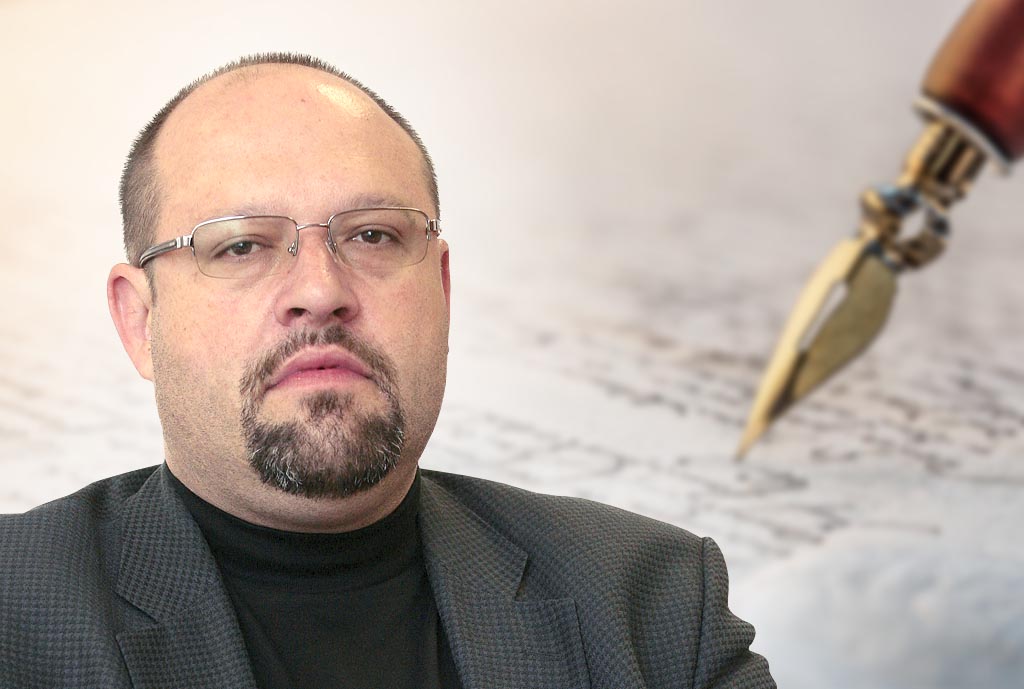
By: Dr Matevž Tomšič
One of the most interesting and, in terms of long‑term political development, most important findings of this year’s parliamentary elections is the shift of young people to the right. Younger generations largely voted for political parties positioned to the right of the centre. Support for the right increased inversely with the age of voters. If we compare support for the two largest parties on each side of the political spectrum, the Slovenian Democratic Party and the Freedom Movement, we can see that the former enjoyed a clear advantage among the youngest voters (aged 18 to 25), while the latter dominated among older voters (over 65). Among middle‑aged voters, support for the two parties was roughly equal.
These results are not a major surprise. Other European countries have also seen rising support for right‑wing parties among younger generations of voters. And similar patterns have appeared in several studies conducted in Slovenia. All of this dispels the myth that young people are “naturally” progressive and liberal, if not outright revolutionary, and therefore almost predestined to vote for the left. This myth has been reinforced by the media, the education system, and popular culture. It has been upheld by baby‑boomer opinion leaders who projected their own mental frameworks and values onto younger generations.
But now things are turning upside down. And the left‑leaning actors who dominate public discourse are not pleased. This is why we hear various real or imagined experts framing this political shift as a problem, almost in the tone of: “Is something wrong with young people, are they even normal?” Such assessments range from concern to condescending paternalism, like that of Samo Uhan, dean of the Faculty of Social Sciences in Ljubljana, who claims that young men with lower education do not understand certain issues, for example, the link between taxes and public services, and therefore fall prey to manipulators (right‑wing ones, of course) and consequently vote “incorrectly”. But such reactions are typical of a hegemonic environment in which anything that contradicts the left‑wing ideological canon is portrayed as abnormal, suspicious, or even dangerous. And these “concerned” opinion leaders are part of the system that maintains this state of affairs.
Young people are often described as rebellious, inclined to oppose the existing system and authority. And with their political choices today, that is essentially what they are doing. They are rejecting the status quo in a society where, in Slovenia’s case, the status quo is maintained by left‑wing politics and the power structures connected to it. It is a system of privileges largely inherited from the former regime, from which the vast majority of today’s Slovenian youth gains nothing. Many of them understand perfectly well the connection between taxes and public services, but they believe those services no longer serve their purpose; instead of helping those who truly need support, they help preserve existing social hierarchies. Ordinary young people who live off their own work can see how some of their peers glide through life effortlessly – simply because they have the “right” pedigree. And on top of that, these same people lecture them from their pedestals about how they should think, what they should believe – and whom they should vote for. Is it really hard to believe that such a system repels them? And that this is why they behave “politically incorrectly”?
Right‑wing parties may view this trend with optimism. One might conclude that their voter base will continue to grow, while the opposing side’s will shrink (simply due to biological realities). But nothing about this is automatic. To retain long‑term support from new generations of voters, they will have to deliver concrete results in the form of deep reforms that create conditions in which people can freely dispose of what they produce – without state‑political paternalism.