

By: Spletni časopis, Nova24tv.si, C. R.
MPs from SDS, NSi, SLS, the Democrats, and Resni.ca have officially submitted to parliament the proposal to appoint Janez Janša as prime minister.
The proposal was submitted today at 12:00 under reference number 020‑12/26‑47/1 (EPA: 76‑X), with Jelka Godec, the leader of the SDS parliamentary group, as the first signatory. The proposal includes the candidate’s handwritten consent.
The National Assembly must now vote on the proposal within seven days at the latest. If Janša is elected, he will become prime minister for the fourth time, a feat previously achieved only by Janez Drnovšek. For a short period, the country will have two prime ministers: until Janša’s ministerial team is confirmed by MPs, Robert Golob will continue to lead the outgoing government in a caretaker capacity.
The proposal to elect Janša was also signed by representatives of Resni.ca – Zoran Stevanović, Katja Kokot, Nedeljko Todorović, Aleksander Štorek, and Boris Mijić, indicating that the centre‑right has succeeded in assembling a diverse and broad coalition for the new government project.
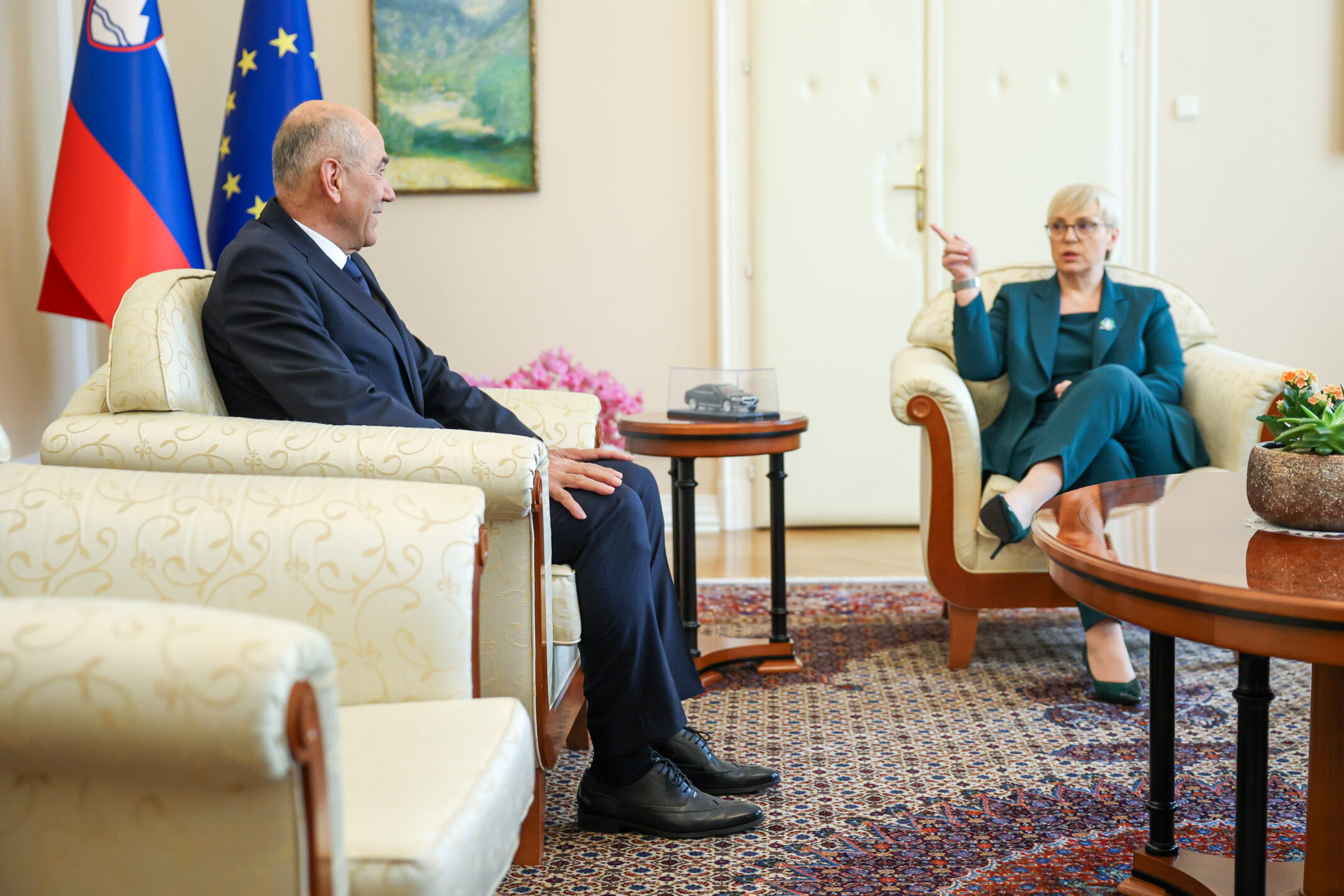
President Nataša Pirc Musar has so far not proposed a technical prime‑minister‑designate, as Svoboda urged her to do yesterday in an attempt to prevent the formation of a centre‑right government. It appears that Svoboda’s manoeuvre has failed. The proposal to appoint Janša is as follows: ImisnetAgent (7)Prenos
Pirc Musar’s attempt unsuccessful
After yesterday’s revelation by Svoboda that they wanted President Nataša Pirc Musar to propose a technical prime‑minister‑designate, we are still waiting to see whether, in the second round of selecting a prime minister, she will comply with the wishes of the leader of the party that has governed in recent years and put forward her own candidate, on whom parliament would vote first. If rejected, MPs would then vote on the proposal submitted by the majority.
In the first round, Pirc Musar gave up after just two weeks, even though the constitution allows 30 days, once it became clear that Golob could not secure a majority for himself. The haste was unusual, given that a majority for Janša was very likely. But the president was elected on the proposal of Milan Kučan and with the support of left‑wing parties, and she is politically left‑leaning, opposed to a centre‑right government. The idea of a technical prime minister appeared in the media just before today’s deadline for submitting candidacies, suggesting that its main purpose was to increase pressure on centre‑right MPs who might still be undecided. If they had been serious, there would have been enough time to check whether such a candidate had actual parliamentary support.
The idea of a technical prime minister shows that Golob, within his bloc, is willing to give up leading the government to prevent Janša from taking power. When forming his supposed government of national unity, Golob did not even invite SDS, the second‑strongest party, to talks. With the technical‑mandate idea, he is now trying to salvage a weak position by offering only political instability as an alternative: by opposing Janša, they hope to force early elections so that Golob could continue leading the government for a while, despite losing legitimacy in the election, where his coalition now holds only 40 seats (down from 53). To retain power, they would suddenly offer a prime minister who received no electoral mandate, calling him “technical”. Something similar happened when Alenka Bratušek was offered instead of Zoran Janković, enabling her to quickly cover a half‑billion‑euro hole in the bankrupt private banks Probank and Factor banka, shielding their private owners, left‑wing tycoons who controlled much of the economy.
Today, due to salary increases and bonuses paid outside budget plans – Introduced just before the election to help Svoboda, SD, and Levica stay in power – public finances face major problems, especially in healthcare and the state budget.
The last‑minute idea of a technical prime minister mainly serves to conceal the real goal: destabilising the country to retain power.
48 votes for development
Janša’s candidacy was supported by 48 MPs, the same number Zoran Stevanović received when elected president of the National Assembly. The candidacy was formally submitted by a group of MPs with Jelka Godec as the first signatory, marking the final procedural step before the vote.
The political landscape in the National Assembly has clearly consolidated around the new coalition majority, consisting of SDS, New Slovenia, SLS, Fokus, and the Democrats. All these parties confirmed the coalition agreement for the 2026–2030 term before the deadline, expressing support for the joint government project, which will likely be led by Janez Janša. The party Resnica is also joining the process, not as a coalition member, but as a supporter in the vote.
In recent days, New Slovenia and the Democrats first confirmed their support for the substantive part of the coalition agreement, followed by SLS, Marko Lotrič’s Fokus, and SDS, which will take over leadership of the executive branch. With this, the formal conditions for submitting the candidacy and beginning parliamentary debate have been met.
Janez Janša has already led three governments and is one of the key figures of Slovenia’s independence. He is among the most capable and experienced politicians in the country, having demonstrated strong leadership, strategic thinking, and the ability to form stable governments in challenging times.
According to the likely prime‑minister‑designate Janša, the future coalition has 48 votes, together with Resnica and its president Zoran Stevanović, who announced that his party would contribute signatures for the candidacy.
The last breaths of the left
Meanwhile, in the “final hours”, parts of the left‑wing political sphere and mainstream media began promoting the idea of a so‑called technical prime minister. This was largely a last attempt to prevent the formation of Janša’s fourth government, after negotiations on an alternative failed. Many point to the political exhaustion and unsuccessful strategy of Robert Golob, making the technical‑mandate idea appear more like a PR manoeuvre without real parliamentary support.
If deadlines proceed without complications, the parliamentary vote on the prime minister could take place as early as Friday. If successful, Janša would assume the mandate to form a government for the fourth time, marking the beginning of a new governing period based on a coordinated programme of coalition partners.