

By Andrej Sekulović
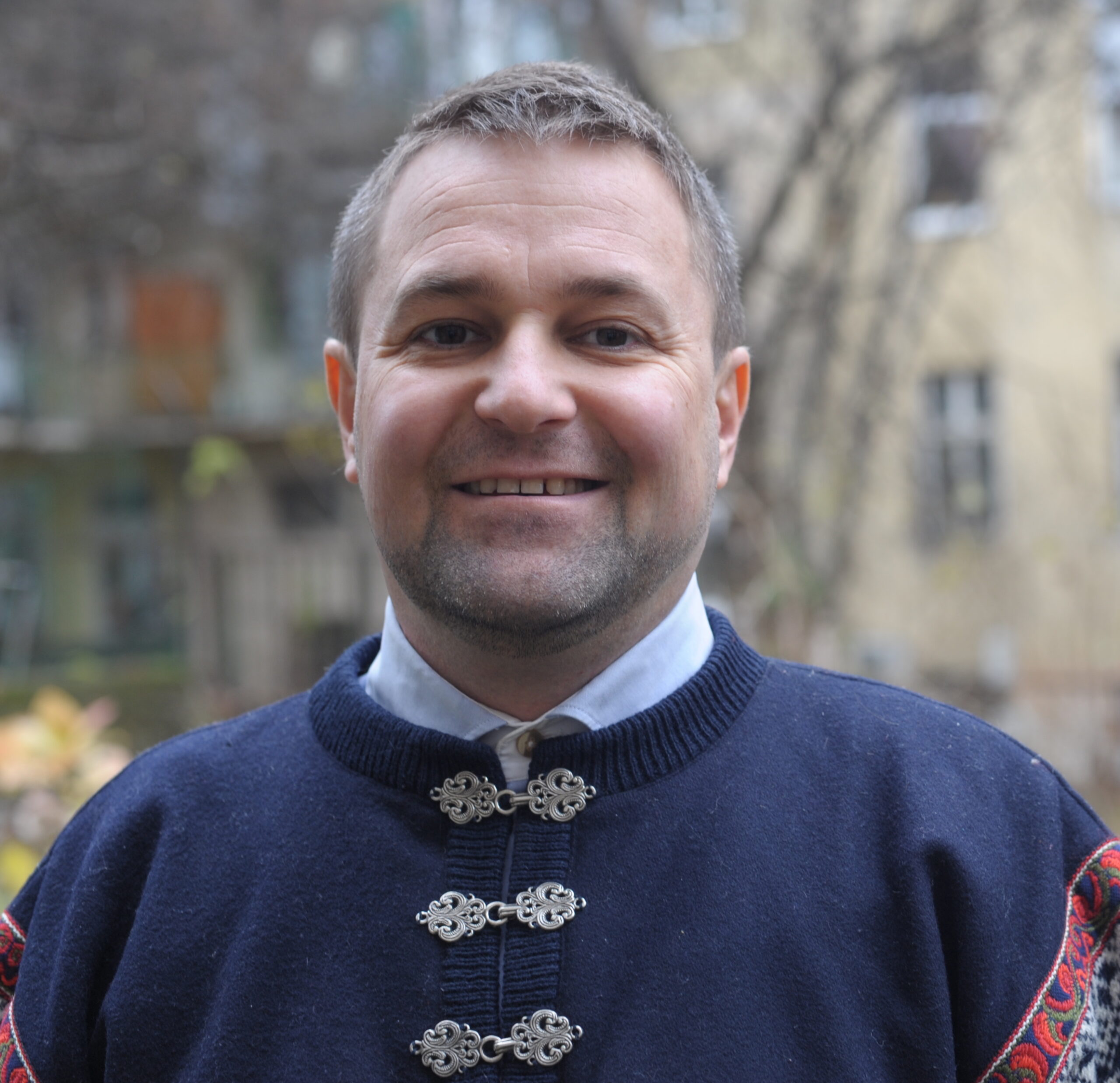
Tore Rasmussen is a Norwegian publisher, founder, and editor-in-chief of Legatum Publishing and the news portal Rabulisten. We spoke with him about publishing, the political situation in Norway, and the threat of mass migration.
First, can you tell us a bit about your work as a publisher? Why did you decide to form Legatum Publishing?
I founded Legatum Publishing to translate and publish Martin Lichtmesz’s Ethnopluralismus: Kritik und Verteidigung in English as Ethnopluralism: Critique and Defence.
I see ethnopluralism as a key concept for the New Right, one that deserves a fair and thorough explanation. Critics dismiss it as a covert form of racism. I see it instead as the vital, if hard-to-define, fusion of culture, history, heritage, and character that forms the soul of a people and is worth defending. Martin Lichtmesz is the first author to explore this idea in depth, examining its meaning, potential, and the ways it can be misrepresented. The book will finally be released later this year, after several others unexpectedly jumped ahead in our publishing schedule.
Well, in addition to that, you also published some works by the well known French thinker Renaud Camus …
By chance, I was given the opportunity to publish the French political philosopher Renaud Camus. We were the first publishing house to translate and publish him in Norwegian. The publication sparked a major debate in Norway about the Great Replacement and free speech. We have since published multiple of Camus’ work in both Norwegian and English, but going forward we plan to focus more on English-language titles.
How would you define the main goal of Legatum Publishing?
The aim of Legatum Publishing is to produce wholesome, uplifting books that foster pride in our shared European heritage. Europe’s cultural diversity is something we must cherish and preserve. A few years ago, I visited several European cities for work. Between workshops and presentations, I sat in Paris sidewalk cafés and visited Notre-Dame, explored beer cellars in Germany, enjoyed melange and croissants in a Vienna café, and admired the Duomo di Milano over an espresso in Italy.
These authentic cultures contain a wealth of knowledge that deserves to be shared across Europe. I believe we can strengthen our pan-European identity by making each other’s authors and thinkers accessible across borders. Our ethno-cultural identity is layered: we are Europeans of different nations, we have our local identities: I am, for example, a Norwegian from the west of the country, unafraid of rain and wind, our national identities, and, in the civilizational sense, our shared identity as Europeans.
🇳🇴 Renaud Camus’ tale på Norgesdemokratenes remigrasjonskonferanse i dag ble svært godt mottatt. Og ja, vi har beklaget til Camus at boksigneringen spiste opp hele lunsjpausen hans. pic.twitter.com/m9fWUMoAJY
— Legatum Publishing (@LegatumBooks) August 16, 2025
What can you tell us about the current political situation in Norway?
This is an election year. A major event has been the international remigration conference REMIG 2025, which took place on August 16, organized by the Norwegian Democrats (Norgesdemokratene).
The day before the conference, German politician Lena Kotré of Alternative für Deutschland (Alternative for Germany) toured Oslo’s Grønland district together with party leader Geir Ugland Jacobsen. During the visit, they were attacked by communists and migrants, an incident that received massive media coverage in Norway. Grønland is one of the areas in Oslo that has undergone dramatic demographic changes, a reality which the organizers say has long been denied by the authorities.
Other speakers included Jeff Ahl from the Swedish think tank Heimr, Kenny Smith from the Homeland Party in Scotland, Jordan Crowley from the Irish National Party, and our author Renaud Camus.
With this highly successful conference and the symbolic visit to Oslo’s east side, the Norwegian Democrats assumed responsibility for one of Europe’s most urgent and suppressed debates: how to stop and reverse mass immigration. The party’s new policy paper on remigration is nothing less than a political breakthrough in Norway; courageous, detailed, and necessary.
I strongly believe that remigration is a rational response to a real problem. It is the responsible, democratic, and lawful answer to a long-term, undemocratic process: mass immigration without public consent, and with the growth of parallel societies that threaten social trust, economic sustainability, and national identity.
You mentioned the election year. How do you think the Norwegian Democrats will fare?
That said, I fear the Norwegian Democrats will not gain significant support until after the Progress Party (norwegian: FrP) has been in government and disappointed its core voters. I am not optimistic about Norwegian Democrats chances in the September parliamentary election. However, if the Progress Party becomes the largest party and takes the prime minister’s office, the Norwegian Democrats could be well placed to attract disillusioned right-wing voters by 2029.
What are the current official migration policies of your government, and what is the general situation with mass migrations?
Norway’s migration policy operates as a form of “voter import” for the left wing parties and aligns with what the UN calls “replacement migration.” The Confederation of Norwegian Enterprise (NHO), representing over 30,000 member companies, openly supports immigration to address an aging population and maintain a supply of working-age employees.
How does all this affect the demographic situation?
By 2019, nearly 30% of newborns had a mother born abroad, not counting children of second- or third-generation immigrants or those with an immigrant father. Combined with low fertility among ethnic Norwegians and a rapidly aging population, this points to a historic demographic shift.
Statistics Norway projects that the population will rise from 5.55 million today to 6 million by 2040, despite a total fertility rate of just 1.4 children per woman, well below replacement level. Growth is driven mainly by immigration and higher birth rates among certain immigrant groups from Asia and Africa.
Even in high-immigration scenarios, SSB acknowledges that the population will age dramatically, with the over-80 demographic more than doubling by 2050. The share of ethnic Norwegians will decline in both relative and eventually absolute terms. In every projection, Norwegians are on course to become a minority in their own country.
In liberal democracies, many politicians are elected on promises they do not keep, especially on mass migration. Is this also true in Norway?
Yes. The clearest example is the Progress Party. They campaign with tough rhetoric on immigration, but when in power admitted more refugees than before.
Norway’s membership in the Schengen Agreement since 2001 effectively ended our ability to fully control our borders. This has had a huge impact on asylum policy, making it easy for thousands to enter each year, often without genuine need for protection.
Parties like the Progress Party and the Conservatives (norwegian: Høyre) promise tighter control, but since they both voted for Schengen and still support it, their pledges lack credibility. Only the Norwegian Democrat is serious about restoring sovereignty and implementing remigration.
Are there examples of left-wing or liberal politicians obscuring the truth or lying on important issues, especially about migration?
On immigration, left-wing and liberal politicians often outsource direct falsehoods to the media.
One notorious case involved three non-European immigrants, two Somali men and one Afghan man, convicted of gang-raping a 17-year-old girl. In court, they mocked her, laughed, and high-fived each other. The attack was planned, systematic, and brutal. Yet regime media avoided mentioning their backgrounds, referring to them instead as “local men” from Nordfjord. None will be deported after serving their sentences.
Does Norway have strict hate speech laws, and how does this affect right-wing publishers?
Big Tech and social media companies are a bigger threat to free speech than current laws. For example, Vebjørn Selbekk, editor of a moderate Christian newspaper, had a TikTok video removed for stating that there are only two genders, classified as “hate speech.”
That said, hate speech laws are being applied more aggressively, making more statements potentially illegal. For Legatum Publishing, this is not yet a direct issue, but for my news site, Rabulisten.no it is a more pressing concern.
What can you tell us about Rabulisten?
I launched Rabulisten the 8th of May this year to promote national identity and report on the news the main stream media ignore or distort, as an independent voice that refuses to bow to globalist dogmas or the stifling grip of self-censorship. As Oswald Spengler predicted, the West in its late civilizational phase is losing the will to live, to grow, and to face the future. At the same time, ideological conformity has reached the point where stating that a woman is biologically female is treated as scandalous. Antonio Gramsci understood that the most effective power is exercised not through force, but through cultural hegemony, when the ruling worldview becomes so dominant that resistance feels unthinkable.
With Rabulisten we will be calling out the policies leading Norway down the same destructive path as Sweden, where mass immigration has produced parallel societies and clan-based structures that undermine the state.
In order to take over cultural hegemony, we must first challenge the existing one. The failures of multiculturalism are becoming increasingly hard for the regime to hide, and I believe alternative media outlets can play a vital role in shattering their propaganda.
How do Norwegians view mass migration, and what is the level of patriotism?
Support for the regime’s ideological agenda is falling. A Norstat survey found that 48% of Norwegians think LGTB+ celebrations have become “a bit too much.” Many parents now fear ideological indoctrination in schools and are seeking positive, inspiring literature free of Pride ideology and multiculturalism.
There is a right wing wave occurring amongst young people on nOrway now, in wich especially young meen are becoming more patriotic
More than half of Norwegian men aged 20–24 voted for the Conservative Party or the Progress Party in the 2023 local elections, nearly twice the share of women in the same age group.
The 2023 election also saw high voter fluidity, with 41 percent switching parties since 2019. Some young voters say they feel little obligation to stick with previous choices and prefer to decide based on the political climate closer to the next election.
As a result Legatum Publishing and Rabulisten aim to reach students and young adults who are hungry for knowledge and alternative viewpoints are finding increasingly fertile ground in Norway.
How do you see the political situation in Europe today?
I am by nature an optimist. Beyond parliamentary gains for right-wing parties, I see hope in the non-parliamentary push for remigration, as we witnessed at the Remigration Summit in Milan on May 17th.
Metapolitical organizations such as the Iliade Institute in France, Heimr in Sweden, and Tradicija Proti Tiraniji in Slovenia give me hope. Parliamentary success is not enough. We need strong non-parliamentary movements to shift the Overton Window, take the fight to the streets, and hold politicians to their promises.
Are there any new books you are preparing to publish?
We have just published Renaud Camus on Remigration: The Bourne Speech in Norwegian and English. Coming next is the second edition of Legitimate Preference by Timothy Vorgens, followed by Four Figures of the German Conservative Revolution by Alain de Benoist.
We are also developing an audiobook platform called Vox Machina (“The Machine’s Voice”), where both independent authors and publishing houses can sell audiobooks via subscription. They will be narrated by humans or AI based on the author’s original voice. Our mission is to make key works of the French New Right, the German Conservative Revolution, and other influential right-wing thinkers accessible despite high production costs and deplatforming risks.
We plan to launch in April 2026 at the Iliade Institute’s annual conference in Paris.
Do you have any final words for Slovenian readers?
In the words of Saul Alinsky: “Organize, Organize, Organize.” Do not give an inch. It starts with a few “guest workers” and grows into the Frankenstein’s monster now visible across Western Europe. Fight non-European immigration as if your life depended on it, because it does.