

By: C. R.
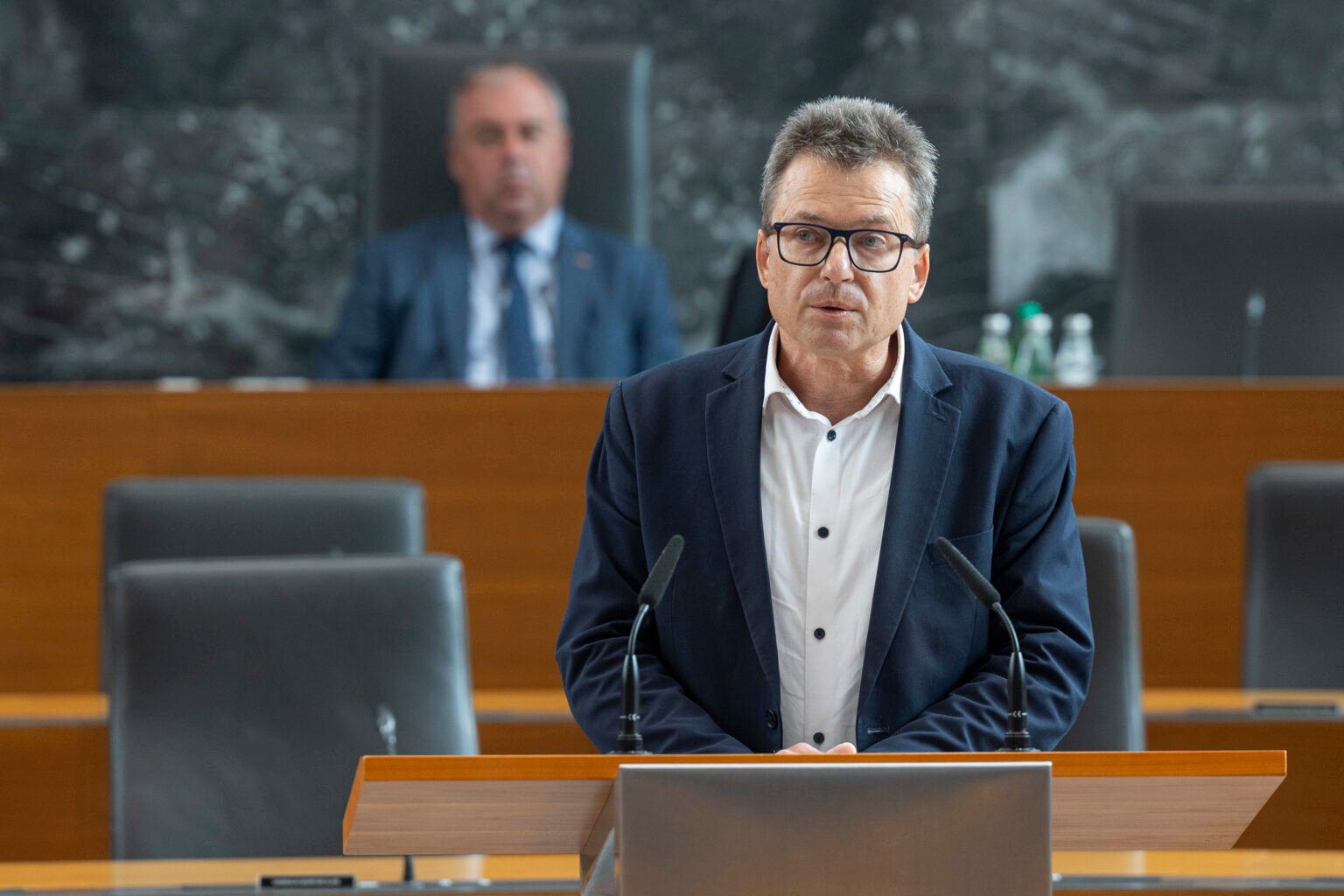
As MP Zvone Černač emphasised at press conference, Robert Golob’s government and the coalition of Freedom Movement, SD, and Levica will go down in history for two “achievements”: “raising taxes and lengthening waiting lines.” Waiting times have grown under this government in many areas, healthcare, access to homes for the elderly (where 40,000 people are now waiting), and also in taking driving tests and obtaining driving licenses.
Zvone Černač pointed out that the GS–SD–Levica coalition has tackled the problem of waiting for driving tests with the wrong approach: “lowering standards.” They adopted a law under which persons who passed their driving test in former Yugoslav countries that are not EU members can, after one year of residence in Slovenia, automatically exchange their license for an EU license. “With this, Slovenian men and women, their own citizens, were put in a subordinate position,” said Černač.
A Slovenian citizen must pay almost €2,000 for a driving test, while in those countries the costs are only €200–600. Such measures do not reduce waiting times or lower costs, the same applies to the recent “firefighting measure” that allows test drives also on weekends.
Černač presented comprehensive and feasible solutions from the Slovenian Democratic Party, listed as follows:
- More efficient logistics in scheduling test drives, relieving centre directors, and increasing the number of drives conducted.
- Presence of only one examiner at the theoretical part of the test, freeing staff for practical exams and shortening waiting times.
- Simplification of theoretical testing, with questions containing at most one correct answer – greater clarity and fairness.
- Introduction of the theoretical part of the test into the school curriculum in the 2nd year of secondary school for earlier, systemic knowledge acquisition.
- Inclusion of first aid in the theoretical training as part of the learning process.
- Use of existing medical certificates when they already contain all legally required examinations – reducing costs for candidates.
- Public funding of the safe‑driving course for candidates who begin the process at age 16; safe driving should be completed first, followed by accompanied driving until age 18.
- Alignment of the minimum number of mandatory hours with EU practice. EU regulation prescribes 7 hours theoretical and 7 hours practical, while Slovenia requires 16 theoretical and 20 practical.
“We propose halving the minimum mandatory number of hours, which is still more than twice what EU regulation prescribes,” emphasised Černač. “This does not lower standards – some need only a few hours, while others are not capable of passing even after 70.”
With this package of measures, SDS presents a realistic, effective, and fair path toward shorter waiting times, lower costs, and a more transparent system that does not reduce traffic safety standards.