

By: Zvjezdan Radonjić, dipl. iur.
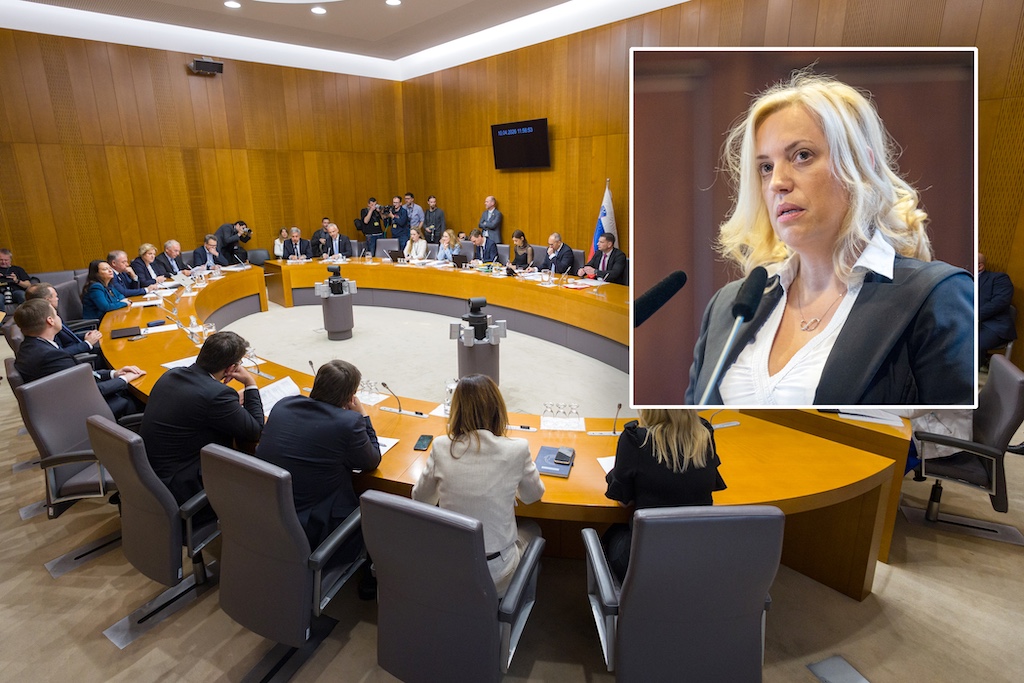
A few days ago, I was surprised to learn that the National Assembly’s Mandate and Elections Commission rejected a proposal by the Judicial Council to appoint a certain Higher Court judge to the position of Supreme Court judge. The rejection itself did not surprise me in terms of substance; what surprised me more was the fact that the judge in question had not already become a Supreme Court judge.
I served as a judge at the Ljubljana District Court from 2005 onward, which allowed me to observe the candidate’s professional development at close range.
A portrait of a career the system tolerated for too long
The head of the criminal division, a widely respected senior lady appointed to ensure smooth operations and detect potential deviations, began bringing to departmental meetings a young man in a tie and stereotypically middle-class jackets. He presented cases in the manner of a diligent but ordinary bureaucrat. Among most judges, he quickly gained a reputation as a strong favourite for every possible promotion. The very fact that he served as an aide to the division head, always impeccably groomed, lacking professional originality, personally distant and rigid, and far too young for the distinction he had been given, left little doubt about what many saw as a bright hierarchical future. Too young, he became head of the judicial assistants, many of whom were more professionally capable than he was. He continued to deliver his reports with sterile precision and was eventually transferred to the Local Court. Immersed in our own caseloads, we largely forgot about him until, several years later, he returned as a District Court judge. Once again, we began joking about genetics and searching for family connections, convinced that some hereditary advantage had to be involved. Even as a District Court judge, he blended into the average. He handled no particularly prominent or demanding trials and appeared to be routinely protected and placed where necessary under the supervision of the well-known Marjan Pogačnik. When Pogačnik rose to the position of court president, the young judge, as expected, became head of the division, tasked with monitoring unusual developments within it. More complex cases allegedly continued to be kept away from him, giving him time to establish information-gathering schemes. He surrounded himself with like-minded individuals who regularly reported how judges behaved, how they ruled, what they discussed among themselves, and what they favoured or opposed.
I once also became the subject of one of Pogačnik’s “police-style procedures.” I was summoned to his office, where the now-rejected candidate sat beside him. After the initial nonsense, Pogačnik began grilling me with all the finesse of a failed police officer. I reminded him that he was not running a police station and that judges are entitled to a certain degree of dignity. Throughout the encounter, the now-rejected candidate remained silent, ostentatiously proper and wearing a tie, seated to Pogačnik’s left, in other words, even further to the left than Pogačnik himself. They began bombarding me with accusations that had no basis in fact. The material was drawn from regular, grossly unlawful reports by the head of the District State Prosecutor’s Office, now the General State Prosecutor, as well as from extensive illegally obtained statements. It all had the character of a police operation, detached from any legal foundation. I was reminded of A Tomb for Boris Davidovich. Naturally, the entire affair ended with one of those pointless disciplinary proceedings, in which the accusation, as expected, ultimately dissolved into nothing.
While still a District Court judge, the rejected candidate reportedly found himself, at Pogačnik’s request, subjected on one occasion to the authority of an all-powerful, mafia-like Senior State Prosecutor, a former career intelligence operative allegedly up to his neck in criminal activities, who was dissatisfied with one of the court’s decisions. The prosecutor not only stressed the extreme unacceptability of courts making decisions contrary to the wishes of the prosecution service and his own personal preferences but allegedly shouted so loudly that the furniture shook. The current candidate, as one would expect, silently endured the man’s outbursts and reported everything to Pogačnik. As a result, the judge responsible for the supposedly outrageous judicial error was subjected to severe criticism at the next departmental meeting, conducted under the supervision of the rejected candidate, almost as if Pogačnik himself had been present. Among the stories circulating outside judicial circles was one concerning the renovation of the candidate’s bathroom. During the project, he allegedly requested that the pipes be painted. The contractor jokingly replied that the pipes would first have to be painted on the inside. The aspiring judge reportedly agreed, adding that they would not run any water through the pipes until the paint on the inside had dried.
I strongly support and welcome the decision of the coalition members of the National Assembly’s commission, who have finally begun clearing out the intolerably foul-smelling Augean stables of the judiciary.
Why the mandate and elections commission said no this time
It would have been atypical for the system if the judge had not been quickly promoted to the Higher Court, where he was soon groomed for an even higher position. He became a regular member of judicial panels led by a first-class UDBA operative. Their panel repeatedly ended up handling cases in which undesirable decisions from lower courts had to be corrected, displaying the methods and influence of the deep state. After this senior judge retired, the now-rejected candidate emerged as a serious contender for further promotion and was eventually nominated, although unsuccessfully. Before that, however, others with even stronger credentials and connections had first to be advanced through the system, which delayed his candidacy during the years of abundance under left-wing governments.
Because I have not been following the latest judicial absurdities in recent years, I assumed that the individual in question had surely already reached the Supreme Court or perhaps even the Constitutional Court. Yet this “injustice” was addressed only this year, when the loyal servants of the Judicial Council offered him their unwavering support and recommended his expected promotion. Suddenly, he was deemed capable of handling more complex legal issues, despite never having done so before. This was justified by the absurd explanation that he had achieved a high percentage of decisions upheld on appeal. Such a record is never the result of legal creativity or professional excellence, but rather of institutional assistance provided to favoured personnel.
If the members of the Judicial Council – may God forgive them – do not know what they are doing, then politicians of the neoliberal, deep-state spectrum certainly do. Once they realised that their preferred personnel solution had failed, they immediately turned their attention to the National Assembly’s Mandate and Elections Commission, which, in their view, should function merely as a silent transmission belt for approving questionable judicial appointments. They began speaking about the collapse of parliamentary democracy, decision-making based on police files (where were they during the era of Pogačnik?!), dragging election procedures into the debate, accusing the commission of undermining the work of the supposedly independent Judicial Council, alleging violations of the separation of powers, further politicisation, and a variety of other complaints. The Supreme Court, instead of respecting the National Assembly’s constitutional role in judicial appointments, has devoted itself to producing professional treatises defending the rejected candidate, the integrity of the Judicial Council’s decisions, and the alleged political interference in the selection of judicial candidates.
I strongly support and welcome the decision of the coalition members of the parliamentary commission, who have finally begun cleaning out the intolerably foul-smelling Augean stables of the judiciary. Through its conduct, the Supreme Court clearly invites the conclusion that it should, if not be dismantled altogether, then at least be pushed to the margins of any decision-making process. The situation therefore clearly calls for action.
(The article was originally published in the print edition of Demokracija on 22 October 2026.)


