

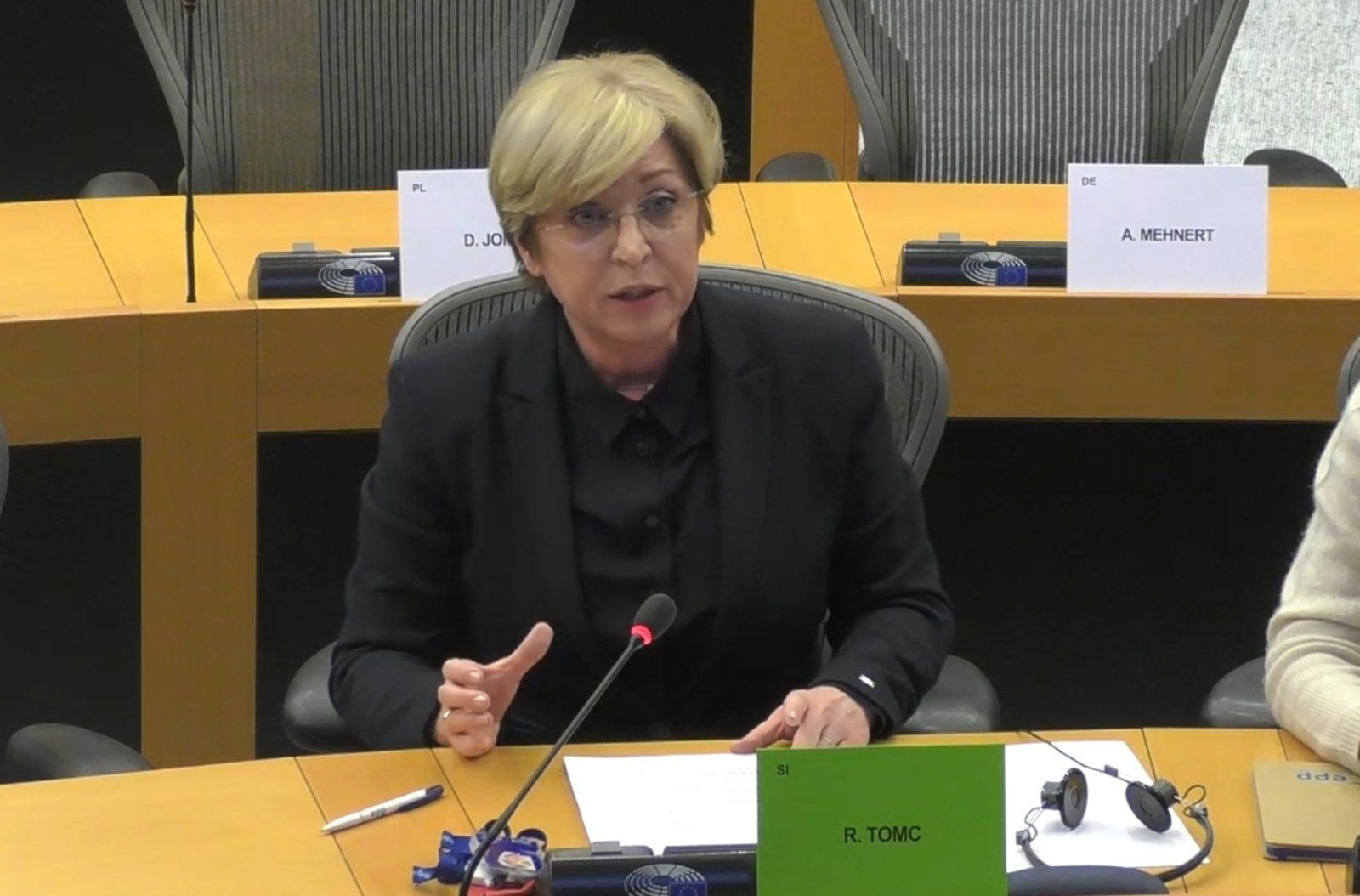
By: Romana Tomc
After a few days, as the pressure has somewhat eased and to avoid any misinterpretations, I am presenting the facts behind the adoption of the European Parliament Resolution on preserving the memory of the victims of the post-war communist period in Slovenia.
The process from preparing the petition to the adoption of the resolution took more than two years. A great deal of work and persistence was invested by my team in its successful execution. It required experience, knowledge, energy, political strength, passion, and courage. The convincing result of the vote at the plenary session may give the impression that the path to approval was easy.
But that impression is deceptive. It was extremely difficult and uncertain until the very end. There were many lies and insinuations, most of them coming, of course, from Slovenia. Clearly, for the proud successors of communism, destroying the resolution was very important, as it exposes all their lies and corruption. All Slovenian Members of the European Parliament from the left actively engaged in defending communist crimes. The left also attempted to divide the unity of the right in the European Parliament with lies. We had to be alert to their actions and respond accordingly. They failed. Even Dr Robert Golob, who according to my information tried to influence the process, failed. The entire EPP Presidency supported me throughout.
The decision to pursue the petition arose from my agreement with colleague Dolors Montserrat, who at the time chaired the Committee on Petitions. Dr Mitja Ferenc responded to my call, taking on the role of lead petitioner and later spoke twice before the Petitions Committee. During this period, I also organised an exhibition in the European Parliament on the Macesnova Gorica cave, authored by Dr Jože Dežman, which was attended by both the President of the European Parliament, Roberta Metsola, and the EPP President, Manfred Weber.
The Slovenian government did not respond for nearly a year to the committee’s request to explain why the Day of Remembrance had been abolished, so I pushed for a renewed review. At the session, I proposed that the committee prepare a resolution. Although I am not a member of the Petitions Committee, I was the only Slovenian MEP who consistently and actively participated in its meetings. The drafting of the resolution was formally taken over by the committee chair, Polish MEP Bogdan Rzońca, with whom I had good cooperation. The first draft was extremely short and general. My office responded with three pages of proposed amendments. From that, a completely different and substantively strong text emerged.
In the negotiations, which I monitored closely the entire time, the left-wing parties, socialists, greens, and liberals tried to destroy the text with their proposals. When that did not work, they attempted to block the resolution procedurally. Their major defeat came with the vote in committee, which they lost outright. It seemed the battle was won, but complications were not over. Until the last minute, there was a behind-the-scenes struggle over whether the resolution would be included on the plenary agenda or not. There were various pressures and disinformation campaigns aimed at convincing me that I would fail and that it would be better to withdraw. In the one minute I was given before the final decision on the agenda, I decided to persevere and take the risk. I believed it would succeed. And I was right!
Reactions after the resolution’s adoption were varied. I could say predictable. From numerous letters of support and calls filled with gratitude, to slander, threats, and denial. Many people showed their true colours. Among them was President of the Republic Dr Nataša Pirc Musar, who responded with a substantively flawed, and even worse, completely insensitive and inappropriate statement. Various “Spomenkas” and other apologists for the left, as always, did not disappoint. Their strong reactions and the minimal coverage by Slovenian media only strengthen my belief that the resolution hit the mark. The historical significance of the resolution will be recognised over time. I do not expect immediate effects from the current ruling elite. But what cannot be changed is the fact that this resolution will forever be recorded in the history of the European Union. I am proud of that.


