

By: Vančo K. Tegov
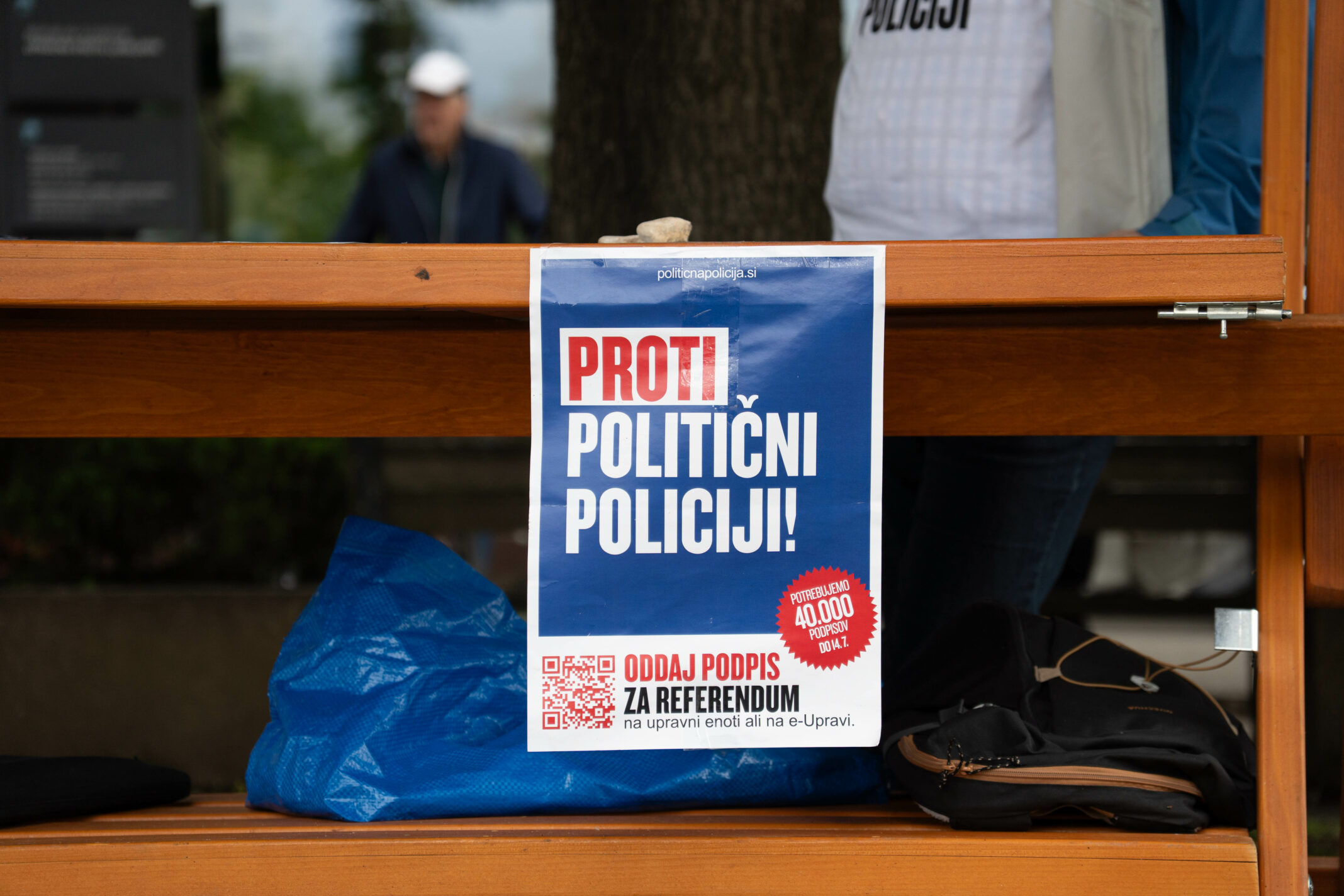
Barely a day had passed, not even that, since the conclusion of the four referendums, and they were already dancing around the totem called corruption once again, while defending the pro-Korean information fortress that, in their view, RTV represents.
Yesterday was a test of common sense. Not only for those individuals who may already possess it, but above all for those who apparently have not had much contact with it until now. Common sense is not something reserved for a select few, nor should it simply disappear whenever political interests come into play.
But what does the day after the referendum tell us?
Has it really come to the point where people no longer care that corruption has worked its way into countless corners of society, no matter how small? That they not only accept it as something normal, but even regard it as permissible, if not outright justified?
The more often these questions are answered in the affirmative, the more it reveals a troubling part of society that either cannot or will not respond critically to social dysfunctions. When people begin to regard departures from normality as ordinary and excuse or even support irregularities, then the problem no longer lies solely with those who create them, but also with those who tolerate them through passivity, lack of critical thinking, or self-interest.
The crucial realisation is that the danger lies not only in the existence of such anomalies, but also in society becoming accustomed to them. Once the unacceptable becomes acceptable, the boundary between right and wrong begins to shift. And days like yesterday strongly encourage such an unsettling conclusion.
Has part of society made peace with the system?
Has part of society come to terms with a system that, through its departure from common sense, responsibility, and fundamental values, has already seriously damaged the social fabric? And is there still enough political will to reform it, restore accountability, and return to a state of normality in which the rules apply equally to everyone?
One factor silently but persistently deepening this condition is indolence, a form of passive indifference often disguised as neutrality. It does not necessarily make noise, provoke open conflicts, or loudly defend the status quo. Its power lies precisely in its ability to gradually accustom people to irregularities, discourage critical responses, and create the feeling that nothing can be changed anyway.
Indolence is therefore one of the most dangerous companions of society’s drift away from common sense. Where scepticism should arise, silence takes its place. Where accountability should be demanded, indifference appears. And where wrongdoing should be clearly identified, people too often settle for saying: “That is just the way things are.”
But therein lies the trap. What we tolerate today out of indifference may tomorrow become something we regard as normal. In this way, the boundaries of what is acceptable shift, accountability loses its significance, and society slowly moves away from the values on which it is supposed to rest.
The question, then, is no longer only who creates such conditions and who benefits from them. We must also ask how much responsibility lies with those who recognise these problems but choose not to respond.
For common sense without critical judgment remains an unused capacity, while critical judgment without action is socially ineffective. And it is precisely indolence that can turn the gap between recognising a problem and acting upon it into a permanent condition of society.
Who will be more effective?
Do the structures that preserve and sustain such a state of affairs still have more political aces up their sleeves? More ways of undermining every attempt at change, obscuring accountability, and preventing society from finally moving toward greater transparency, fairness, and efficiency?
But the question that naturally follows is even more direct: who will prove more effective, those striving to preserve the status quo or those demanding change?
Will the greater force be the ability to maintain influence, divert attention, and delay action, or the determination to insist on transparency, accountability, and equal rules for everyone? Will political energy once again be spent on preserving positions of power, or on eliminating the dysfunctions that undermine trust in public institutions?
The answer will not depend solely on political structures and their actions. It will also depend on society’s ability to distinguish between promises and deeds, between apparent change and genuine results, and between loud rhetoric and responsible action.
In the end, what will matter most is not who has more aces hidden up their sleeve, but who can turn words into verifiable results. And it is precisely here that we will see whether the desire for change is truly strong enough to overcome political calculation, social indifference, and the comfort of the existing state of affairs.
And finally: are we ready for change?
Have we in Slovenia even reached a critical mass of people who genuinely want change for the better? Not merely change on paper, not new faces with the same habits, and not new promises accompanied by the same old excuses, but changes that would be reflected in everyday life, in the functioning of institutions, and in the accountability of those who hold power.
It is time to awaken from social indifference. Enough with accepting irregularities, double standards, empty promises, and the belief that nothing can ever be changed. Enough, too, with expecting others to assume responsibility on our behalf.
The time has come to demand accountability, transparency, and equal rules for everyone, without exceptions, without political privileges, and without excusing wrongdoing simply because it comes from our own side. It is time to stop remaining silent when we should speak out, and to look even where our own political loyalties may discourage us from looking.
Change does not happen by itself. It requires courage, persistence, and people who are unwilling to trade away their principles. It requires citizens who think for themselves, examine promises, judge actions, and accept responsibility for their choices at the ballot box.
So, let us ask ourselves: will we continue to watch passively as society drifts away from the values on which it should be built, or will we finally demand different standards?
Let us not wait for someone else to change. Let us begin with ourselves, continue within our own communities, and insist on accountability from everyone who makes decisions about our shared future.
It is time for determination instead of indifference, responsibility instead of excuses, and action instead of empty promises.
For if we continue to remain silent when we should act, we will not merely be witnesses to change for the worse. We will also become part of the reason it continues.
Slovenia does not need yet another cycle of fine promises. It needs a society with enough courage to demand order, accountability, and equal standards for everyone, and enough perseverance to stand by those demands.
Now is the time for action!
In conclusion
The answer to all of this does not depend solely on those who once again put on a victorious smile after the referendum. It also depends on all of us, who must ask ourselves how much longer we will accept the unacceptable as something ordinary.
A society does not begin to lose its common sense only when its leaders lose theirs. It begins to lose it when people stop distinguishing between right and wrong, and when they cease to care.
Democracy and common sense require constant engagement, critical judgment, and perseverance.