

By: Nova24tv.si
While Iranian women are celebrating the end of the theocratic terror, our foreign minister is calling for de‑escalation and respect for international law – in other words, for the protection of a regime that has finally been struck by Israel and the United States. Her statement has been received negatively abroad as well, and former prime minister Janez Janša is drawing attention to an affair from 2009–2010.
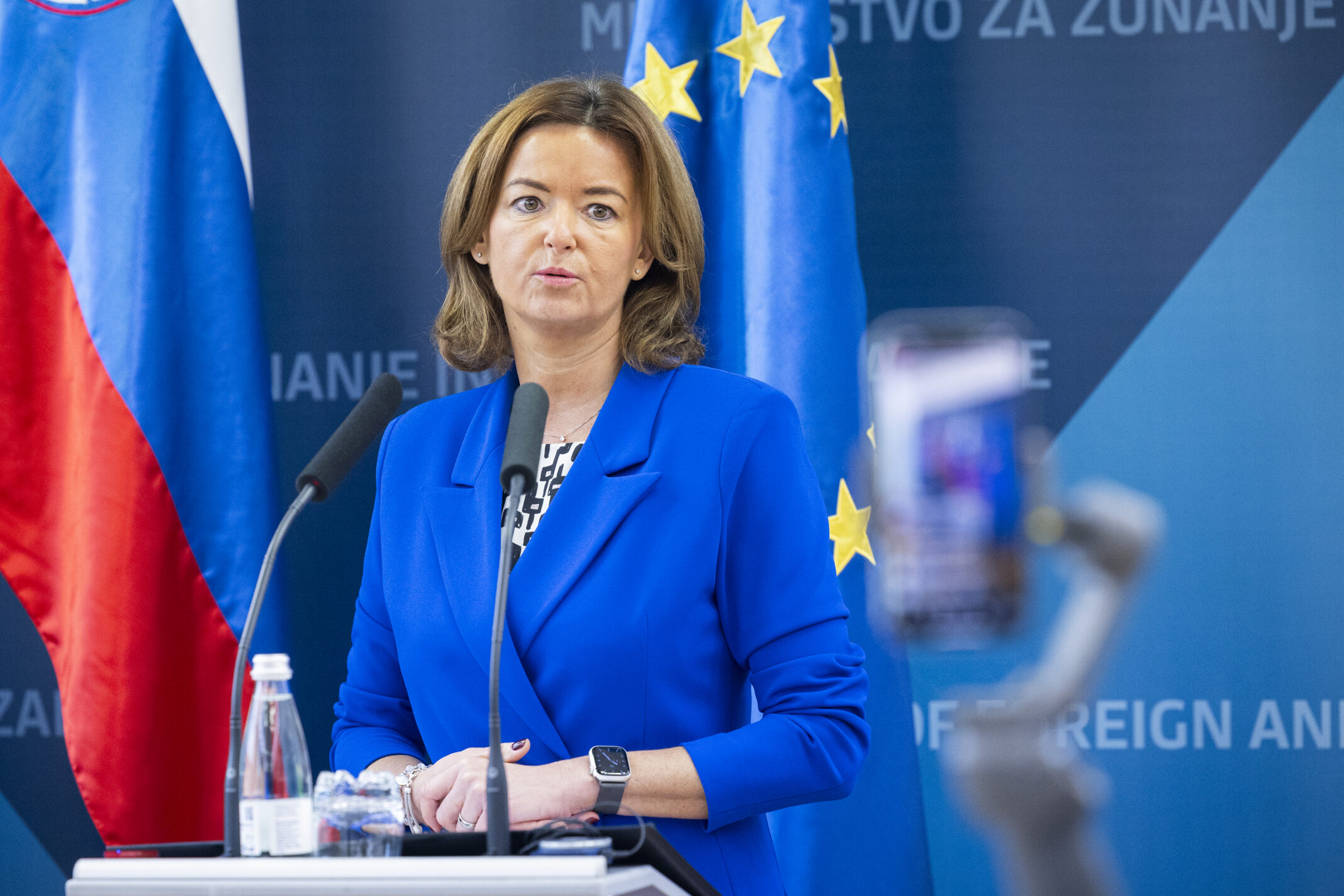
On Friday evening and Saturday morning, Israel and the United States carried out extensive preventive strikes on Iranian military and nuclear facilities, as well as on the top of the regime. Among those killed were Ayatollah Ali Khamenei and several other high-ranking regime officials. Iran responded with rocket attacks on American bases and Israel. And while people in Tehran are celebrating the fall of the tyrannical regime, Foreign Minister Tanja Fajon issued a statement that has triggered a wave of outrage both at home and abroad.
Former U.S. ambassador and Trump confidant Richard Grenell wrote directly on X: “A NATO member expresses support for Iran.”
He shared Fajon’s statement in which the minister called for “immediate de-escalation, restraint, and respect for international law,” emphasising that “diplomacy remains the only path to stability.”
The sharpest reaction came from SDS president and former prime minister Janez Janša, who commented on Grenell’s post as follows: “Unfortunately. And this is the reason. Her government enabled Iran to launder more than a billion U.S. dollars during the triple sanctions in 2009 and 2010. Without any legal consequences.”
Is the Slovenian left afraid of criminal revelations?
With this, Janša pointed to the NLB – Iranian billion affair (also known as the “Farrokh case”). It concerns a scandal from 2008–2010, when the state-owned Nova Ljubljanska banka (NLB) – during Pahor’s left-wing government – enabled the transfer of nearly one billion dollars (around one billion euros) of Iranian money through the accounts of Iranian-British citizen Iraj Farrokhzadeh and his company Farrokh Ltd.
The money came mainly from the Iranian Export Development Bank (on the EU and U.S. sanctions lists for supporting the nuclear and missile program and terrorism). The accounts were opened in December 2008 (shortly after Pahor took office), the flow reached up to 50 transactions per day and up to 70 million euros per month, with more than 30,000 transfers in various currencies worldwide. Farrokhzadeh was on Interpol’s wanted list at the time, and his accounts had previously been closed in Switzerland due to suspicion. The Bank of Slovenia banned the transactions only in December 2010, and NLB implemented the order with a delay, which allowed the operations to shift to Russia. Despite investigations (including by the Office for Money Laundering Prevention and the prosecution), no one was held accountable, and most charges were dismissed.
International law expert Miha Pogačnik also responded to Fajon’s statement, predicting that if the Iranian regime were to fall, “many people in Slovenia will have a headache.”