By: Vida Kocjan
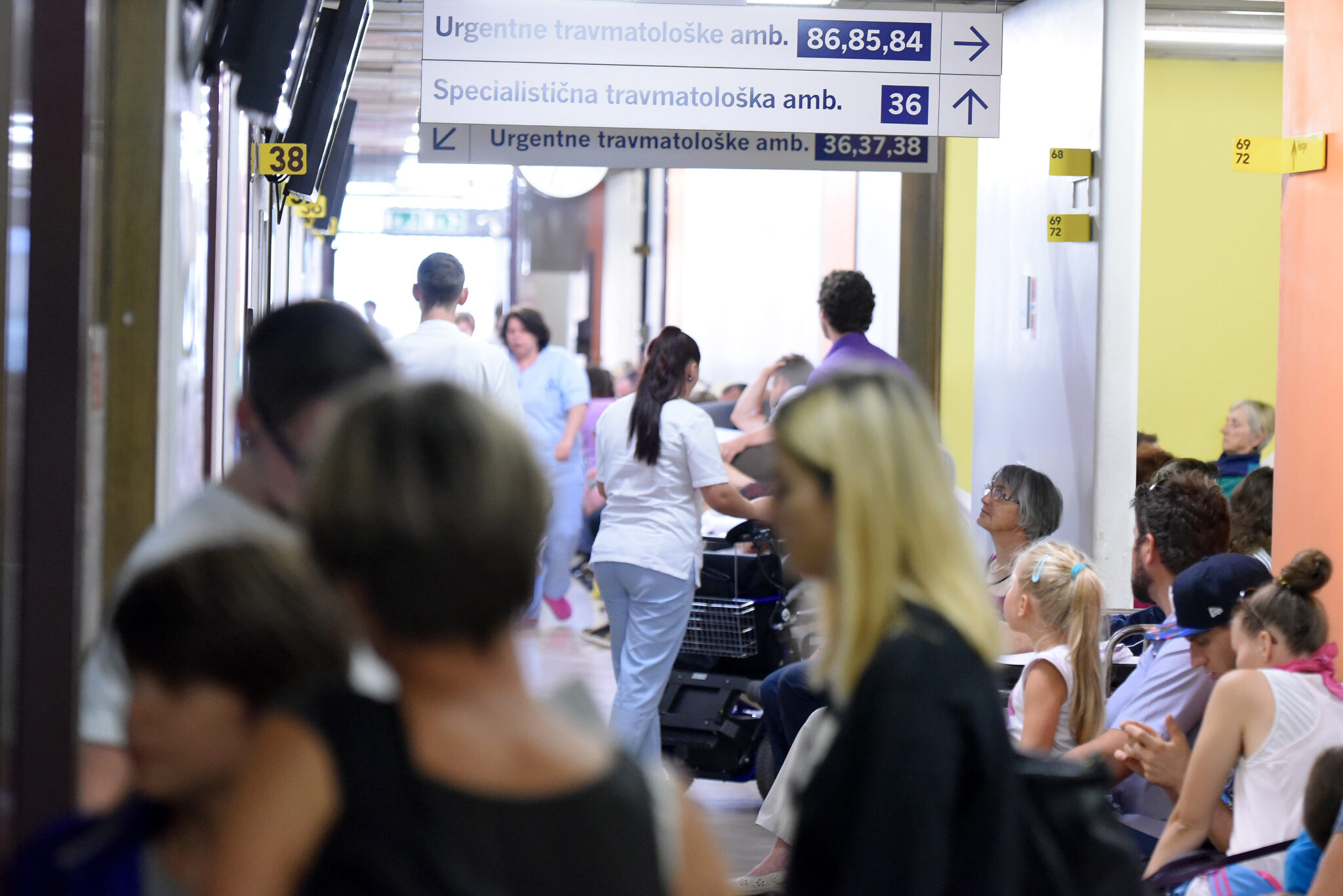
Data show long waiting times, including for standard specialist examinations, often several months, a year, or even longer. Official data from Slovenian authorities obscure the scale of the problem also due to changes in methodology.
The trend of waiting times in Slovenia is rising or persistently high, especially for more complex procedures and specialist services.
Trend of increasing long waits
According to data from the National Institute of Public Health (NIJZ), the number of patients waiting longer than the permissible waiting time increased noticeably at the beginning of 2026, especially in priority categories. OECD data for 2025 also showed that patients in Slovenia wait longer than in many other European countries. The OECD notes that the trend of waiting times in Slovenia is steadily increasing. The number of people waiting longer than allowed rose significantly in a certain period; according to some data, for example, this number increased from around 65,000 at the beginning of 2024 to nearly 79,000 at the beginning of 2025.
Some OECD countries also have long waiting times, but Slovenia ranks among the highest. This applies to cataract surgery, and the most striking example is hip replacement, where the average waiting time in Slovenia during a comparable period was estimated at around 667 days (almost two years), one of the longest in the OECD.
According to NIJZ data from early January 2026, the number of patients waiting beyond the permissible time increased by 3 to 27 percent in just three weeks, depending on urgency level. Specifically: for very urgent cases, the number rose by 27 percent (from 20,291 to 25,711), and for urgent cases by 10 percent (from 36,907 to 40,430). This is one of the more recent concrete examples showing a deterioration of the situation.
More sick leave, more costs
Businesses warn that long waiting lines contribute to higher absenteeism, as workers wait longer for treatment and therefore remain on sick leave longer. Some companies, such as BSH Nazarje, already pay for additional specialist insurance for employees to shorten waiting times, yet sick leave has not decreased.
Changes in regulations and statistical interpretation
Meanwhile, the Ministry of Health is misleading when it emphasises that the number of excessively long waits has decreased. They do not say that this is the result of changes in recording methodology and statistics. For example: the permissible waiting time for urgent examinations was extended, which statistically reduced the number of those who “exceed” the limit. There were many such changes, and they mean that comparing data before and after the changes is not directly meaningful. It appears as if the situation is improving, but this is the result of administrative adjustments and altered methodology, an area in which the personnel of the transitional left are indeed masters.
Waiting even several years
Actual experiences in practice are different. Patients themselves report long waits, sometimes several months or even years, for surgery dates or specialist examinations. Many seek alternative solutions, often abroad, increasingly also self-paid. For those who can afford it, that is. In Slovenia, waiting times are determined by contracts between the Health Insurance Institute of Slovenia (ZZZS) and providers. Following a socialist-style model, the rigid ZZZS has its own rules, which are often incomprehensible and defy common sense.
The ruling coalition (Svoboda, SD, and Levica) is misleading when it claims that public healthcare is a priority, that more money has been invested in the system than ever before, and that they are monitoring and trying to improve the situation.
Part of the problem also lies in limits on the volume of paid (private) services and legislative changes – both organisational and financial – that often do not increase system capacity but merely shift or reshuffle quotas.
Statistical data may show shorter waiting times for those who are “not yet in the excessively long waiting category.” But this does not mean that patients actually get treated faster. Methodological changes have made official statistics look better than the everyday reality experienced by patients.
The price of waiting: silent but high
Patients pay the highest price for long waiting times. Waiting means worsening health, more complications, more sick leave, and greater personal distress. For part of the population, it also means pressure toward self-payment, which deepens inequality in access to healthcare and undermines the fundamental principle of the public system.
The problem is not invisible, but unresolved
Waiting lines in Slovenian healthcare are not a hidden issue but a chronic systemic failure. Data, trends, and patient experiences show that conditions are not improving significantly, despite official interpretations. As long as the focus remains on statistics instead of actual waiting times, and as long as there is no political will for deeper organisational and staffing reforms – as is currently the case in Golob’s coalition – waiting lines will remain one of the most tangible proofs that the system is not working in the interest of those it exists to serve.
General trends by specialty
Rheumatology: The average waiting time for a first examination exceeded 400 days in the past year, more than a year.
Dermatology, neurology, cardiology, orthopaedics: All these specialties have recorded increases in average waiting times in recent months and years (under Golob’s government).
Diagnostic procedures (e.g., MRI, ultrasound): Waiting times range from 200 to 300 days.
OECD: Slovenia with the longest waiting times
According to OECD estimates, more than 90 percent of patients in Slovenia waited more than 3 months for cataract surgery.
Almost all patients waited more than three months for hip replacement (98.6 percent) or knee replacement (a high share), indicating severely prolonged waiting times for orthopaedic surgeries.
For some procedures, Slovenia ranks among the countries with the longest waiting times