

By: Moja Dolenjska
The new Minister of Health, Dr Tadej Ostrc (Democrats), has in recent days reached an important agreement with the interventional radiologists of the University Medical Centre (UKC) Maribor. After prolonged unsuccessful negotiations by the hospital leadership and the looming departure of doctors from UKC, the minister personally intervened and, through a quick and open discussion, prevented the specialists from leaving.
The Ministry of Health under the new leadership announced that the agreement ensures the continued provision of interventional radiology at the Maribor institution and represents an important step toward stabilising conditions and ensuring uninterrupted care for patients in northeastern Slovenia. The minister expressed his gratitude to the radiologists for their responsible decision made in the interest of patients.
This step indicates a change in approach: instead of staff leaving the public healthcare system, quick and practical solutions are now being sought. As supporters wrote on social media, this marks a turnaround after years in which measures by the previous (Golob) government often drove healthcare workers out of the public system.
Despite the success with radiologists, pressing problems remain
Despite this, numerous unresolved challenges persist in Slovenian healthcare. One of the most critical areas is orthopaedic surgery – hips, knees, and other procedures – where waiting times exceed acceptable limits. Patients from all over Slovenia, especially from Southeast Slovenia, wait months or even years for examinations and operations.
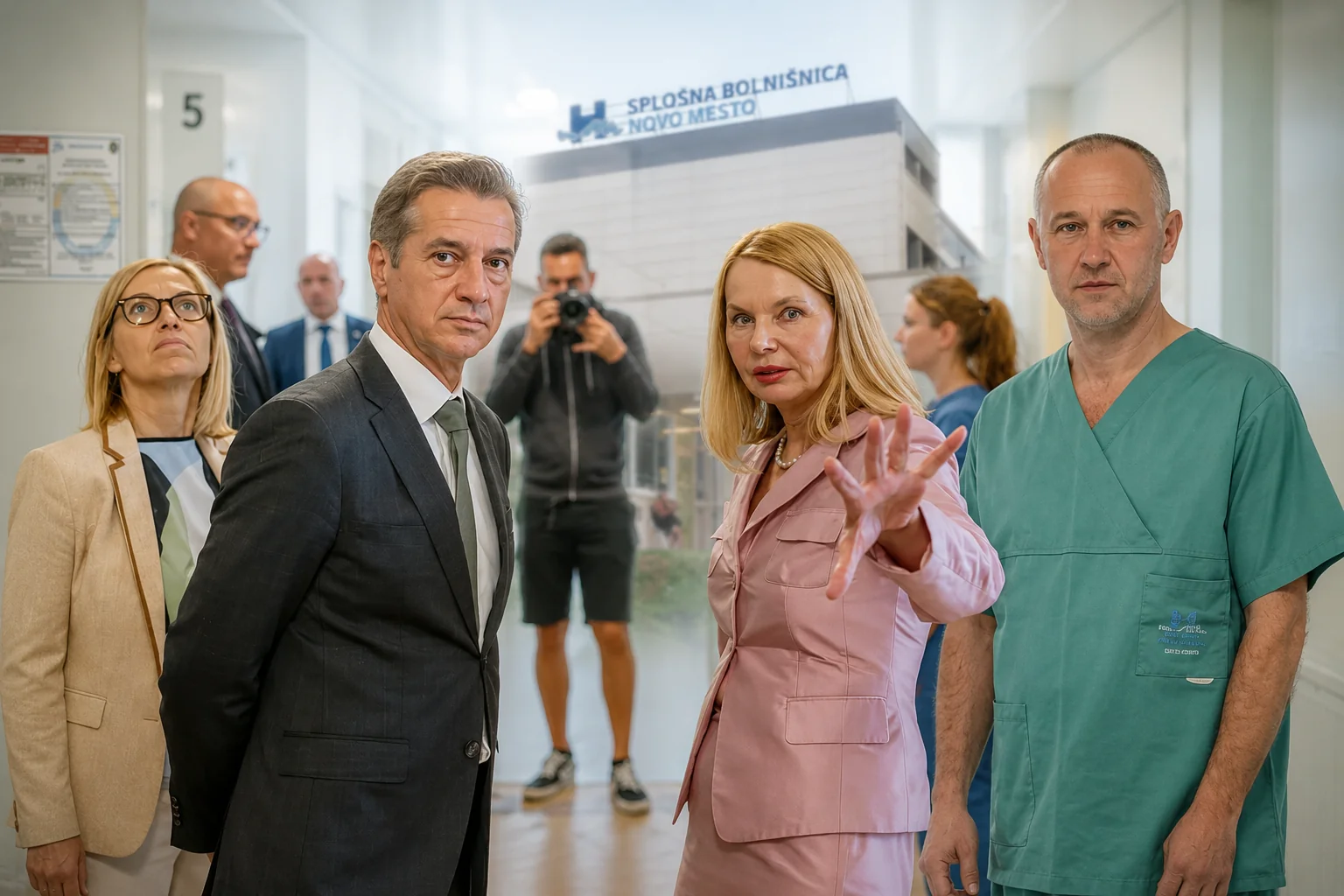
Particularly highlighted is the case of Dr Gregor Kavčič, long‑time head of the Department of Orthopaedic Surgery at the General Hospital Novo mesto (SB NM), which he himself established. At the end of 2025, he was dismissed and received an extraordinary termination following an (alleged) extraordinary professional audit, which supposedly indicated suspicion that he had artificially prolonged waiting lists and redirected patients to a private concession clinic (where he also operated). The hospital claimed at the time that the waiting list had been deliberately extended to facilitate redirecting patients. Later, it turned out that this was not exactly the case.
Dr Kavčič firmly denies all accusations. He emphasises that he acted in accordance with the Patients’ Rights Act: if waiting times exceed the permissible limit, the doctor must offer the patient the option of treatment elsewhere. Dr Kavčič also had permission for limited work with the concession provider. Essentially, this was not about queue‑jumping or artificially extending waiting lists. After his dismissal, some employees of the department publicly spoke out in his support. It also emerged that the orthopaedic department had fulfilled its planned programme at over 100 percent, while the director of SB NM was unwilling to provide payment for support staff for additional surgeries, even though the Health Insurance Institute (ZZZS) would have fully covered the additional operations. She would pay only the surgeon, not the rest of the team, which Kavčič refused to accept.
The hospital SB NM assures that continuity of work in orthopaedics is guaranteed, but patients from Dolenjska and beyond still report long waiting times, with major difficulties in more complex surgeries.
Call to the new minister: fix orthopaedics as well!
The success with radiologists in Maribor shows that the new minister has the will and ability to act quickly. Readers therefore argue that now is the right moment to tackle other critical areas just as decisively. Calls are mounting for Minister Dr Tadej Ostrc to:
- examine the case of Dr Gregor Kavčič and the entire situation at the orthopaedic department of SB Novo mesto, including the overall state of the hospital (investments, payments for legal services, etc.),
- find systemic solutions to shorten waiting times in orthopaedics across Slovenia (activation of all available capacities, additional operating rooms, cooperation with private providers under clear rules),
- ensure timely access to surgery for patients regardless of region.
Public healthcare must work for patients, not against them. The agreement with radiologists is a good start. Now the same determination is expected in orthopaedics and other specialties with the longest waiting times. It is scandalous that Dr Kavčič, the country’s best orthopaedic surgeon, is no longer operating. Previously, he performed more than 500 surgeries per year at SB NM. Now the hospital prefers to spend money on lawyers in its fight against Kavčič rather than on patient care.
Minister Ostrc has already emphasised in his public statements that the key priority is ensuring that patients receive treatment on time. “It is time to put these words into practice also in orthopaedics – patients from Dolenjska and elsewhere have been waiting far too long,” reads one of the messages received by the editorial office of Moja Dolenjska in recent days.


