

By: Nova24TV.si
The article in Mladina about a “serious test” facing the University of Ljubljana is not an isolated commentary. Rather, it represents a continuation of a pattern that left-leaning media outlets and associated networks have allegedly employed for years: international waves of protest are selectively portrayed as legitimate and almost inevitable responses to “pressure,” while local circumstances are framed within the same narrative. In this way, the groundwork is laid for mobilisation without the need to openly call for blockades or street demonstrations.
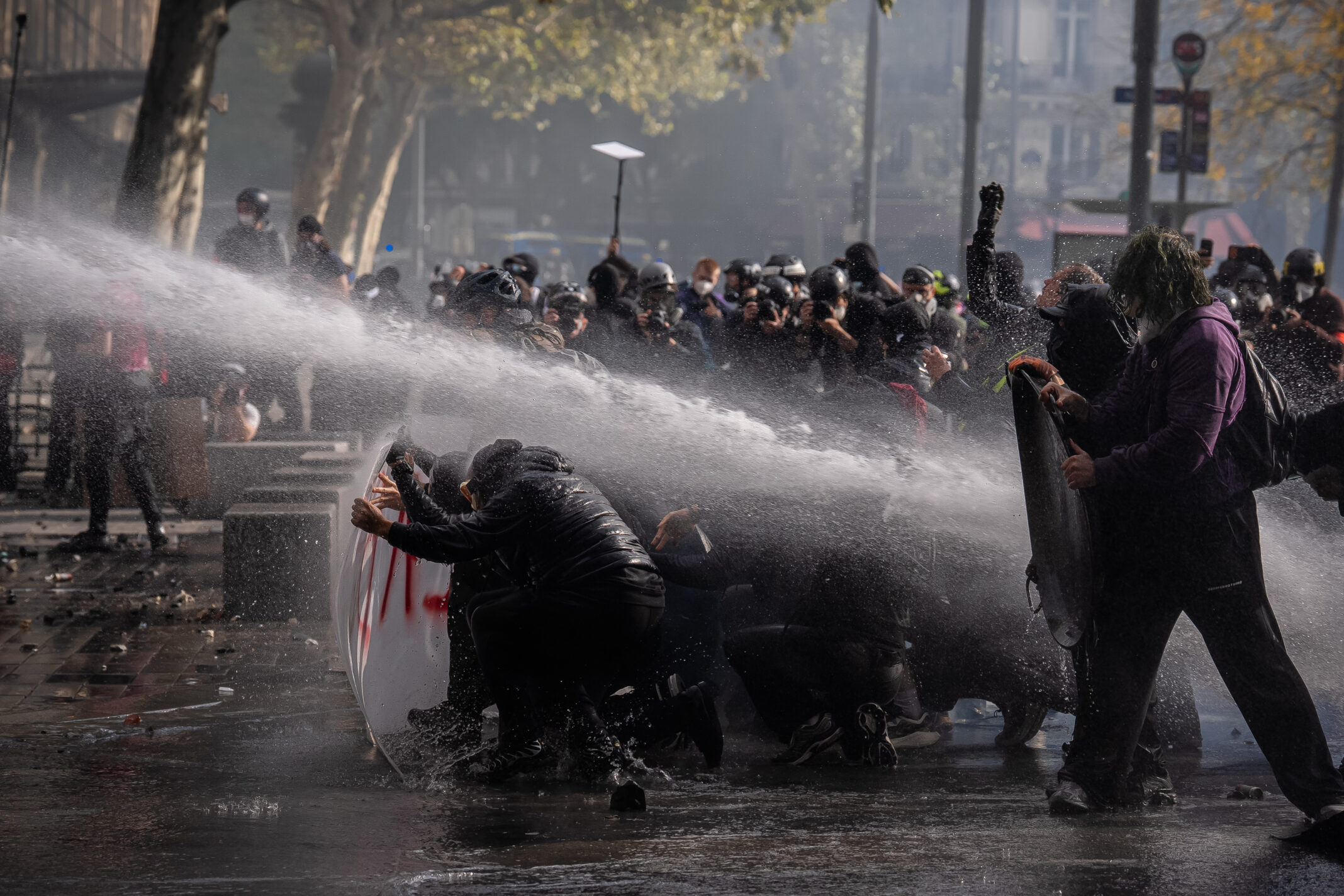
Left-wing activist Luka Volk directly links the French protests over education funding to the situation at the University of Ljubljana. The claim that “it was precisely inadequate funding of education that drove young people and employees into the streets” is difficult to interpret as anything other than a subtle call for protest. The implication is that if education funding is restricted or slowed, a public and street-level response is both expected and understandable. The rhetorical questions that follow, asking whether the university will defend the academic community or participate in silencing it, further reinforce that framing.
Mladina is not in favour of the ideological neutrality of educational institutions
Mladina writes that the University of Ljubljana, in its proposed new statute, has allegedly expanded the prohibition on “political or other agitation” so broadly that it could encompass student protests and trade union activities as well. At the same time, the magazine emphasises the government’s financial pressure on the university and suggests that, through such provisions, the university is itself attempting to silence critical voices rather than defend them.
This is the same mechanism that we already witnessed during the previous government led by Janez Janša, when mainstream and left-leaning media systematically reinforced the narrative of “authoritarian” pressure, while NGOs and trade union organisations organised or supported protests. Now that a centre-right coalition is in power, the pattern is repeating itself, albeit for the moment with less intensity but with the same objective: any attempt to limit organised political activity within public institutions, or any discussion about public finances, is portrayed as a threat to “freedom.”
Selectivity and double standards
In the article, Luka Volk cites the occupation of the Faculty of Social Sciences in support of Palestine as an example of the kind of activity that the new university statute might prohibit. At the same time, however, he does not appear to regard restrictions on collecting signatures for a referendum in May 2026 as problematic, despite concerns raised at the time by both the SDS party and the Slovenian Democratic Youth. This reflects a predictable pattern within that media environment: left-wing activism at universities is treated as a legitimate expression of academic freedom, whereas right-wing activism or trade union activities supporting a referendum against the Intervention Measures Act are portrayed as something that should be restricted or, at the very least, criticised.
Non-governmental organisations and trade union structures that have participated in organising protests in the past, particularly during the governments of Janez Janša, possess established networks, experience, and media support. When Mladina presents the French model as a relevant point of reference, it does not need to issue an explicit call to protest. It is sufficient to create the impression that the situations are comparable and that defending the community is the “correct” response.
The centre-right government is dealing with budgetary constraints and efforts to preserve the institutional neutrality of universities, while left-leaning media outlets and associated groups seek to portray these measures as an attack on the academic community. Luka Volk’s article in Mladina is part of a broader coordinated narrative that presents the protests in France and Italy as a relevant warning for Slovenia. This becomes even clearer when viewed alongside a recent social media post by the youth wing of The Left party, which stated: “French students are protesting against measures that are also awaiting Slovenia.”
Volk, who has long been active in left-wing movements and is closely associated with that political milieu, merely continues the same subtle form of agitation through his article. By using analogies and rhetorical questions, he allegedly creates the impression that a public street-level response is logical and justified, without ever having to openly call for protests.


