

By: C. R.
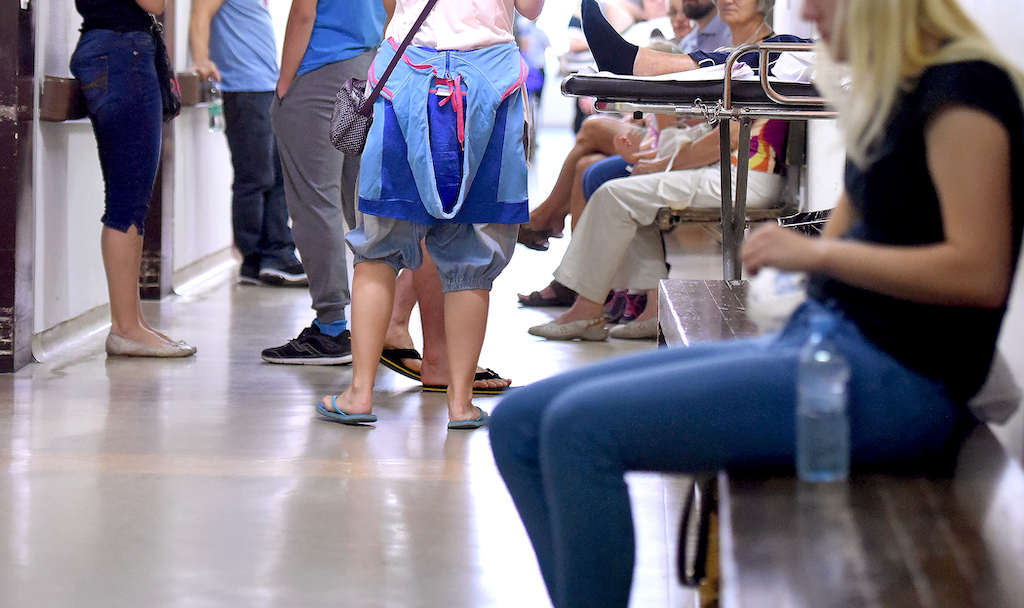
Employees at the Emergency Department of the University Clinical Centre (UKC) Maribor have once again, on today’s Emergency Medicine Day, highlighted the unbearable state of the current emergency medical system in the country, which is causing suffering for both staff and patients. They are therefore demanding immediate measures to reform the system.
“Emergency medicine at the level of emergency departments in Slovenia is, unfortunately, clinically dead,” emphasised Andrej Hohnec, Deputy Head of the Maribor Emergency Department, at today’s press conference.
One of the biggest issues is the shortage of staff, which places an even heavier burden on existing teams and further reduces interest in the profession. “In Slovenia, there are currently around 200 specialists and residents of emergency medicine working in clinical settings, but only a quarter of them are in emergency departments, which are the core building blocks of this system. Not all of them are fully employed; there are around 30 full-time specialists in emergency departments, half of whom work in Maribor. We do not even have enough for a single bus,” Hohnec illustrated.
Due to demanding working conditions, other healthcare staff are also lacking. One additional problem is the lack of flow in the system, which means patients often remain in emergency departments for extended periods. According to Hohnec, responsibility lies with past health policies and the leadership of public healthcare institutions: “Nowhere have we seen real support or concrete measures to promote this specialty, to encourage employment in emergency departments, or to ensure people stay in the system. A lot of it stems from the system’s disorganisation – unclear career paths for emergency physicians and the inherently difficult nature of the work,” he explained.
He said that emergency medicine has been fighting for survival for several years, but decision-makers remain unresponsive despite numerous warnings. He stressed that proposals for fixing the system have long been known – they just need to be implemented.
“The state first needs to decide whether it even wants to have an emergency medical system,” added Gregor Prosen, Head of the Emergency Department. Despite the many problems, he emphasised that they strive every day to care for all who need help as best as possible. “We hope our patients understand that the best care does not always mean the fastest treatment,” he said.
According to Prosen, staff at the emergency department also feel pain when they see patients waiting, but given the current circumstances, there is no alternative. They still face violence. “The proposed law that was rejected was a harsh slap in the face,” he said with disappointment. “The security situation is gradually deteriorating, though it must be said that at least in our institution, we have made some improvements in the last year or two, especially when it comes to physical attacks. On the other hand, there is still far too much verbal abuse,” he added.
Each year, the Maribor Emergency Department treats about 125,000 patients, two-thirds of whom are usually not in life-threatening condition. Prosen does not blame the patients: “It is understandable – if they have nowhere else to go, they will come to us,” he said.
Metin Omerović, an emergency medicine specialist, confirmed that the work is demanding but also extremely interesting and fulfilling. “We have the privilege of helping people when they are in their greatest distress. We represent the good side of humanity,” he said. He also highlighted the variety and broad scope of work as major advantages of the specialty.