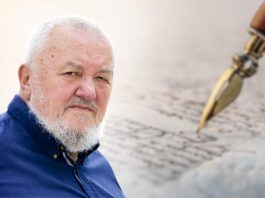
By: Dr Andreja Valič Zver
On the occasion of the adoption of the Resolution on preserving the memory of the victims of the post-war communist period in Slovenia, proposed by Bogdan Rzonca with the assistance of Dr Mitja Ferenc and Romana Tomc this week at the plenary session of the European Parliament in Strasbourg, it is worth recalling the background of this latest act in the long line of Slovenian efforts for “truth, justice, and memory.”
When in 2008 Slovenia, during Janša’s government, became the first new EU member state to preside over the EU Council, there were high expectations in this important area of democratic transitional justice as well. The then Minister of Justice, Lovro Šturm, was aware of the responsibility not only of the Slovenian government and state toward the victims of totalitarian regimes, especially the communist regime, but also of a broader responsibility to the international community. At Šturm’s invitation, I represented the Ministry of Justice at international conferences in Lithuania and the Czech Republic in 2008, effectively launching the initiative to establish the Platform of European Memory and Conscience, which has since grown into an international network of more than 70 institutions and individuals.
The first Janša government strongly supported addressing the crimes and consequences of totalitarian regimes. For example, from 2006 to 2008, under the leadership of the Slovenian History Teachers’ Association, the international project Human Rights and History Teaching was carried out, during which history teachers from all European countries heard, for the first time, lectures on systemic and systematic human rights violations and fundamental freedoms on Slovenian territory during and after World War II.
Lovro Šturm was also the initiator of the first international conference on totalitarianism at the headquarters of the European Commission in Brussels in 2008. The Slovenian speakers were Dr Tamara Griesser Pečar, Dr Ljubo Sirc, Dr Peter Jambrek, and myself. Dr Jambrek also edited the proceedings Crimes Committed by Totalitarian Regimes (Brussels, 2008), which collected contributions from the conference and remains one of the most important legacies of Slovenia’s first EU Presidency. Later, similar conferences were organised by other new member states, such as the Czech Republic, Poland, and others, but Slovenia’s contribution undoubtedly made history, especially in shaping, alongside the 2009 Prague Declaration, a clearer approach to addressing Europe’s totalitarian past.
After 2009 and the discovery of the Huda Jama mass grave, highlighting wartime and post-war human rights violations in Slovenia gained greater traction at the European level. MEP Milan Zver organised numerous international events in the European Parliament (e.g., in 2011: What Do Young Europeans Know About Totalitarianisms?, co-hosted with the famous Romanian dissident László Tőkés and Memory Group chair Sandra Kalniete; in 2010: a conference and exhibition marking the 20th anniversary of Slovenia’s first multi-party elections, and others). He is also known for his years-long efforts to name a hall in the European Parliament after the father of the Slovenian state, Dr Jože Pučnik, which was successfully realised in 2018. Let us also recall his role in protesting the shameful depiction of the bloody partisan commander Stane on a 2-euro coin, a battle he fought against the Slovenian government and the office of MEP Jelko Kacin, who of course supported the government’s decision.
Years of efforts to establish a memorial in the European Parliament in Strasbourg to victims of wartime and post-war killings on Slovenian territory have borne no fruit. Just before the final decision, Cerar’s government firmly defended the perpetrators, while the leadership of the European Parliament, like Pontius Pilate, washed its hands of the matter.
Thankfully, Slovenia’s left-wing governments have at least had the decency not to ban the observance of August 23rd as the European Day of Remembrance for Victims of Totalitarian Regimes, as was adopted by a majority in the European Parliament with the 2009 Resolution on European Conscience and Totalitarianism. However, Golob’s government has shamelessly trampled basic human dignity and respect for victims by drunkenly abolishing the Day of Remembrance for the Victims of Communism. Therefore, the Resolution on preserving the memory of the victims of the post-war communist period in Slovenia, which began taking shape before the 2024 elections, should signal to the entire EU the unfinished nature of Slovenia’s transition and call on the Slovenian authorities once again to uphold “truth, justice, and memory.” Golob and company, you owe this to both the living and the dead!