

By: Spletni časopis
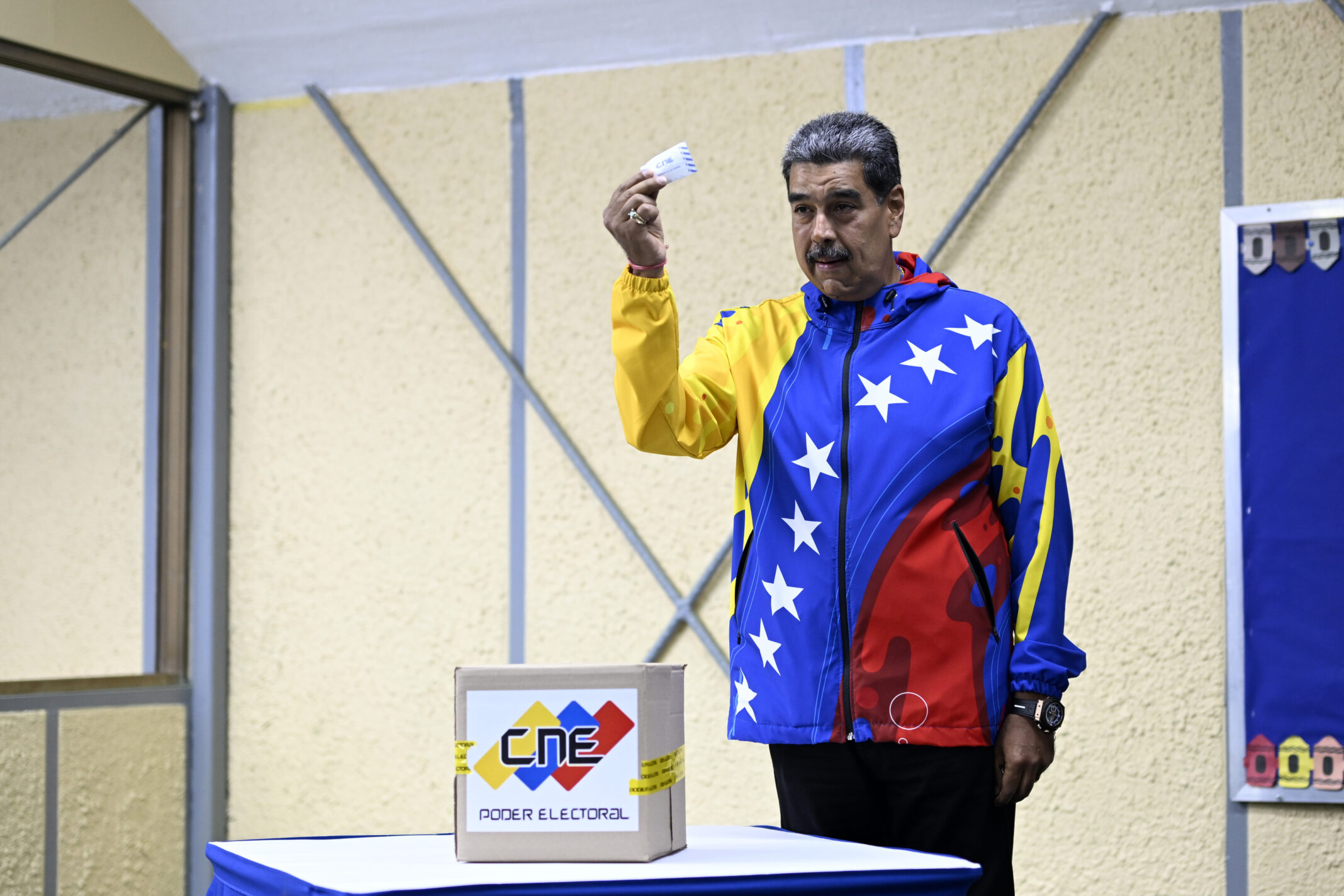
The several‑hour operation in which Venezuelan forces captured dictator Nicolás Maduro and his wife and transported them to the United States for trial has caused a major stir.
Reactions vary widely. The harshest condemnation of the U.S. action comes from countries ruled by dictators – Russia and Iran, for example. But also from Slovenia’s ruling politicians, where the most extreme position, as usual, is taken by Levica. The assessments of the most important European leaders and of SDS opposition leader Janez Janša are entirely different. They do not defend Maduro in the slightest. Quite the opposite.
In Slovenia, the U.S. intervention was condemned just as sharply as in Moscow by the ruling Levica, which also lashed out at representatives of the European Union. Less harsh, but still very critical of Donald Trump, were Prime Minister Robert Golob and President Nataša Pirc Musar. Janez Janša responded by saying that all of them were bringing international shame upon Slovenia. Thus, Asta Vrečko and Luka Mesec came to Maduro’s defence: “In Levica we strongly condemn the U.S. attack on Venezuela and the kidnapping of its president. This is a gross violation of international law, state sovereignty, and the fundamental principles on which the international order is supposed to rest.” When it comes to the media, the most extreme position of Levica, calling the president’s capture a kidnapping, was adopted as its own by the portal of Slovenia’s most‑watched TV channel, POP TV.
Vrečko added: “We in Levica are disappointed, though sadly not surprised, by the servile reactions of the European political leadership, including Kaja Kallas and Ursula von der Leyen.”
Less harsh was the head of the government in which Levica sits, Robert Golob, who stated: “I am following today’s events in Venezuela with concern. Any military intervention against a sovereign state that is not based on the principles of international law and the UN Charter is unacceptable and leads the world into a further spiral of wars and violence. At this moment, the most important thing is de‑escalation. We do not want a new war. We do not want civilian casualties and the suffering of innocent people. In the EU we will remain firmly committed to the peaceful resolution of disputes, de‑escalation, and a peaceful and democratic path for Venezuela.”
The reaction of French President Emmanuel Macron, who often socialises amicably with Golob, was entirely different: “The Venezuelan people have today freed themselves from the dictatorship of Nicolás Maduro and can only rejoice. By seizing power and trampling fundamental freedoms, Nicolás Maduro gravely undermined the dignity of his own people. The coming transition must be peaceful, democratic, and respect the will of the Venezuelan people. We hope that President Edmundo González Urrutia, elected in 2024, will swiftly ensure this transition. I am currently speaking with our partners in the region. France is fully mobilised and vigilant, including to ensure the safety of our citizens in these uncertain times.”
Donald Trump was also criticised, though more diplomatically than by Golob, by Slovenia’s President Nataša Pirc Musar, who in the past worked as a lawyer for the Trump family in disputes with journalist Bojan Požar. She wrote:
“The situation in Venezuela is worrying and does not move in the direction of respecting international law. Repeated violations of the fundamental principles of international law, where one state intervenes in another simply because it can, cannot be acceptable, even when it concerns a state with authoritarian leadership, which Slovenia in the case of Venezuela does not recognise. Immediate de‑escalation is necessary. Slovenia, together with the EU, must remain committed to a peaceful, democratic path and above all to the protection of the civilian population, not to supporting armed conflict that would ignite new wars.”
The reaction of European Commission President Ursula von der Leyen was quite different: “We are closely monitoring the situation in Venezuela. We stand by the Venezuelan people and support a peaceful and democratic transition. Any solution must respect international law and the UN Charter. Together with the High Representative and Vice‑President @kajakallas and in cooperation with EU member states, we are ensuring that EU citizens in the country can rely on our full support.”
Very critical of Slovenia’s leadership, which, in his view, sided with the dictator, was SDS leader and former prime minister Janez Janša: “The picture has never been clearer. Those who have now spoken out in defence of the head of a narco‑cartel and dictator Maduro are: Vladimir Putin, Robert Golob, Hamas, Nataša Pirc Musar, Hezbollah, Asta Vrečko, Cuba, Miha Kordiš, North Korea…”


