

By: Nova24tv.si
The left‑wing political camp is doing everything it can to prevent the formation of a centre‑right government. This was confirmed yesterday by Drago Kos in his appearance on Odmevi. The discussion focused on the Black Cube affair, which exposed corruption within the left‑leaning political bloc. Kos devoted most of his appearance to reflecting on how to pursue the authors of the recordings. The programme also featured one of the left‑wing activists, Mladina journalist Borut Mekina. In the broadcast, he continued the line of argument he had begun together with Nika Kovač and Filip Dobranić at the pre‑election press conference.
As a reminder: today we published an article revealing what the left‑wing political bloc is doing to stay in power. According to our information, efforts are under way to find incriminating material on MPs from Resni.ca and the Democrats, criminal and pre‑criminal proceedings against SDS and NSi are being accelerated, and there are even claims that up to a million euros may be offered for an individual MP to switch sides. At the centre of these efforts is said to be Drago Kos.
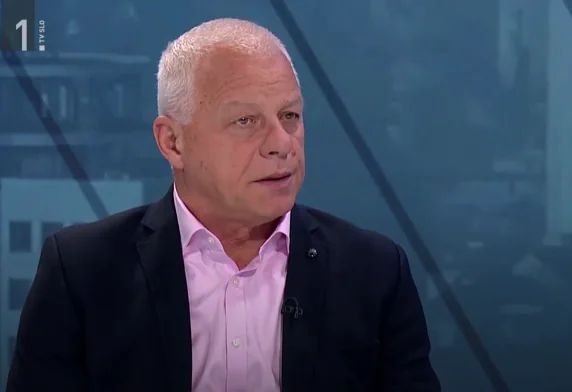
Yesterday, he appeared on Odmevi as a former head of the Commission for the Prevention of Corruption and former police officer. During his appearance, he explained to the public how the authors of the recordings exposing corruption could be prosecuted. He also tried to minimise the content of the recordings, saying that suspicion of criminal offences appears in only about three cases. In the meantime, he also revealed what the “problems” are in attempting to prosecute the authors of the recordings. In the recordings, he identified the criminal offences of unlawful audio recording, unlawful video recording, obstructing or influencing the free decision of voters, and espionage. According to him, the “problems” are the following: unlawful audio recording is prosecuted by private lawsuit; video recording is prosecuted on the basis of a proposal, which again means that the injured parties would have to file a proposal for prosecution with the police. Regarding influencing voters’ decisions, he sees a problem in the low penalty.
This raises the question of why this is considered a “problem”. Kos uses language as if he himself were involved in attempts to prosecute the authors of the recordings. In doing so, he inadvertently suggests information about his involvement in efforts to prevent the formation of a centre‑right government. We have already discussed the absurdity of focusing on the authors of the recordings rather than their content. Now a new absurdity seems to be emerging, the claim of influencing the free decision of voters. In what way was this “free decision” violated? By the fact that audio and video material appeared in public in which figures from the left reveal corruption within their own ranks? If anything, the voters’ ability to make a free decision in the elections was strengthened. The claims of espionage are also absurd. The recordings do not feature actors who are part of the state authorities, nor do they reveal state secrets. Kos also “forgot” to mention that audio and video recordings are methods used by journalists as well. Should journalists around the world who expose corruption in this way also end up behind bars?
Kos tries to shield the corrupt
When the debate turned to the content of the recordings, however, he took the opposite position. As he said, it would be a mistake for the police to simply proceed with arrests and house searches. “Those who were wrong were mainly the politicians in the election campaign who demanded immediate arrests and house searches,” he said. He added: “What we heard in these recordings may be grounds for suspicion that one of the corruption‑related criminal offences was committed. This of course means that the police must begin investigating some of these claims. Not all of the claims were concrete enough for the police to start working.”
Mekina falls into a logical contradiction
The second guest on Odmevi, Borut Mekina, continued in the programme with the pre‑election spy narrative. He offered no new evidence regarding the matter. His appearance came across as a continuation of the press conference at which three activists accused the SDS party and its president of being behind the recordings and claimed that the Israeli detective company Black Cube, which they themselves labelled a private intelligence agency, had helped obtain them. Simply because they assumed so.
Mekina, on the other hand, admitted that there is no evidence linking SDS or Janez Janša to the creation of the audio and video recordings. At the same time, he claimed that Janša could also have appeared on the recordings.
He said: “It is not so unlikely that Janez Janša is also recorded.”
He apparently failed to make the logical connection that this would imply Janša had ordered recordings against himself.


