

By: G. B.
Although military experts have been warning us for a long time that the risk of a global conflict is now much greater than it was years ago, our country is clearly responding to this very poorly.
Some time ago, the government informed the public that on September 27th it would test the mobile phone alert system. But this should in fact have been done long ago. Slovenians do not actually have a system like the U.S. Emergency Alert System (EAS), which interrupts TV and radio broadcasting in case of emergencies. Many will recall how, in 1991 during the aggression of the Yugoslav People’s Army, we essentially had an improvised system of warnings which, nevertheless, was effective – people sought shelter on time during air raids. Sadly, truck drivers and the farmer at Medvedjek on June 28th, 1991, on the then Ljubljana–Novo mesto highway (now a motorway) were not so fortunate.
Shelters do not even cover a quarter of Slovenia’s population
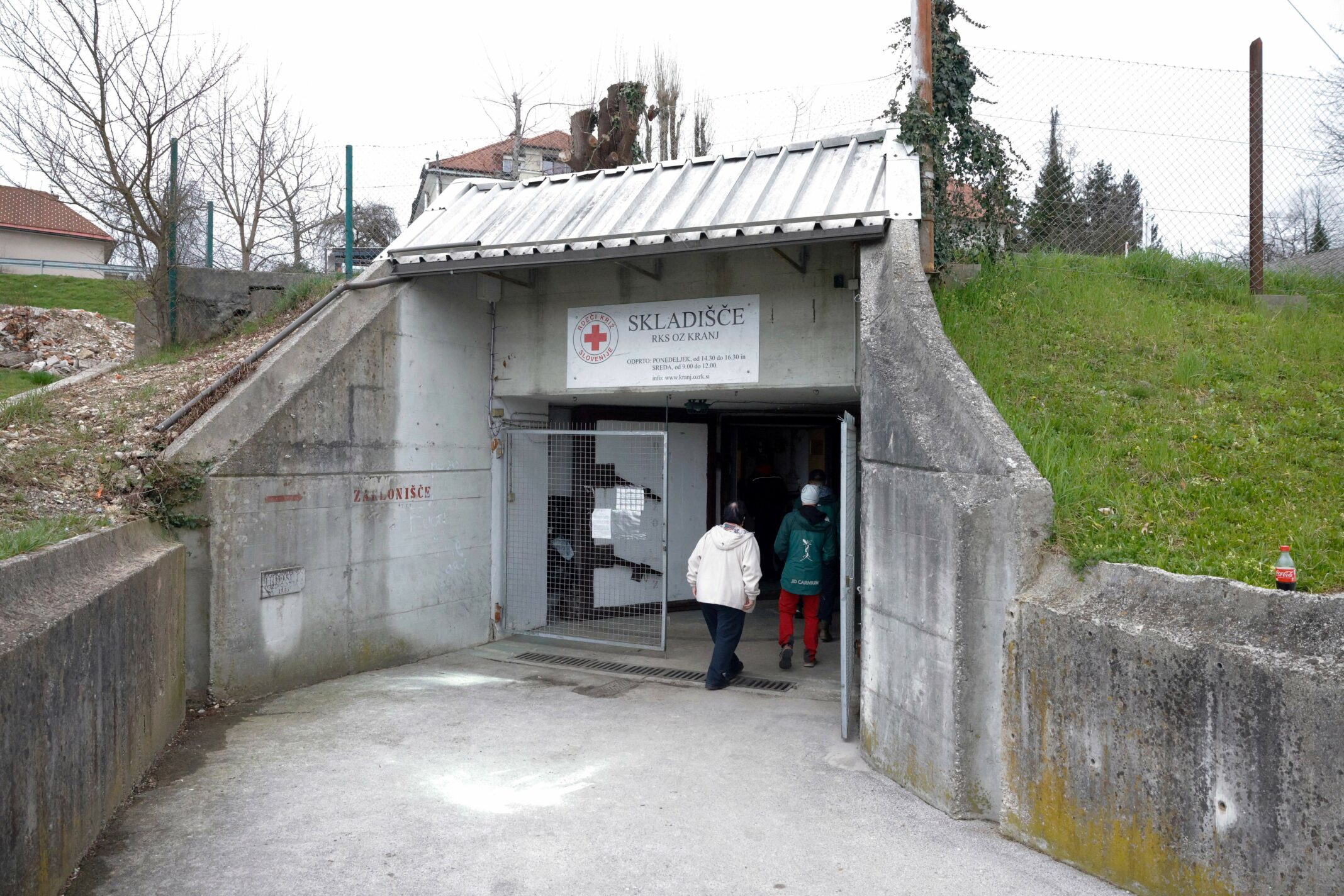
Following recent intrusions of Russian drones into Polish territory, warnings that the era of peace is over are becoming more frequent. Clearly, diplomacy plays the most important role in preventing wars. Still, one must also be prepared for the direct effects of military attacks, which requires civil defence readiness. A case in point is shelters. Slovenia has about 2,300 shelters, but they do not cover the entire population, since at most 350,000 people could take refuge in them. Most shelters are located in urban centres, and many are outdated, poorly maintained, or repurposed as storage rooms, locker rooms, etc. Only 17 shelters have a valid certificate of suitability, which reveals serious shortcomings. It is also true that the former Yugoslavia had a fairly developed alarm and sheltering system under the then-existing legislation on general people’s defence and social self-protection (a very Kardelj-era terminology). Many will recall campaigns under the slogan “Nothing must catch us by surprise.”
According to our information, in March 2025 the government (or Ministry of Defence) ordered inspections of shelters to assess their condition and prepare a rehabilitation plan. However, there is no unified record of shelters. Many have deteriorated over time or are even in private ownership. Another problem is the legislation, which requires the construction of shelters only in towns with more than 10,000 inhabitants and in key public institutions such as schools and hospitals. But for investors, this is often just an unnecessary cost. Thus, it is no surprise that existing shelters are either of poor quality or poorly maintained – or both. Many lack functioning protective doors or ventilation systems. If events requiring mass use of shelters were to occur – as on Sunday, June 30th, 1991, when a nationwide air raid alarm was issued – there would likely be major confusion or even chaos.
Outside of urban centres, public shelters practically do not exist, except for small ones in schools and health centres. Most of these, however, are not equipped with protection against nuclear weapons. This means that in a worst-case scenario, the number of fatalities would be very high.
Deliberate dismantling of the protection and rescue system?
In some countries, such as Sweden, the population has long been prepared for possible emergencies, for example by encouraging stockpiles of drinking water, canned food, battery-powered radios, blankets, etc. In Slovenia, no such efforts have yet been seen, though it is true that some might interpret such preparations as “spreading panic.” Still, this is about prevention. Unfortunately, everything here is shrouded in uncertainty. It is also clear that the European Union largely leaves this area to individual member states – while centralising matters that are less urgent.
Another serious concern is the state of the public healthcare system, which, it must be admitted, is in increasing disarray. In the event of a major disaster or war, the system would very likely collapse.
Let us also recall that operators at the 112 Emergency Notification Centre have been on strike since last year. Yet practically no one is dealing with them. From this, one might conclude that the current government is even deliberately dismantling the protection and rescue system. In the event of a crisis, therefore, under the current government we would face a major catastrophe.


