

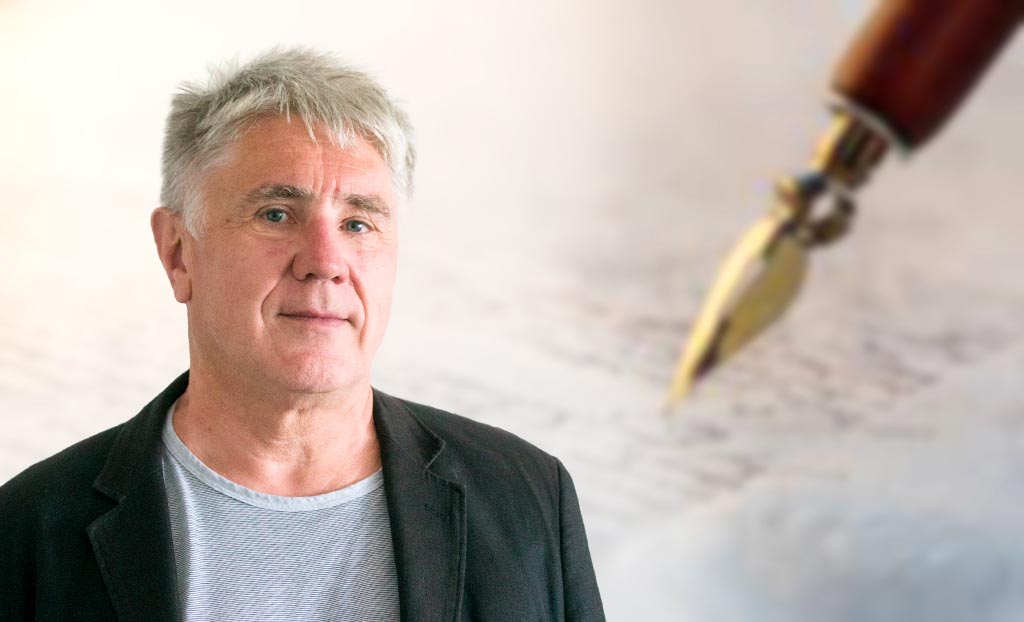
By: Miro Petek
Anton Trstenjak and Erwin Ringel wrote a book decades ago titled On the Slovenian Person and the Carinthian Soul. In it, we who still inhabit the Slovenian part of Carinthia also recognise ourselves.
Here, I mean the autochthonous part of Slovenian Carinthia within its old provincial borders. Carinthians are geographically isolated, trapped in valleys between rivers and mountains, cut off from decent transport connections. This marginalisation and seclusion also show in our character; we are marked by resilience, stubbornness, and also creativity. But Trstenjak touches on the darker, more tragic sides of the Carinthian person, including a characteristic internal struggle, emotional restraint, and even a tendency toward suicide. Yes, a Carinthian will hardly raise a hand against a neighbour; he is more likely to take his own life. In terms of suicide rates, Carinthia ranks among the highest in Slovenia, and Slovenians are near the top of the world rankings. Carinthians are said not to express their distress outwardly but rather carry it inside, Trstenjak calls this “inner sorrow.” This melancholy, this quiet pain, does not manifest as aggression but often as self-deprecation or even self-destruction. Carinthian folk songs, sung on both sides of Mount Peca, are beautiful and melodic, but most are one long lament about fate, pain, longing, disappointment in love, and much more.
It seems that this Carinthian character has infected the whole of Slovenia. Lamenting instead of protesting has settled over the entire nation, and the spark that would lead us to rebellion, to the desire for active and decisive change, is no longer there. We are patient and silently watch the nonsense and crimes happening every day in Slovenian politics. Communism taught us to be silent, and fear on one side, combined with apathy on the other, pushes us into a zone of passivity. By calmly accepting the incompetence, manipulations, lies, and theft of the ruling elite, we unwittingly grant them legitimacy. That is why they are convinced of their own right, greatness, and untouchability and are becoming ever bolder. Because there is no critical reflection in the media, because no one truly exposes these harmful patterns, their ruthless arrogance only gains further momentum.
The situation in the country is such that at least 100,000 Slovenians should be on the streets every day. That is roughly the number of self-employed entrepreneurs whom the government has punished twice with a two-percent tax on long-term care contributions. They will take one percent from everyone else. Spiritually impoverished and morally bankrupt politics – led by Robert Golob, alongside whom stands some marvel of a Minister for Solidarity of the Future – have invented a tax, the purpose and allocation of which they still do not know. Over one billion euros per year. More precisely: we do not know how they will spend it, but they do, because various NGOs and institutes are already writing the invoices. This is not only politically inappropriate and scandalous behaviour; it is criminal, backed by legislation. Systemic crime.
Every day of this government is too much; it will not resign on its own because we diligently fill their budget, and they are comfortable. Only protests like those in Serbia can remove them from power. Passive disappointment among Slovenians must be transformed into active resistance. Serbia also has a parliamentary system and elections, yet dissatisfied people seek solutions on the streets. There is no other way.
A thousand, two thousand, ten thousand people is not enough. The streets must be flooded by a multitude. This harmful, corrupt steering must be told enough. We must decide whether to continue to humiliate and self-destruct or to humiliate and destroy those who now humiliate and destroy us. Every day is precious. We ourselves must say what we want. If we cannot express this decisively and loudly, the political caste will continue to tell us what we may do. More precisely, they will continue to explain what we may not do.