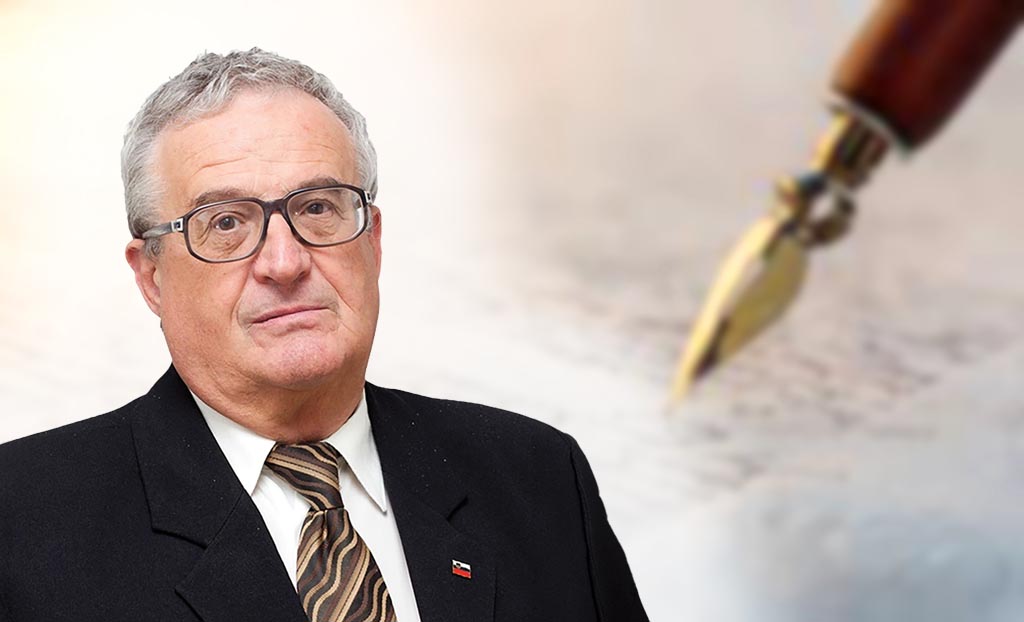
By: Dr Peter Pavel Klasinc
To all those in the Republic of Slovenia who are responsible for archival and documentary records at records-creating institutions!
Dear Sir or Madam,
Allow me, in light of the reorganisation and rationalisation of public and state administration, and the resulting reduction in the number of ministries, to respectfully and professionally draw attention to several key issues relating to the management and preservation of documentary and archival records. During any reorganisation, additional care must be devoted to this area, as the preservation of cultural heritage ultimately depends on the employees of archival services within the reorganised ministries. Since change is the only constant, the planned changes accompanying the reorganisation are certainly welcome; however, they entail activities that require specialised knowledge in the management and preservation of archival and documentary materials.
I would respectfully and professionally recommend that special attention be paid to issues concerning archival services, where such services are in operation (litera scripta manet – “the written word remains”). According to this principle, written documents must be regarded as records that are intended to endure. It is therefore extremely important that, during changes to records management and archiving systems, the principle of provenance be respected. This means preserving the original arrangement and maintaining the existing order and organisation of records. Under no circumstances should the existing structure be altered unnecessarily.
With regard to traditional archival and documentary materials, the regulations and procedures governing this area must be followed. For electronic and digitised records, guidance provided by information technology experts regarding software and technical standards should be observed. In all cases, however, both processes must be carried out in accordance with prescribed archival procedures, inventory forms, and requirements ensuring continued access to individual documents. A connection between traditional and electronic records must be established and should be based on the relevant provisions of the Archives and Archival Institutions Act (ZVDAGA), implementing regulations, recommendations, standards, and related guidelines.
The expertise of archival professionals working within record-creating institutions such as ministries and other public bodies should be taken into account wherever such services exist. Where they do not, guidance should be sought from professionally trained and qualified archivists, who can establish the three key foundations for the proper management of both traditional and electronic records. The first foundation is suitable facilities; the second is qualified personnel; and the third is a records management policy governing archival and documentary materials, which must primarily comply with ZVDAGA and its implementing regulations. Let me borrow the Latin maxim ignorantia iuris (legis) neminem excusat, meaning that ignorance of the law excuses no one.
In conclusion, I would like to emphasise that wherever there is a lack of qualified personnel, and employees are not sufficiently skilled in establishing systems for traditional and electronic records preservation, additional education and training should be encouraged, as this field requires specialised expertise. I would also like to point out that, for many years, Alma Mater Europaea University has offered undergraduate, master’s, and doctoral programmes in this field, taught by numerous accredited university professors who are prepared to provide professional advice and support in your decision-making processes. I wish you all the best.
The author of this contribution is the Head of the Archival Studies Programmes at Alma Mater Europaea University.