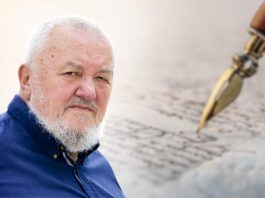
By: Dr Vinko Gorenak
At the beginning of May, we voters went to a referendum on special pensions for a handful of artists, some of whom are not even artists. For me, things like displaying a pregnant belly covered with the Slovenian flag and a cut-out symbol, or breastfeeding a dog, simply are not art. At that time, we voters rejected the already adopted law on special pensions, and the law, in accordance with the will of the people, did not come into effect. In the coalition, they thus received a rejection from the people.
Not even two months had passed, and we were already on the verge of two new referendums. In the first, voters were supposed to decide whether to significantly increase defence spending, and in the second, whether Slovenia should withdraw from NATO. As a reminder, on March 23rd, 2003, Slovenia held a referendum on joining NATO, and over 66% of voters decided in favour of accession. Every alliance like this, especially a military one that guarantees Slovenia’s territorial integrity, of course comes at a cost. And since joining, particularly after 2014, Slovenia has not fulfilled its commitments, especially the one to allocate 2% of its GDP to defence.
So, what is the difference between the concluded referendum on special pensions for a handful of cultural workers and the proposed (but later cancelled) referendums on defence spending and NATO membership? The essential difference is that the referendum on special pensions was a legislative referendum, meaning the people made a binding decision. The proposed and later cancelled referendums on defence spending and NATO membership would have been consultative, meaning they would not be binding on the National Assembly. To simplify: in the referendum on special pensions, voters had the final say. In the announced and then cancelled referendums on defence and NATO, the final decision would have rested with MPs, who could decide differently from the voters.
Some additional facts are also interesting. The referendum on special pensions, where voters ultimately rejected the law, was initiated by the opposition. The ruling coalition, on the other hand, called for a boycott, claiming it was an opposition-led conspiracy targeting a few artists and would cost taxpayers nearly seven million euros.
But the proposed and later cancelled referendums on defence spending and NATO membership would have cost just as much. Interestingly, the defence spending referendum was proposed by two coalition parties, Levica and SD, while the NATO membership referendum was proposed by the head of the coalition, Robert Golob.
In normal political conditions, a coalition acts in unison, and no coalition party publicly opposes the collective stance. But that did not happen here. A rift occurred within the coalition, and under normal circumstances, this would lead to the government collapsing and new elections being called. But of course, that will not happen here. Levica and SD will continue to shout against increasing defence spending, with Levica alone calling for withdrawal from NATO, yet both parties will remain part of the coalition, and the coalition itself will not fall apart.
Wondering why? The best answer was given by Dr Žiga Turk, who wrote: “In this coalition, there are three parties with special needs. The first has a special need for Venezuela, the second for the Anti-Imperialist Front, and the third for money, and the first two.” The only clear conclusion is this: in the Golob coalition, they are playing referendum games with the security of all of us.