By: Gašper Blažič
I write these lines the day after a sunny Slomšek Sunday, which this year was a true celebration for Celje. It combined the feast day of Blessed Anton Martin Slomšek with the 400th anniversary of the founding of the Missionary Society, which Slomšek, still serving as bishop in St. Andrä, had invited to the Austrian provinces of the time. Its beginnings on Slovenian soil are closely tied to the pilgrimage church of St. Joseph on the hill above Celje. This was before the diocesan seat was transferred to Maribor in 1859.
Slomšek would have preferred Celje as the diocesan centre, but Maribor was the more rational choice. Through multiple adjustments of diocesan boundaries, he managed to preserve Slovenian identity in Styria, otherwise, decades later, General Rudolf Maister would have had nothing left to defend. Ironically, those boundary changes pushed Slomšek’s former episcopal seat in predominantly German-speaking St. Andrä into the jurisdiction of the Diocese of Gurk-Klagenfurt, which in recent years has once again been led by a Slovenian bishop, Jožef Marketz.
Still, during the celebration I had the feeling that it was more a festivity of the Styrians, even though Slomšek’s legacy is important for all Slovenians, reaching to the southernmost and westernmost ethnic borders, even if he himself was more rooted in the so-called Salzburg branch of the Christian mission from the early Middle Ages. Why do I write this? Mainly because today, we are witnessing the rise of an ideology “liberated” from Christianity, which, under the guise of reinforcing identity, returns to old pagan roots and offers seductive solutions and positions. It is no coincidence that one of the apostles of pagan revival in our country is also a strong advocate of euthanasia, through which (setting aside antisemitism) the followers of both “red” and “brown” shirts are once again converging. Yet our history offers many positive examples. Forty-five years after Slomšek, Jakob Aljaž was born in Zavrh under Mount Šmarna Gora, known locally as “Bačenkov Jaka”, with whom I share the same baptismal font. Aljaž was not only a priest, mountaineer, and composer, but also a great patriot who helped strengthen Slovenian identity both under the Habsburg Empire and later within the new South Slavic state, the Kingdom of SHS. In doing so, he undoubtedly built upon Slomšek’s teachings about healthy patriotism and how to transcend exclusionary nationalism. He showed how much one must risk for Slovenian identity to take root in practice. Today, we are squandering it carelessly. More precisely: it is being squandered by those who should be protecting it, our current rulers.
Still, the question arises: is there truly such a great divide today between Christianity and nationhood, given that the Christian vision is the proclamation of Jesus Christ to all nations? According to the apostles of modern paganism, this supposedly supports globalism and enables the left and global “wokeness.” But in the early days of Christianity in Slovenia, alongside official Latin, there were instances of preaching in the vernacular. Saints Cyril and Methodius took decisive steps in this direction, although their Byzantine influence did not take hold equally everywhere. Nevertheless, they significantly influenced the thinking of contemporary popes, who came to see preaching in the local language as crucial for evangelisation. The first translation of the Bible, however, came only with Protestantism. All of this later shaped the belief that our earthly homeland and our nation are also gifts from God, and that we must not discard them. Just as, on the other hand, the nation must not become a kind of idol.
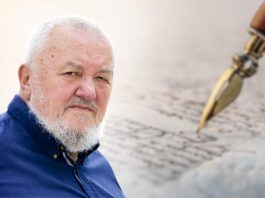
This was also understood by our priestly national awakeners on the western edge of the ethnic territory – commonly known as the čedermaci. They were not only fighters for language and national survival, but also fighters for truth. One of their successors, the courageous messenger of truth Bogdan Vidmar, departed this world just before this year’s Slomšek Sunday. His ordination and first mass took place at a time when the aggressor YPA was trying to destroy the newly formed Slovenian state. Is that not, in itself, a powerful message?