

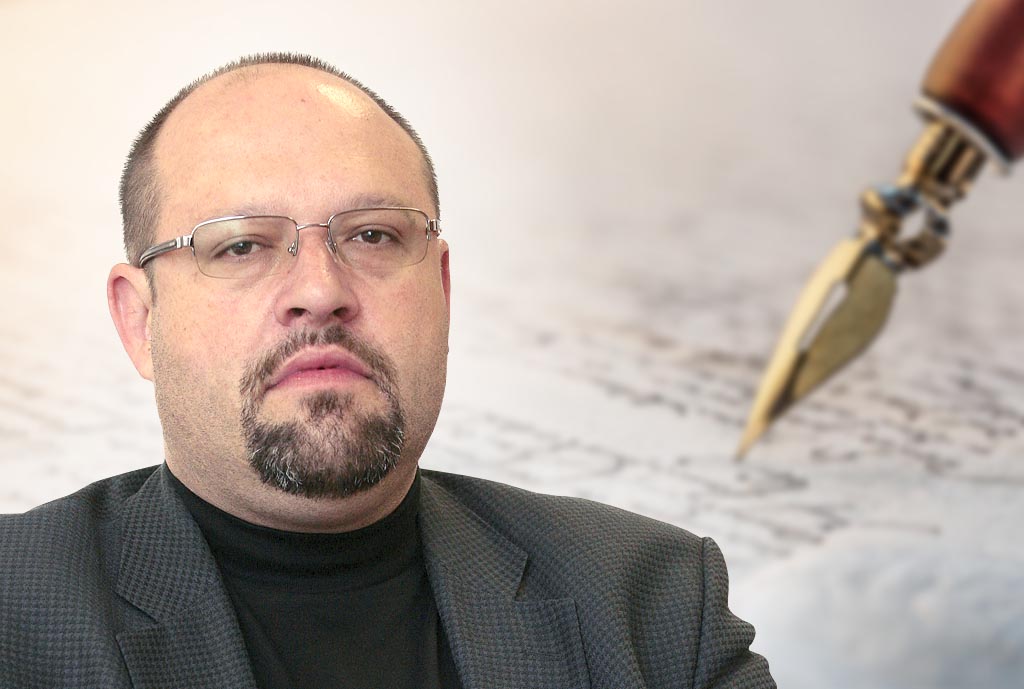
By: Dr. Matevž Tomšič
In political theory, it is a well‑established belief that so‑called civil society plays an important role in strengthening democracy and is one of the factors contributing to its stability. But its functioning is often excessively idealised, especially when it is contrasted with “corrupt” politics. Misconduct and abuses also occur within the civil‑society sphere, as some of its actors behave in ways that by no means produce positive effects from the perspective of the development of democracy and society as a whole.
It is especially problematic when civil society is not autonomous but instead intertwined with political, economic, or other power centres, so that so‑called NGOs act as their extended arm. This means that instead of pursuing the common good, they follow entirely particular interests.
This is precisely what we are dealing with in Slovenia. Certain individuals and organisations that present themselves as representatives of civil society act as exponents of one and the same political current, the left. In alliance with the dominant media, which likewise serve that same political agenda.
This is most evident in the group that pompously calls itself The Voice of the People, and in organisations among which the most prominent is the 8 March Institute. These NGOs have for several years been one of the firmest pillars of the left‑wing political option, back when it was still in opposition, and now, when it is in power. And because the ruling coalition under Robert Golob is not faring well ahead of the upcoming elections, they have mobilised once again.
But this time, their target is not only their greatest enemy, Janez Janša and his Slovenian Democratic Party. It seems the left has realised that there are parties capable of reaching into the pool of centrist, mostly undecided voters, yet are not under the control of their power structures. This applies especially to Anže Logar’s Democrats. That is why the 8 March activists and their allies have gone after him in particular. This manifested in the bizarre “hamburger affair,” in which they accused Logar’s team of transforming the website of the now‑defunct hamburger company Lars & Sven (whose owner is a member of the Democrats) into their own, allegedly gaining followers in an unfair way. Their leader, Nika Kovač, even reported Logar to the Court of Audit. But the matter is absurd, and the accusations are baseless. The company is defunct, so its page, followers included, is worth practically nothing. And its owner is free to decide what to turn it into.
Meanwhile, these moral guardians raise a ruckus over such trivialities, yet ignore far more serious and questionable actions by the ruling left‑wing politicians. They remain silent about the findings of the anti‑corruption commission regarding Prime Minister Golob’s conduct, and silent about proceedings against Ljubljana’s mayor Janković. And speaking of problematic political advertising: they were not at all bothered by the campaign promoting the government’s achievements under the slogan Slovenia Forward, even though it is backed by the Freedom Movement, without being labelled as such on the ads. This is a clear case of unfair advertising. But since it’s “their own,” it is apparently allowed.
Those who warn about political manipulation – which they supposedly find only on the right – are themselves massive manipulators and hypocrites. They proclaim themselves representatives of the entire people, though they are merely propagandists of the left – and of its most extremist wing. They present themselves as independent, though they are constantly intertwined with politics. They portray themselves as benevolent and tolerant, yet in reality they are full of hostility toward anyone who does not think like them.
And those who demand transparency from others finance themselves non‑transparently. While political parties are subject to strict oversight, this does not apply to NGOs – not even to those that are, in fact, political proxies. That is why the same financing rules that apply to political parties should also apply to such organisations that engage in political propaganda.