

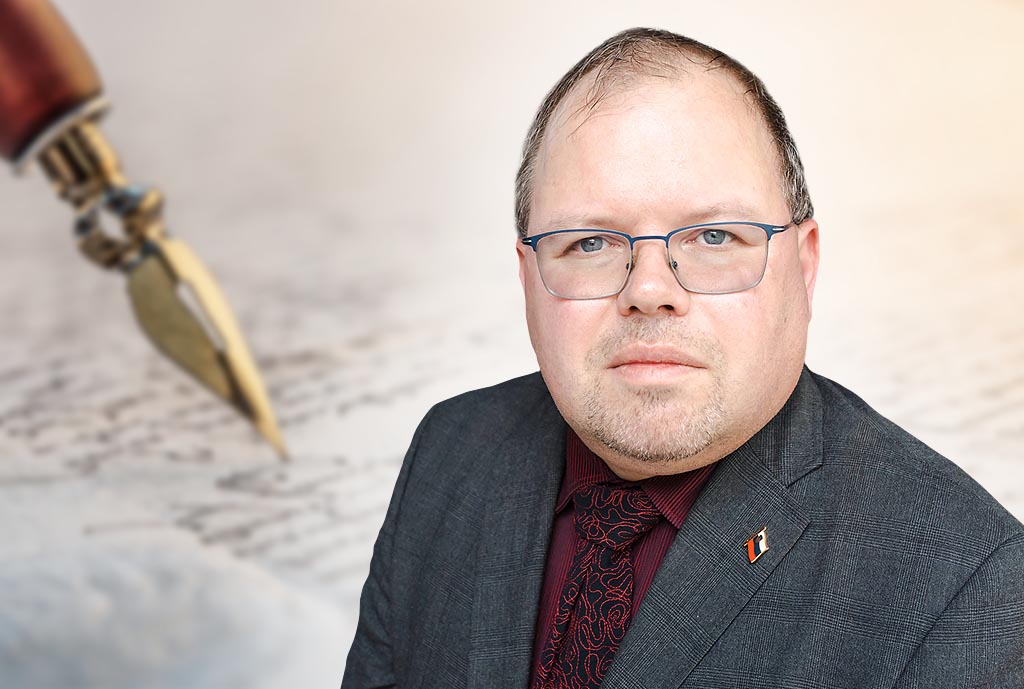
By: Gašper Blažič
Anyone who followed the referendum campaign could hardly fail to notice how the March 8th Institute seemed to be popping up everywhere during the final month before the four referendums. Young people were invited to speak into microphones, first being coached on what they were supposed to say, alongside celebrities who, unsurprisingly, tend to lean to the political left.
Anyone who has recently read literature on the São Paulo Forum should also read a brief explanation of how all of this began. Decades ago, the well-known Italian New Left theorist Antonio Gramsci devised an effective formula that later contributed to controlling what is allowed to be labelled as “culture.” In practice, this means tight and decisive control over what can be presented to the public as “cultural,” “progressive,” and so on. Although the São Paulo Forum is primarily associated with Latin America, similar developments can be observed in Slovenia and elsewhere across Europe.
Perhaps only now are we beginning to understand the real meaning behind the famous slogan “step down from power,” launched into public discourse by then-League of Communists leader Milan Kučan in the late 1980s. And yes, he took that slogan from his then-young adviser, Borut Pahor. Kučan, of course, never truly stepped down from power; following Milošević’s example, he merely moved to the “next chair,” transitioning from the position of Communist Party leader to that of President of the Republic’s Presidency, albeit through direct elections. At the time, we were naïve enough throughout the 1990s to embrace phenomena such as the “Soros Foundation,” “Soros scholars,” and similar initiatives with relatively little scepticism. What we did not realise was that a financially backed ecosystem of non-governmental organisations, various supposedly “independent” media outlets, and “civil society” programmes was already taking root in our country. All of this was supported both by taxpayers’ money and foreign capital. Before we fully understood what was happening, Slovenia’s public sphere had become crowded with a wide range of influential organisations sharing a common denominator: a left-wing agenda that needed to be spread among the population. The mechanism is a simple psychological trick: people are made to feel intelligent, important, and progressive when they parrot pre-packaged slogans and talking points.
One such slogan over the last three years has been the word “genocide.” This brings to mind my own attempt to use the term to describe the events of 1945, when communist forces killed at least 15,000 Slovenians, not to mention members of other nationalities. I was quickly rebuked and told to educate myself on what genocide actually means. Even within the Slovenian democratic camp, many frowned upon the use of the word, arguing that it was unnecessary exaggeration, while mainstream media often justified the killings as punishment for collaboration, comparable to what happened in France and elsewhere. And now? The very same ideological circles use the word “genocide” on a mass scale. Not because they genuinely sympathise with Palestinians, far from it. Rather, it is about controlling culture and shaping public thinking. In an article entitled “The Political Delirium of Genocide: When Facts Are Irrelevant and Morality Merely Decorative,” published on the Demokracija website the day before the third anniversary of Hamas’s major attack on Israel, Sebastjan Erlah argued that the term is being misused: “Those who today shout about genocide in Gaza are not offering a critique of reality; they are merely reporting their own hallucinations, produced by a hyperreal media machine.” The propagandists invoking genocide in Gaza are not interested in truth. They are interested in a political agenda built on propaganda, because people consume symbols rather than facts. “The image of suffering has become a currency that political actors freely attach wherever they wish,” the author further wrote.
The cultural and political hijacking of the term genocide also presents a challenge for linguistics, primarily because the word itself has been emptied of its original meaning. This could have serious consequences for how the events of the first half of the 1990s in Srebrenica are perceived and understood.