

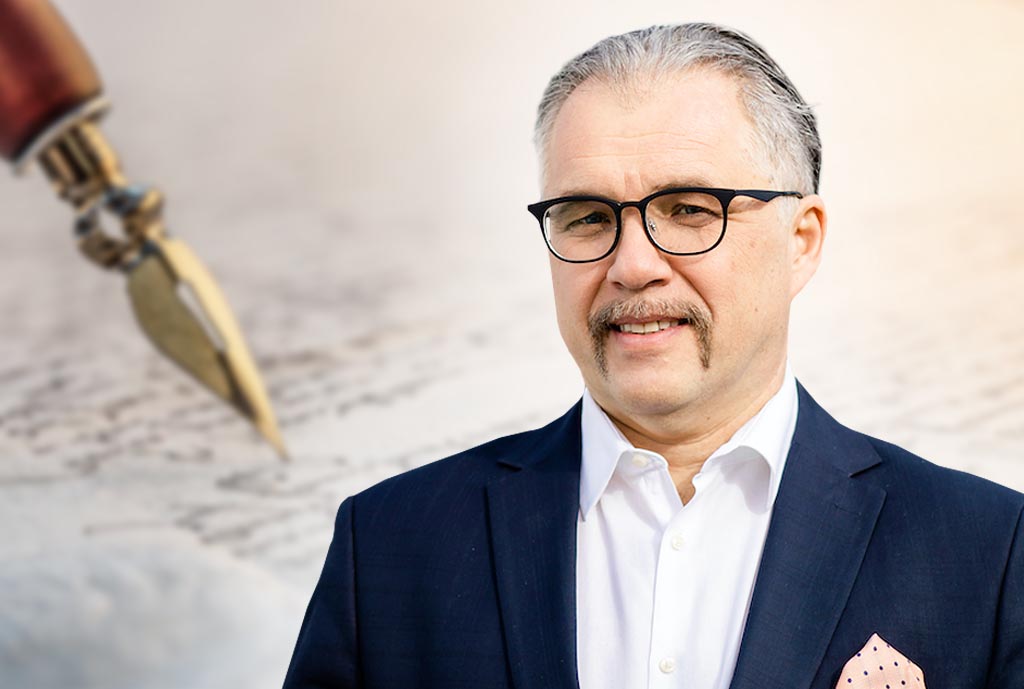
By: Edvard Kadič
A little over a month and a half before the parliamentary elections on 22 March, an almost textbook pattern of how forces operate in the Slovenian political and media space is becoming increasingly visible. This pattern quietly withdraws from sight between election cycles and becomes invisible, silent, and practically unnoticeable to an uninterested voter. Yet precisely at the moment when public debate should be at its broadest, freest, and most balanced, it appears before the public in full force. As if the system itself senses that the moment has come for synchronisation and action.
On 12 February 2026, the Specialised State Prosecutor’s Office (SDT) dismissed the criminal complaint against former Interior Minister Aleš Hojs in the case concerning the alleged disclosure of classified information about house searches targeting members of the Kavač clan. After a thorough investigation lasting more than four months since the house search in September 2025, there was not enough evidence to establish reasonable suspicion. The loud accusations echoed in the media day after day, fuelling (unjustified!) suspicion, but ultimately proved weak, as they simply did not withstand scrutiny. Hojs himself said that there was no evidence because there could not be any.
At the same time, the same body – the SDT – filed an indictment on 2 February 2026 against four MPs and former members of the parliamentary intelligence oversight commission (Knovs) from NSi: Jernej Vrtovec, Janez Žakelj, Jožef Horvat, and Matej Tonin. The accusation: abuse of official position under Article 257 of the Criminal Code. The procedure has dragged on for two years without visible progress, yet the indictment appears precisely now, just as the election campaign for parliamentary seats begins. NSi describes this as the prosecution entering the campaign, while Manfred Weber, the leader of the European People’s Party, the strongest political group in the European Parliament, has even called on the European Commission to examine a possible abuse of the judiciary. The timeline itself does not prove anything, but it does raise the question: why do the mills of justice grind at this particular rhythm? Slowly for one side, and suddenly quickly for the other.
The same question applies to the TV programme Tarča on RTV Slovenia. The show was abruptly cancelled on 12 February. RTV management insists: it was due to an unexpected absence in the team, Tarča has never been cancelled because of its content, and accusations of pressure are misleading and politically motivated. Interestingly, the Tarča team claims the exact opposite on social media: that their superiors informed them the show would not air in its original form because it was supposed to highlight topics uncomfortable for the current government. And then came an additional twist: instead of a critical investigative show, viewers were given a documentary about Viktor Orbán. Surely that cannot be a coincidence, can it?
It is no secret that there is a network of media outlets connected to a single owner (Martin Odlazek), systematically constructing an extremely negative image of only certain political actors. Headlines and claims that often later fail to hold up in court create a very specific impression in the public. This is not a new phenomenon, neither here nor elsewhere in the world. It is a deliberate narrowing of the space for free decision‑making by voters.
The problem is not isolated incidents or high‑profile events, but the synchronised, targeted pattern of action. The pattern is visible even to the blind: just before elections, selective pressure intensifies, procedures that had been dormant for months or years suddenly activate, and voices that might disturb one side fall silent. Think only of the Fotopub affair. And it is not even necessary that there is a single centre of power issuing direct orders. Often it is an automatic synchronisation of interests. People in different positions (in the prosecution, at RTV, in editorial offices) sense that now is the moment to take a step they had been postponing. The system works like an ecosystem: when one senses an opportunity, others respond similarly.
It is important not to forget who fulfils their election promises and who does not. Do not overlook my new book Direktno, which, through a selection of columns, takes you chronologically through the period between 2022 and 2025, a period we must never forget. It is necessary to calmly answer four key questions: Who accuses loudly and who proves quietly? Which procedures begin or end precisely before elections? Which media and programmes suddenly fall silent or become louder? And above all: Which questions are not being asked in the mainstream media? If you add to these questions a reflection on who is truly capable of leading the country and who merely claims to be capable, you will surely circle the right name. Let your choice at the polling station on 22 March therefore be the result of sober reflection, not the result of pressure that is intensifying, and will continue to intensify, in this month leading up to the elections.