

By: STA, G. B.
According to Prime Minister Janez Janša, the government does not currently plan to reduce the number of public-sector employees by ten percent in each of the next two years, despite recent media reports suggesting otherwise. He stated after today’s budget session that before undertaking any such measure, the government would first consult the public through a referendum.
At a press conference where he, together with Finance Minister Andrej Šircelj, presented the proposed budgets for the next two years, Janša said that a redistribution of human resources is necessary, first within the public sector itself. Because the population is ageing, there is a shortage of personnel in the service-provision parts of the public sector, while at the same time there are considerable surpluses in the bureaucracy, he said.
According to media reports, the government had planned, while preparing the budget proposals for the next two years, to reduce public-sector employment by 10 percent in 2027 and by a further 10 percent in 2028. Janša denied this today. “There is nothing of the sort in the budget proposal,” he insisted.
As he explained, those reports resulted from a misinterpretation of earlier forecasts. Moreover, it is difficult to assess whether a ten-percent reduction in staffing is actually necessary and whether it could realistically be achieved through gradual, non-compulsory measures within a single year. For that reason, staffing levels in the personnel plans accompanying the budget proposal remain unchanged from this year. “There is no reason for panic. Nobody will lose their job,” he said.
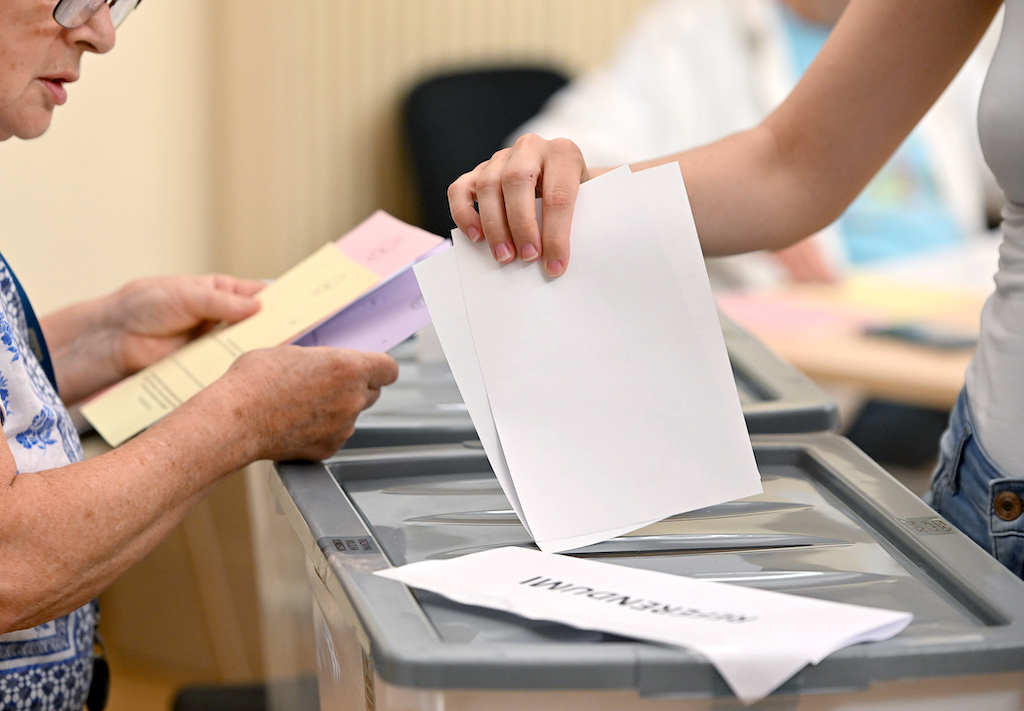
Nevertheless, a redistribution of human resources is necessary. Before undertaking such a restructuring, however, the government intends to consult the public through a referendum. “In the coming months, a consultative referendum will be proposed on whether we should proceed with this restructuring and with reducing bureaucracy,” he said. According to Janša, the result will show “whether people support greater prosperity or whether they prefer continued stagnation.”
The decision to propose a consultative referendum was taken at a coalition meeting on Saturday. Janša was unable to say exactly when the vote might take place, though he indicated that it would probably be held later this year. He noted that, regardless of the outcome of the upcoming referendum on the development law, the government will have to prepare a budget revision during the first months of next year and will also require a clear picture of public-sector restructuring.
He pointed out that since Slovenia’s independence, the number of employees in the public administration has increased significantly. “This is the fourth time I have led a government, and I have discovered agencies and funds founded by the state that I had never even heard of before,” he said. In his view, this is where reserves and potential efficiencies can be found.
At the same time, the state faces acute staffing shortages in several areas. “There is a growing need for personnel in healthcare, social care, and services for the elderly, and there is also a shortage of police officers. These sectors do not have enough people, which is why reallocations are necessary,” he stressed.
Janša believes that employees should first be redeployed within the public sector itself. After that, he proposes transferring some human resources from the public sector into the private economy, which is facing a structural labour shortage. According to him, this shortage is significantly slowing economic growth and limiting development potential.
He does not see major obstacles to such a transition, arguing that the work of economists and lawyers is broadly similar whether it is performed in the public or private sector. He also noted that, given the pace of technological progress, Slovenia, together with Europe and the wider developed world, will face one major reform over the next decade: lifelong learning.