

By: G. B.
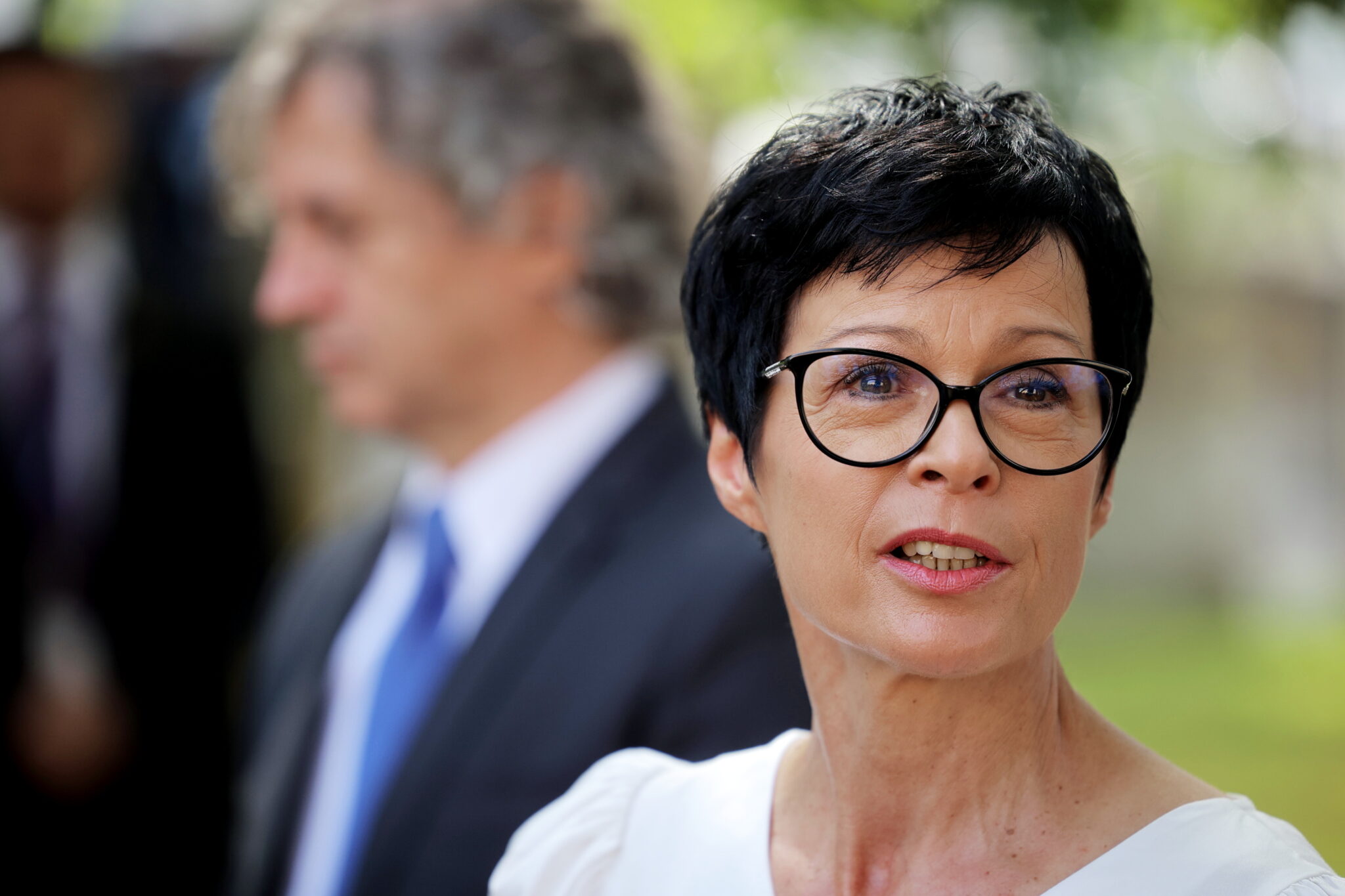
It appears that the European Commissioner for Enlargement, Marta Kos, has no problem with her UDBA‑related past. On the contrary, she seems proud of it. She believes she is very well suited for her position.
The European Commissioner for Enlargement, Marta Kos, responded today in the European Parliament to accusations that she lied during her 2024 parliamentary hearing about her alleged cooperation with the former Yugoslav secret service, saying that she is still suitable for performing her duties.
“Yes, I am very suitable for the work I do,” the Commissioner replied to a question by Latvian MEP Rihards Kols from the European Conservatives and Reformists (ECR) group, who asked whether, given that she had “lied about her past” during the November 2024 hearing, she was still fit to hold office. At the meeting of the Committee on Foreign Affairs (AFET), she stressed that her appointment as Commissioner had been confirmed by the European Parliament, that she delivers results, and that she strongly believes in the EU project.
Kols referred in his question to the book Komisarka, presented in March by Igor Omerza. In it, the author states, among other things, that Kos initially cooperated with the Yugoslav secret police UDBA, or the State Security Service (SDV), at the turn of the 1980s to the 1990s as a source under the name Tara, and that after she was employed at Deutsche Welle Radio in Cologne in the then Federal Republic of Germany, she was “re‑registered” as an operative named Blanka. The book also includes several documents that allegedly prove this.
Several MEPs from the political groups of the Socialists and Democrats (S&D), the Liberals (Renew), and the Greens expressed support for the Commissioner’s work during the session, which was dedicated to discussing the state of the enlargement process.
Kos, a former journalist and Slovenian diplomat, had already faced accusations of cooperation with UDBA before her appointment as Commissioner for Enlargement, but she denied any cooperation during the AFET committee hearing in November 2024. She did acknowledge that her name had appeared on an intelligence list, as had the names of many government members, Members of the European Parliament, and thousands of others, without knowing precisely what that meant.
In early March, the European Commission responded to the publication of Omerza’s book by emphasising that Commissioner Kos had undergone extensive and detailed vetting before joining the Commission.