

By: Spletni časopis
After the elections, the ruling coalition will try again to legalise state‑sanctioned suicides, Svoboda announced last night.
For at least a year after the referendum, the same issue cannot be legislated, because the vote initiated by Aleš Primc with 40,000 signatures was not merely consultative, unlike the one on a similar dilemma that the ruling parties called last year during the European elections to boost turnout among their voters.
“I am convinced that the path of this law is not finished. Sooner or later, we will have such a solution in Slovenia. Of course, it is a pity that it is not already in place, especially for all the people who might need such a law now,” said Tereza Novak for Svoboda immediately after the results were announced. Mladina editor Gregor Repovž commented on Tanja Gobec’s show Politično: “Such questions belong at the beginning of a mandate, when things are calm and the debate can be sober, not overshadowed by the fact that elections are approaching.”
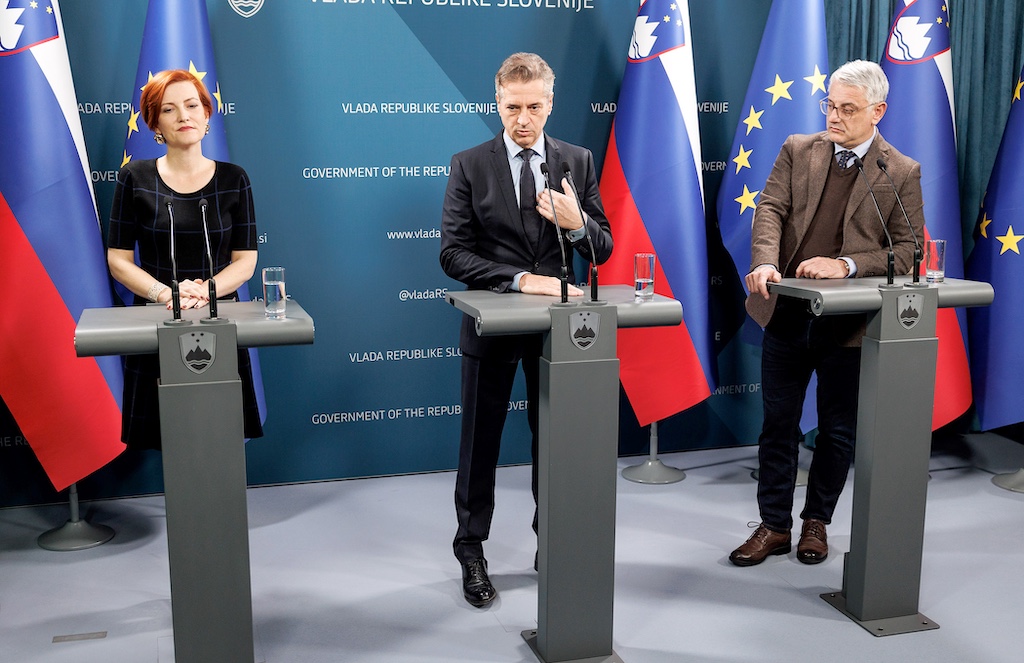
Prime Minister Robert Golob said of the law under which the state, through special commissions, would decide who may commit suicide, pay for the procedure, and oversee its execution, that this was not a political issue. Doctors were included in the state mechanism, but they strongly opposed this role. The rejected law also required doctors to falsify the official cause of death, listing a serious illness instead of suicide. Repovž, on TVS, assessed the content of the referendum in much the same way as the prime minister, saying it was about “intimate questions.”
The full statement by the prime minister on the referendum defeat was as follows:
Robert Golob: “Today the citizens of Slovenia went to the polls to answer one of the most difficult and important questions any society can face: how to preserve the dignity and inalienable value of every human life, right up to its final moments.
Last year, people in a referendum called on the government to find a new way forward. The government, together with its alliance, took this commitment seriously: we listened to different views, led a careful debate, and shaped a balanced proposal. For months, opinion polls showed that this solution enjoyed majority support. Yet we always knew this was a deeply personal question, where people also expressed completely opposite positions.
To the supporters of the law and the alliance: I understand you, and tonight I share your disappointment. You fought long and hard to bring this issue to the forefront and for Slovenia to find a new, more humane solution. You tackled a subject many societies still avoid.
To the opponents of the law: today you rejected the proposed model, but the challenge we face remains. Because on two things we all agree: no one should be forced into unbearable, prolonged suffering. And no one should be forced to end their life. As a free and compassionate society, we must ensure both.
This was not a political issue; it was a question of dignity, human rights, and individual choice. That is why we entered this campaign as an alliance, an alliance of those who care about their fellow human beings, so that they may end their lives with dignity.
But this will not stop us. In the coming months we will work even more diligently and decisively, so that in next year’s elections we will convince you, dear citizens, of a vision of Slovenia that remains open, democratic, and free. A country where every individual has the right to their own choice, and where it will never again be permissible for politicians to impose that choice.”
Gregor Repovž’s statement on Politično about what was decided and when it is appropriate to legislate “state suicides” was as follows: “I think this was an extremely intimate and difficult question. We really do not want to think about death. But what matters, and what I think may be a lesson for all future governments, is that such questions should not be resolved right before elections. Such questions belong at the beginning of a mandate, when things are calm and the debate can be sober, not overshadowed by approaching elections where everyone can play games with them. Because this is a truly important question. It is a question of death and our attitude toward death, to which other themes can then be attached…”